Knowing how to clean cast iron properly is essential if you want your cookware to last for years without rusting, sticking, or losing its seasoning. Cast iron is incredibly durable, but it requires a different approach to cleaning than non-stick or stainless steel pans. When cleaned the right way, cast iron actually improves with use, developing a natural non-stick surface that enhances cooking performance over time.
In this guide, you’ll learn how to clean cast iron safely, remove stuck-on food, protect seasoning, and avoid the most common mistakes that damage cast iron cookware
Why Learning How to Clean Cast Iron Matters
Cast iron cookware is coated with a layer of seasoning created by oil bonding to the surface through heat. This seasoning protects the pan from rust and creates a smooth cooking surface. Improper cleaning methods can strip away this layer, leaving the pan vulnerable to damage.
Understanding how to clean cast iron correctly helps you:
-
Preserve the seasoning layer
-
Prevent rust and corrosion
-
Maintain non-stick performance
-
Extend the lifespan of your cookware
The goal of cast iron cleaning isn’t to make it look brand new—it’s to keep it functional, protected, and ready for everyday use.
What Not to Do When Cleaning Cast Iron
Before diving into the correct method, it’s important to understand what can harm cast iron.
Avoid soaking cast iron in water
Leaving cast iron submerged in water encourages rust, especially if the seasoning is thin or uneven.
Avoid harsh detergents
Strong soaps and degreasers can strip the seasoning layer, making the pan dry and prone to sticking.
Avoid abrasive scouring tools
Steel wool and harsh metal pads can scratch the surface and remove seasoning unevenly.
Avoid air drying
Allowing cast iron to air dry leaves moisture on the surface, increasing the risk of rust.
Knowing these mistakes is just as important as learning how to clean cast iron the right way.
How to Clean Cast Iron After Cooking (Step by Step)
The best time to clean cast iron is shortly after cooking, once the pan has cooled slightly but is still warm.
Step 1: Rinse with warm water
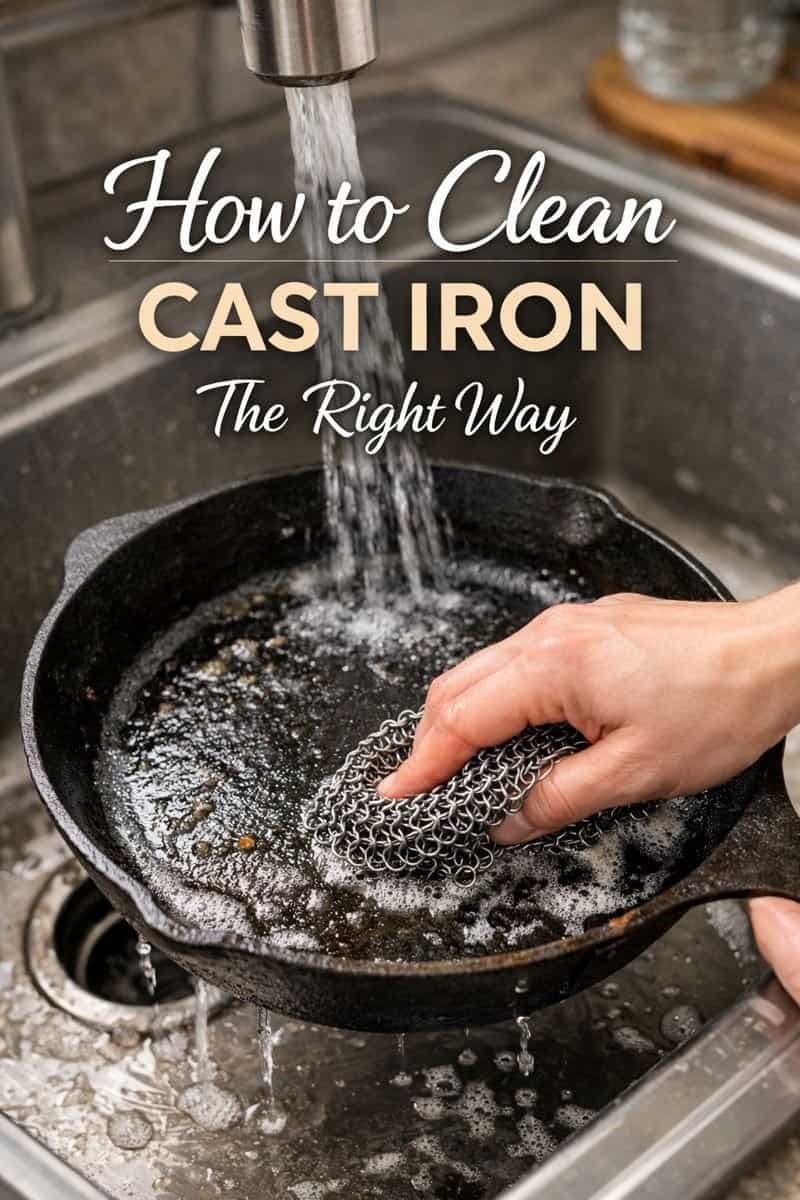
Rinse the pan with warm water to loosen food residue. For lightly used pans, this step may be enough.
Step 2: Gently scrub the surface
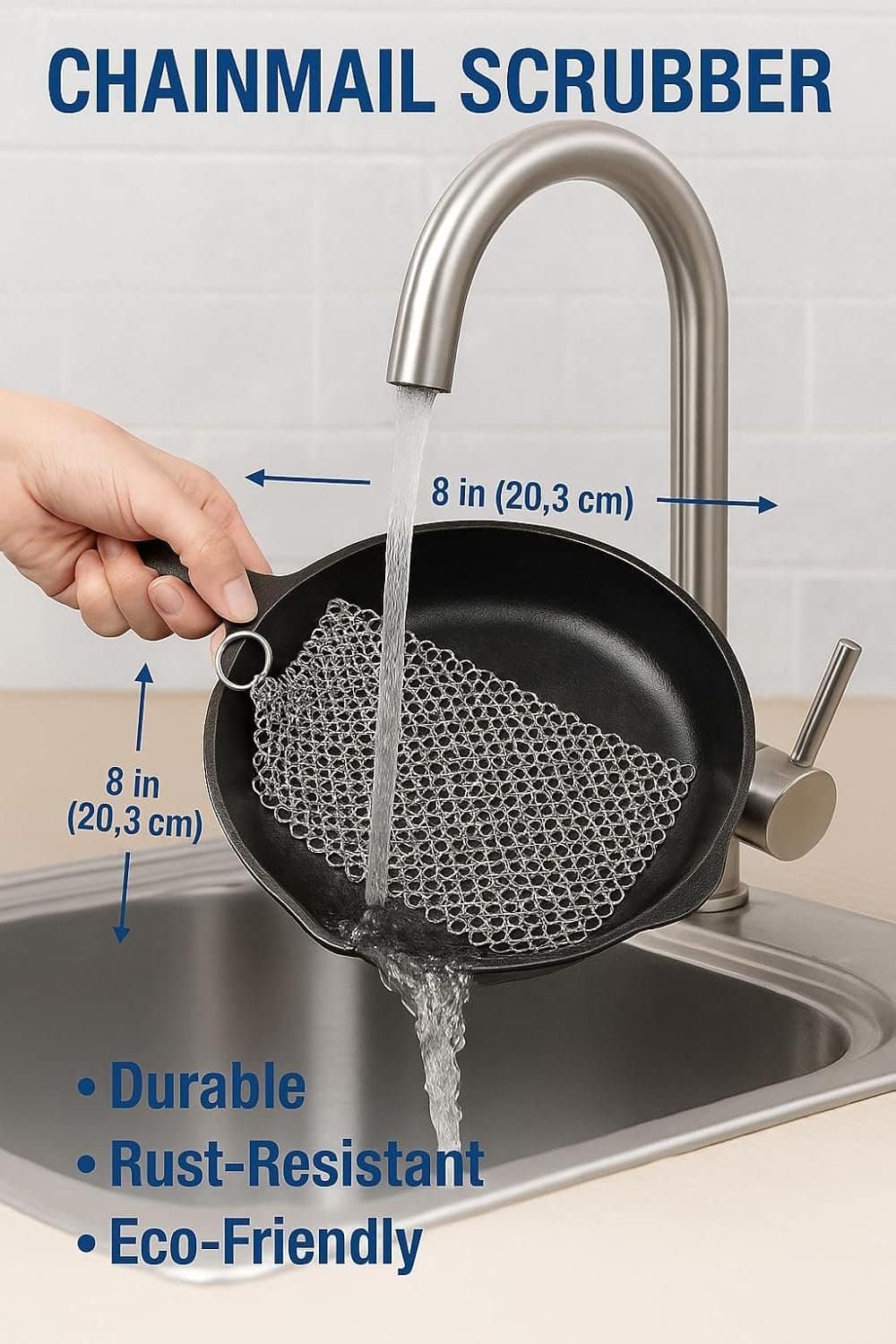
If food is stuck, use a cast iron–safe scrubber to lift residue without damaging the seasoning. Gentle circular motions work best. The aim is to remove food, not strip the pan.
Step 3: Use soap only if necessary
Despite common myths, a small amount of mild soap can be used occasionally if the pan is very dirty. It should not be part of daily cleaning, but it won’t ruin well-seasoned cast iron when used sparingly.
Step 4: Rinse and dry immediately
Rinse thoroughly and dry the pan right away with a clean towel.
This process is the foundation of how to clean cast iron safely and consistently
How to Dry Cast Iron Correctly
Drying cast iron properly is essential to prevent rust.
After towel drying, place the pan on the stovetop over low heat for one to two minutes. This evaporates any remaining moisture trapped in the pores of the metal. Once fully dry, remove the pan from heat and allow it to cool slightly.
Skipping this step is one of the most common reasons cast iron develops rust.
Re-Oiling Cast Iron After Cleaning
Re-oiling is a key part of how to clean cast iron and maintain its seasoning.
After drying:
-
Add a few drops of neutral oil (vegetable, grapeseed, or sunflower oil)
-
Spread a thin layer across the surface
-
Wipe away excess oil with a paper towel
The surface should look dry, not greasy. This light oiling helps reinforce the seasoning and protects the pan between uses.
How to Clean Cast Iron with Burnt-On Food
Occasionally, food may become heavily stuck or burnt onto the pan.
Loosen residue with heat
Add hot water to the pan and let it sit for a few minutes (do not soak). Heat helps loosen food without prolonged moisture exposure.
Scrub gently
Use a cast iron–safe scrubber to lift the residue. Avoid scraping aggressively, which can damage seasoning.
Repeat rinsing and scrubbing as needed until the surface feels smooth.
How to Remove Rust from Cast Iron
Even with proper care, rust can sometimes form especially if the pan wasn’t dried properly.
For light rust:
-
Scrub the affected area gently
-
Rinse and dry thoroughly
-
Apply a thin layer of oil
-
Heat briefly on the stovetop
For heavier rust, the pan may need to be re-seasoned, but routine cleaning habits help prevent rust altogether.
How Often Should You Clean Cast Iron?
Cast iron should be cleaned after every use, but the intensity depends on how it was used.
-
Light cooking: rinse, dry, and oil
-
Normal cooking: rinse, gentle scrub, dry, oil
-
Heavy residue: deeper cleaning with a scrubber
Consistency is more important than aggressive cleaning.
Common Myths About How to Clean Cast Iron
You can never use soap”
Occasional mild soap is fine. Overuse is the real issue.
“Cast iron should always look shiny”
A matte or slightly uneven surface is normal and healthy.
“Scrubbing ruins cast iron”
Using the right cleaning tool maintains seasoning rather than damaging it.
Long-Term Cast Iron Care Tips
To keep cast iron in great condition:
-
Clean it shortly after use
-
Dry it completely every time
-
Apply a light oil coating regularly
-
Use cookware-safe cleaning tools
-
Store in a dry environment
Over time, cast iron becomes easier to clean as the seasoning improves.
Final Thoughts
Learning how to clean cast iron properly removes the fear many people have about using it. With gentle cleaning, proper drying, and light maintenance, cast iron cookware becomes one of the most reliable and rewarding tools in the kitchen.
Rather than treating cast iron as fragile, think of it as durable cookware that thrives on consistent care. With the right habits, your cast iron pan can last a lifetime and perform better with every use.