There are some beginner basics every home cook needs to master before whipping up any of their favorite recipes. Whether you’re an amateur cook or a professional chef, accidents can occur without taking the proper safety measures. Things in your kitchen can be sharp, pointy, hot, electric, or otherwise dangerous and should be treated with respect and mindfulness.
The reality is that thousands of kitchen accidents take place every day in homes around the country. The huge majority of these accidents are entirely avoidable — both as a matter of knowledge and as a matter of habit. From knife wounds to burns, fumbles to food poisoning, being able to identify these hazards is the beginning of protecting you and your family.
This guide can help you follow eight guidelines to improve your safety practices. These tips will make your cooking area much less of a hazard to yourself and you’ll be more confident in the kitchen in no time.
Why It’s Just Not Worth It to Cut Corners on Safety in the Kitchen
Professional kitchens don’t battle the challenges of the home kitchen. While this is in sharp contrast to the environment in a restaurant, where staff have received some formal training and there is a common set of procedures, home cooks tend to cook while dividing attention, cooking in a hurry, or cooking between tasks.
During cooking time, home kitchens are not only for adults. This adds to safety issues that have to be watched carefully. For just a second of distraction can end in disaster for everyone in your household.
It’s not just a way to stay safe while cooking, but it will keep your food quality from being compromised and keep you from getting sick. Good food handling practices can help to keep dangerous bacteria at bay and help to protect the nutrient value of your food.
Moreover, accidents in the kitchen can lead to high medical bills and a few broken kitchen appliances. Prevention is free but saves you money and pain in the end.
Safety Tip #1: A Good Command of Knife Skills is Integral
Sharp tools are safer than dull tools. A good sharp knife will cut food cleanly without pressure, so you are less likely to slip and cut yourself.
Dull knives need applied pressure and can be dangerous. They can slide off hard items such as tomato skins or layers of onion, surprising you with a little gash.
Proper Knife Handling Techniques
Always cut away, never toward yourself. Tuck your fingers under, almost like a claw when you are holding food to lend it stability as you chop.
Employ a cutting board that does not slip on the counter. Put a wet towel under them to keep them from sliding or get boards with rubber feet.
Store knives safely in a knife block, on a magnetic strip or with blade guards. Never leave them floating around in drawers where you can accidentally grab the blade.
Wash knives promptly after use and towel dry. This helps prevent rust and stay sharp longer.
Safe Cutting Practices
Just take your time when you are chopping, dicing, or slicing. When you attempt to rush things, mistakes happen and injury occurs, and it’s something that can be completely avoided.
Make sure your work table is well lit so you can see precisely where your knife is headed. A lot of kitchen accidents are caused by bad lighting.
Never try to catch a falling knife. Back away and let it fall and then handle it as gently as possible when it lands.
Safety Tip #2: Avoid Burns and Scalds
Burns in the kitchen are one of the most common cooking injuries. Hot oil, steam, boiling liquids, and hot surfaces can cause severe burns in seconds.
By knowing the heat sources in your kitchen you can keep yourself aware of potential burns. Stovetops, ovens, toasters and even microwaved foods can hit dangerous temperatures.
Stovetop Safety Measures
Face pot handles toward the center of the stove to avoid bumping them. This is the simplest thing you can do to avoid all those burns and spills.
Back burners should be used whenever possible, especially when kids are around. This will keep hot pans out of reach, and cut down on accidents.
Never leave cooking unattended, particularly when oil or high temperatures are involved. Grease fires start and burn an entire kitchen faster than you think!
Store flammable items such as dish towels, paper products and wooden utensils away from heat sources. These substances can ignite much more rapidly than you would think.
Oven and Microwave Precautions
Use hot pads or oven mitts when handling hot cookware. Wet gloves conduct heat, which is a potential cause of steam burns.
Leave oven doors open slightly to allow hot air to slowly escape. Rushing can lead to facial burns from bursts of hot air.
Be careful when removing items from the microwave with a lid on. Pressure generated from the steam buildup can result in painful burns when it is released.
Allow hot foods to cool for a moment before handling. Liquids microwaved can overheat and, upon being disturbed, explode.
Safety Tip #3: Keep a Tidy and Organized Work Area
An untidy kitchen has hazards everyone forgets about. There are various safety risks in a cluttered kitchen. Unsanitary kitchens lead to mishaps, cross-contamination, and a poorly optimized cooking procedure.
Clean as you go, don’t wait until dishes are piled up or spills have been scattered. This is how to keep your work area safe and have more fun cooking.
Spill Management
Clean up any spills right away to avoid slipping and falling. Water, oil and food particles result in slippery surfaces which can result in serious injuries.
Keep dish soap close by while cooking. Keeping paper towels and cleaning cloths at the ready will help you make quick work of messes.
Place non-slip mats in spill areas of the home. They provide extra traction and cushioning should there be falls.
Workspace Organization
Keep items you use often in areas that are easily accessible. Do not store anything heavy in high places where it could fall.
Clear off countertops of clutter – you do not need 50 tools out when cooking. Clutter also makes it easy to knock something over or to misplace sharp tools.
Dedicate specific areas to prepare raw meat. This is good for preventing cross-contamination and keeping things more organized.
Safety Tip #4: Proper Meat Handling
There’s nothing more that will turn your appetite off a meal like foodborne illness from improperly handled meat.
Proper meat handling is essential for food safety. Bacteria such as salmonella and E. coli thrive on improperly handled proteins.
Cross-contamination is the transfer of bacteria from raw meat to other foods, surfaces and tools. This unseen threat needs to be constantly in mind and handled with care.
Safe Meat Storage
Keep raw meat on the bottom shelf of the refrigerator. This prevents liquids from dripping onto other food and surfaces.
Have different cutting boards for meat and vegetables. Color-coded boards help you keep track of which board is for which type of food.
Safe ways to thaw frozen meat: in the refrigerator, in cold water, or in the microwave. Never thaw at room temperature, as you are giving bacteria an opportunity to multiply.
Proper Cooking Temperatures
| Type of Meat | Minimum Safe Internal Temperature |
|---|---|
| Chicken & Turkey | 165°F (74°C) |
| Ground Beef | 160°F (71°C) |
| Beef Steaks | 145°F (63°C) |
| Pork | 145°F (63°C) |
| Fish | 145°F (63°C) |
Internal temperatures can be checked with a meat thermometer. Harmful bacteria may not have been eliminated, and it’s not just visual cues that can tell you if that’s the case.
After cooking, it is important to let the temperature of the meat rest. This will help with the distribution of the heat throughout the protein.
Safety Tip #5: Be Smart with Food Storage
Poorly stored food may spoil, create waste, and may even be harmful to your health. Knowing how to store food properly saves your family from getting sick and saves you money.
The temperature of food is important in inhibiting bacterial growth. The “danger zone” is between 40°F and 140°F because bacteria multiply rapidly in this temperature range.
Refrigerator Safety Rules
Keep your refrigerator at or below 40°F (4°C). Maintain consistent, proper temperature by investing in a refrigerator thermometer.
Refrigerate leftover food within two hours of cooking. Hot foods should be cooled and refrigerated quickly so bacteria does not have a chance to grow.
Organize your fridge using “first in, first out.” Use older items before opening newer ones so food does not get wasted.
Pantry Organization Tips
Check expiration dates and throw away expired products. Though some foods are safe for days, weeks, or even months after their sell-by dates, others can spoil quickly.
Keep all dry goods in sealed airtight containers to ensure pests don’t get in, and also preserve the quality of the ingredients. It also allows you to see inventory levels at a glance.
Store your pantry goods in a cool, dry, dark place. Heat, humidity, and light cause foods to decompose, and provide optimal growing conditions for spoilage bacteria.
Safety Tip #6: How to Be Safe Around Appliances and Kitchen Equipment
Kitchen appliances consume large amounts of electrical energy and have the possibility of causing electric shock and fire. The combination of water and electricity is particularly dangerous and definitely not one you should underestimate.
Older homes could have electrical systems that are inadequate for the loads demanded by modern appliances. Knowing how much electricity your kitchen can handle can help prevent overloads and fires. For comprehensive guidance on kitchen equipment and safety considerations, visit DTDF Home and Kitchen for expert recommendations and reviews.
Appliance Safety Guidelines
Unplug small appliances when not in use. This easy practice not only helps to prevent electrical fires, it also cuts energy use throughout the house.
Never touch electric machines with wet hands or while standing in water. Even tiny amounts of moisture are good conductors and can lead to dangerous shocks.
Check cords regularly for damage, fraying or exposed wires. Replace any defective cords immediately, don’t try to repair them with tape.
Circuit Protection
Do not connect multiple high wattage appliances to the same outlet. Spread electrical loads over several circuits to avoid overheating.
Use GFCI (Ground Fault Circuit Interrupter) outlets where water is present. These specialized outlets automatically cut power in the event of a ground fault.
Keep electrical cords from touching hot surfaces or sharp edges. Heat can melt insulation, and sharp objects can puncture protective coverings.
Safety Tip #7: Save Your Kitchen from Fires
Cooking fires spread more quickly than most people realize, so prevention is key. Grease fires, particularly, can rapidly consume entire kitchens if not properly addressed.
Knowing how to handle different types of fires can save you in emergency situations. Some kitchen fires can be made even worse by water, so correct knowledge is essential. The National Fire Protection Association provides excellent resources on fire safety and prevention strategies.
Grease Fire Prevention
Never leave oil heating on the stove unattended. Oil can reach its ignition point quickly, especially on high heat!
Have pot lids on hand when you are cooking with oil. Placing a lid on a grease fire is a safe way to extinguish flames.
If oil starts to smoke, immediately remove from heat sources. Smoking oil is near its flashpoint and can ignite.
Fire Response Techniques
For small grease fires, turn off the heat and cover the pan with a lid. Never attempt to put the flames out with water, as it will only spread and splatter the fire.
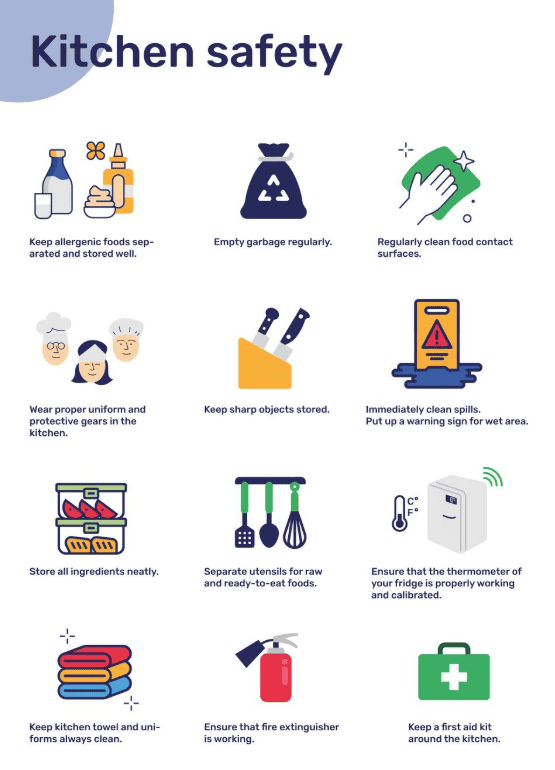
Keep a grease-rated kitchen fire extinguisher nearby. Class K fire extinguishers are designed for fires involving cooking media (fats, grease, and oil) in commercial cooking sites such as restaurants.
For any fire you can’t quickly get under control, call emergency services. Professional firefighters have equipment and training that homeowners do not.
Creating an Escape Plan
Know how to get out of your kitchen if fire blocks one escape route. Practice your escape route with all family members periodically.
Place smoke detectors near, but not in, your kitchen. Smoke alarms near the kitchen should be photoelectric type to lessen the occurrence of nuisance alarms due to cooking particles.
Safety Tip #8: Chemical and Cleaning Safety
Cleaning products do wonders in keeping kitchens sanitary, but misuse can result in serious health hazards. Many household cleaning products contain chemicals that become hazardous when combined.
Good ventilation prevents buildup of chemical fumes that can lead to breathing problems. Even natural cleaners can be irritating to sensitive people without good airflow.
Safe Cleaning Practices
NEVER combine different cleaning products. Ammonia and bleach combine to form chloramine — a toxic gas that can cause pneumonia and become deadly in a confined space.
Always read the label before using any cleaning product. Understanding mixing ratios and safety precautions will help prevent accidents and injury.
Keep cleaning products away from food preparation areas. Chemical residue on food poses potential risks to food safety and human health.
Natural Cleaning Alternatives
White vinegar is an excellent ingredient for cleaning solutions for most kitchen surfaces (it’s also safe for your countertops). It helps to clean away grease and eliminates odors.
Baking soda acts as a mild abrasive to scrub without scratching surfaces. It neutralizes acids and absorbs foul odors too.
Lemon juice is a natural antibacterial agent, which also provides fresh scents. The citric acid works to dissolve mineral deposits and stains.
How to Design Your Own Kitchen Safety Checklist
It takes time and practice to form safe habits. Begin by focusing on one or two areas you need to improve and add safety practices over time.
Regular safety assessments will help to identify new hazards as your skill set and culinary equipment evolve. Monthly reviews help maintain safety practices in your memory.
Weekly Safety Tasks
| Task | Frequency | Purpose |
|---|---|---|
| Sharpen knives | Weekly | Maintain safe cutting performance |
| Clean refrigerator | Weekly | Prevent bacterial growth |
| Check expiration dates | Weekly | Avoid spoiled food consumption |
| Test smoke detectors | Monthly | Ensure fire detection systems work |
| Inspect electrical cords | Monthly | Identify potential fire hazards |
Keep records of any safety concerns observed during your weekly inspections. Address issues promptly rather than putting off repairs or replacements.
Emergency Preparedness
Post emergency contact numbers in your kitchen. Include poison control, emergency services, and your family doctor for fast, easy access in emergencies.
Have a well-stocked first aid kit for kitchen accidents. Include burn gel, bandages and antiseptics specially selected for cooking mishaps.
Practice emergency drills with every family member. Everyone should know how to shut off gas, electricity and water in case of emergency.
Teaching Kitchen Safety to Others
Share these safety tips with all the people in your family who cook in your kitchen. Safety routines make the most sense when everyone is doing the same things.
Kids can also practice age-appropriate safety skills, gaining confidence and self-esteem while staying safe. Begin with basic concepts and develop more complex safety habits as they mature.
Age-Appropriate Safety Lessons
Young children can be shown how to wash hands before handling food and to stay away from hot objects. These simple lessons are the foundation for advanced safety practices.
Teenage children can learn proper knife techniques and safe use of heat sources. These skills set children up for cooking on their own safely.
Adults who visit to cook in your kitchen require quick orientations about your safety protocols. Point out where you keep fire extinguishers, first aid supplies and emergency shut-offs.
The Many Benefits of Kitchen Safety in the Long Run
Proper safety practices make you feel confident that you and your family are maintaining food safety. When you trust your safety systems, you can concentrate on creativity and flavors.
Well-maintained kitchens also hold their value better than neglected examples. With regular care and concern for safety you can avoid expensive repairs and replacements down the road.
You can be reasonably sure that you’re protecting your family’s wellness when you emphasize safe food handling and cooking. Less illness means more family dining together, and less time spent addressing preventable issues.
It also serves as education by modeling good safety habits that children will take with them into their own homes. These are lessons that carry over far beyond the kitchen to all other responsibilities in life.
Advanced Safety Considerations
Experienced cooks often develop shortcuts that may seem benign but can actually increase risks. Reviewing your habits will alert you to where complacency may have set in.
Those with special dietary needs or food allergies need specific safety precautions. Cross-contamination is more crucial for severe allergy sufferers.
Professional Techniques for Home Cooks
Setting up your home kitchen like a restaurant enhances both efficiency and safety. Preparing everything ahead of time minimizes the multitasking and hurried movements that so often lead to accidents while cooking.
Professional cooks use standard communication in settings where more than one person is working in the kitchen. Announcing “hot pan” or “knife behind” prevents accidents in crowded cooking areas.
Temperature logs help monitor food safety in commercial establishments. Simplified versions can be adapted by home cooks to keep track of refrigerator and freezer temperatures.
Technology and Kitchen Safety
Today’s kitchens feature modern technology with innovative safety components that were not available in earlier times. Induction cooktops, smart thermometers, and automatic shut-offs can supplement traditional safety strategies.
But technology should add to rather than replace basic safety knowledge. Relying too much on automation can make people complacent, with potentially dangerous results when that technology fails.
Smart Kitchen Safety Tools
Bluetooth meat thermometers send temperature alerts straight to your phone, so your meat won’t get overcooked and you can avoid foodborne illness.
Smart smoke alarms can tell the difference between cooking vapors and real fires to reduce false alarms while keeping you safe.
Automatic stove shut-off systems will automatically turn the stove off if a pot boils dry, or if the temperature gets too high. These systems offer backup protection for the busy cook who gets easily distracted.
Frequently Asked Questions
Q: How often do I need to replace my kitchen fire extinguisher? A: Inspect your fire extinguisher every month; replace it every 10 to 12 years or if it is used. Your pressure gauge should be in the green zone and there should be no visible signs of damage.
Q: What is the best treatment for minor kitchen burns? A: Cool (not ice-cold) running water for 10 to 15 minutes is best for minor burns. Butter, oil or ice will only make the injury worse. If a burn is larger than a quarter, or if it blisters, see a doctor.
Q: I cut chicken on one side of my cutting board and wash it before cutting vegetables on the other side. Is this safe? A: While washing is helpful, it’s better to use separate boards for meat and vegetables, thereby eliminating the possibility of cross-contamination altogether. Bacteria can get into knife grooves and resist casual cleaning.
Q: How do I know if my refrigerator is at a safe temperature? A: Monitor temperatures with an appliance thermometer to ensure temperatures stay at or below 40°F (4°C). Built-in temperature displays are not always accurate, especially on older refrigerator models.
Q: What should I do if I accidentally mix cleaning chemicals? A: Evacuate the area and ventilate it. If you have trouble breathing, feel dizzy or have other symptoms, call poison control at 1-800-222-1222.
Q: Can I defrost meat in hot water? A: Thawing in warm water puts meat in the bacterial danger zone. Cold water, refreshed every 30 minutes, is the most efficient safe method, or you can thaw in the refrigerator for the safest results.
Q: How can I make my kitchen more senior-friendly for elderly family members? A: Good lighting, non-slip mats on the floor, keeping frequently used items at appropriate heights so you’re not reaching up high, and lever-style handles that don’t require a strong grip.
Q: Should I be concerned about plastic containers melting in the microwave? A: Use only microwave-safe containers. Even microwave-safe plastics should be replaced if they’re pitted, cracked or cloudy.
Building Long-Term Safety Habits
Repetition makes kitchen safety less of a thing you think about and more of a thing you do. Just like driving safety, safety practices can become “second nature” after practice and attention.
Begin gradually incorporating these 8 key strategies rather than trying to implement them all at once. Focus on mastering one area at a time before taking on the next challenge.
Remember: Kitchen safety is about more than physical well-being. Safe cooking methods also help maintain food quality, prevent waste and lead to positive cooking experiences for the whole family.
When you are respectful of kitchen safety, you are a role model for anyone who comes into your cooking area. These practices foster an environment of safety that transcends individual cooking sessions and becomes a way of life.
The time spent learning to use your kitchen safely will make you feel confident in the kitchen for years to come! Each meal is a chance to practice these essential skills, all while serving the people you love most the most delicious food.