
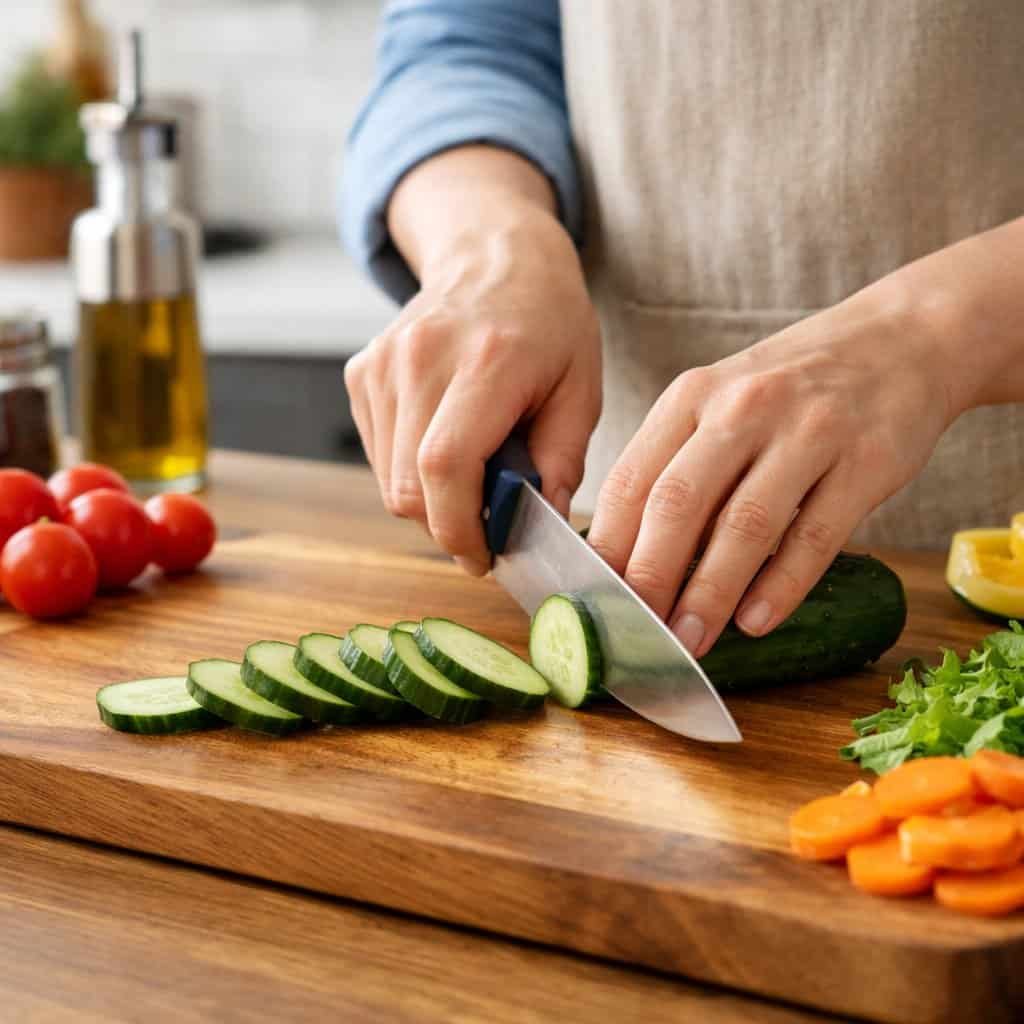
Simple kitchen safety habits are the foundation of preventing avoidable injuries at home, yet most people rarely think about them until something goes wrong. The kitchen feels familiar, comfortable, and routine. But this comfort can quietly reduce awareness, making everyday tasks more dangerous than they appear. The truth is, most kitchen accidents don’t happen because people lack skill. They happen because small safety habits are missing.
The encouraging reality is that kitchen injury prevention doesn’t require drastic change. It requires awareness, consistency, and small adjustments in daily behavior. When you develop simple kitchen safety habits, you reduce risk naturally while improving confidence and control.
These habits don’t interrupt your routine. They strengthen it.
Why Simple Kitchen Safety Habits Matter More Than You Think
Most kitchen accidents occur during routine tasks cutting vegetables, preparing ingredients, or handling tools you’ve used hundreds of times before. Familiarity creates comfort, but comfort can lead to reduced attention.
This is where simple kitchen safety habits become powerful. They create structure and predictability in your environment. Instead of reacting to unexpected slips or mistakes, your habits prevent them before they happen.
Kitchen accident prevention isn’t about being overly cautious. It’s about being intentionally prepared.
When safety becomes part of your routine, control becomes automatic.
These kitchen safety tips at home protect you quietly, without effort or interruption.
Knife Safety Habits That Prevent Serious Injuries
Knives are one of the most essential tools in any kitchen and also one of the most misunderstood in terms of safety. Many people assume that dull knives are safer because they feel less threatening. In reality, dull knives create far greater risk.
A dull blade requires more pressure to cut. Increased pressure reduces control. And reduced control increases the likelihood of slipping.
Sharp knives behave differently. They respond predictably. They cut cleanly and require less force. This improves precision and reduces unexpected movement.
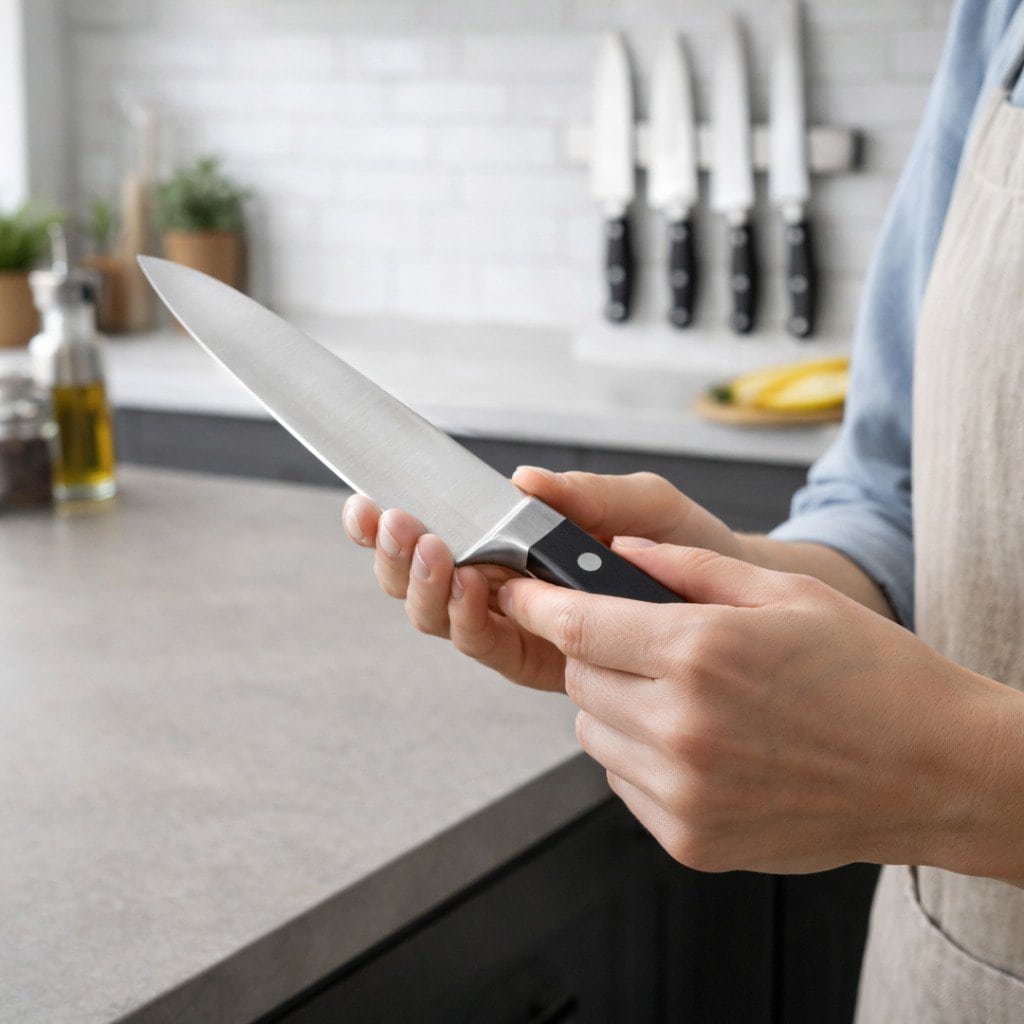
Developing proper knife safety habits begins with maintaining your tools. Regular sharpening ensures that your knife works with you, not against you.
This is why maintaining your knife properly plays a central role in kitchen injury prevention. A well-maintained knife improves safety, efficiency, and overall cooking confidence.
If you’ve ever noticed yourself forcing a knife through food, it’s a sign your tool needs attention. Restoring sharpness restores control.
Safe knife maintenance is not about perfection. It’s about consistency.
Safe Cooking Habits That Improve Awareness and Control
One of the most overlooked causes of kitchen accidents is rushing. Cooking is often treated as a task to complete quickly, especially during busy days. But speed reduces awareness.
Safe cooking habits encourage intentional movement rather than rushed movement.
When you slow down slightly, your coordination improves. Your hands and eyes work together more effectively. Your movements become deliberate and controlled.
This reduces the likelihood of mistakes.
Awareness is one of the most powerful tools in kitchen accident prevention. It doesn’t require effort. It simply requires presence.
Cooking becomes safer when your attention remains where your hands are.
Distractions, multitasking, and rushing create uncertainty. Calm, focused preparation creates safety.
Kitchen Accident Prevention Starts With a Stable Workspace
A stable workspace creates predictability. Predictability creates safety.
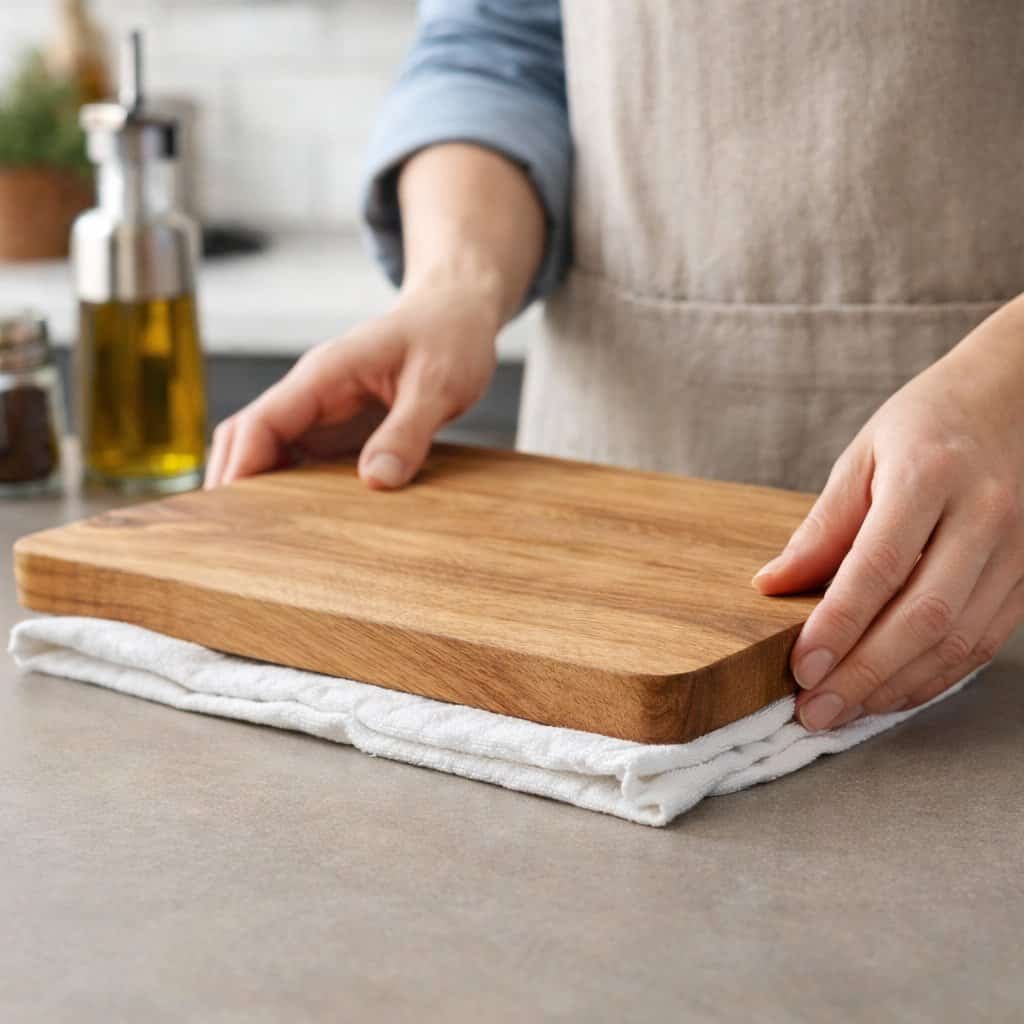
Cutting boards that shift or slide introduce unnecessary risk. Even small movements can reduce control.
Fortunately, this is one of the easiest problems to solve. Placing a damp cloth or towel under your cutting board stabilises the surface completely.
This simple adjustment is one of the most effective kitchen safety tips at home.
A stable surface allows your movements to remain controlled and precise.
Kitchen accident prevention often depends on these small environmental adjustments.
Your workspace should support you, not challenge you.
Organised Kitchens Support Safer Cooking Habits
Clutter reduces clarity. When your workspace is crowded, your brain divides attention between multiple objects.
This increases the likelihood of mistakes.
An organised workspace improves visibility and movement. It allows you to focus fully on your task.
This doesn’t require perfection. It requires enough space to move comfortably and confidently.
Simple kitchen safety habits include maintaining an environment that supports awareness.
Clarity improves control.
Control improves safety.
Proper Knife Storage Is Essential for Kitchen Injury Prevention
Safety doesn’t begin when you start cutting. It begins with how your tools are stored.
Loose knives hidden in drawers create invisible risks. Reaching into a drawer without seeing the blade clearly can result in injury before preparation even begins.
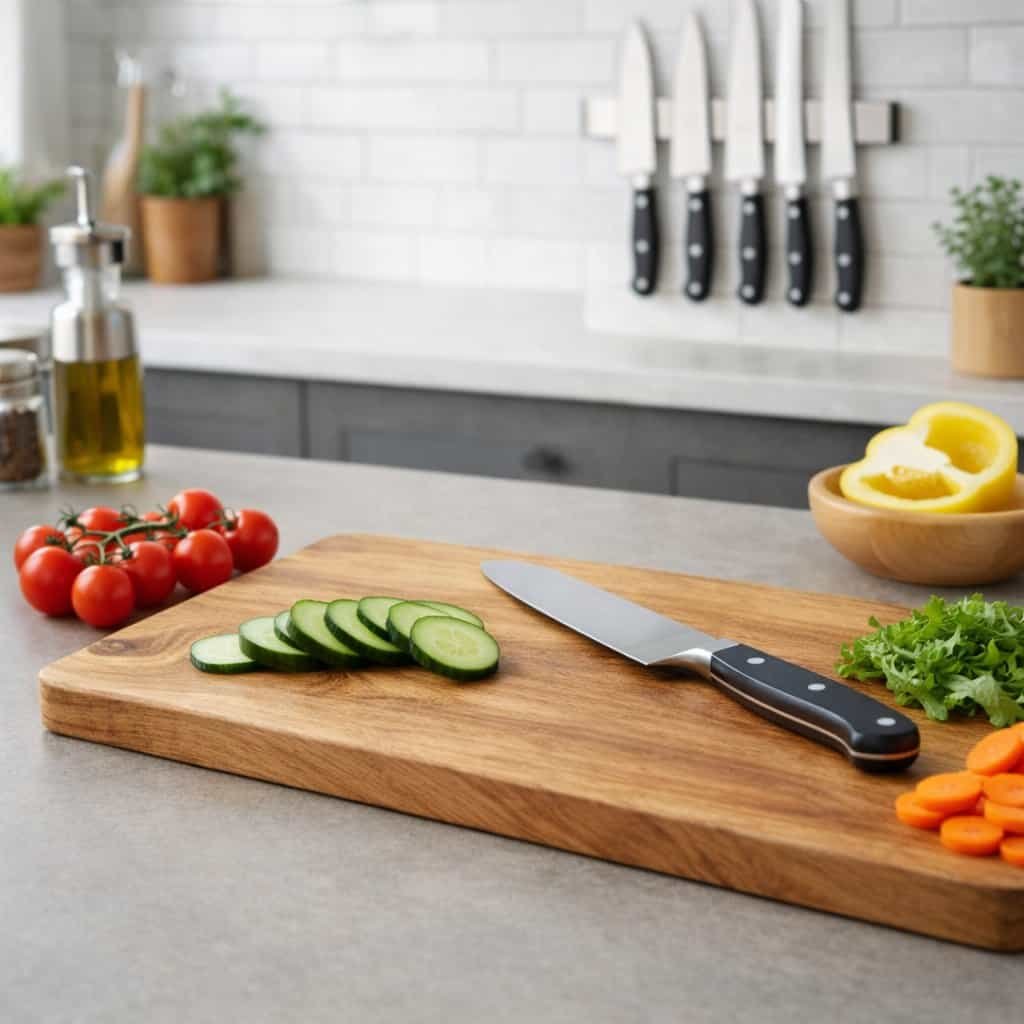
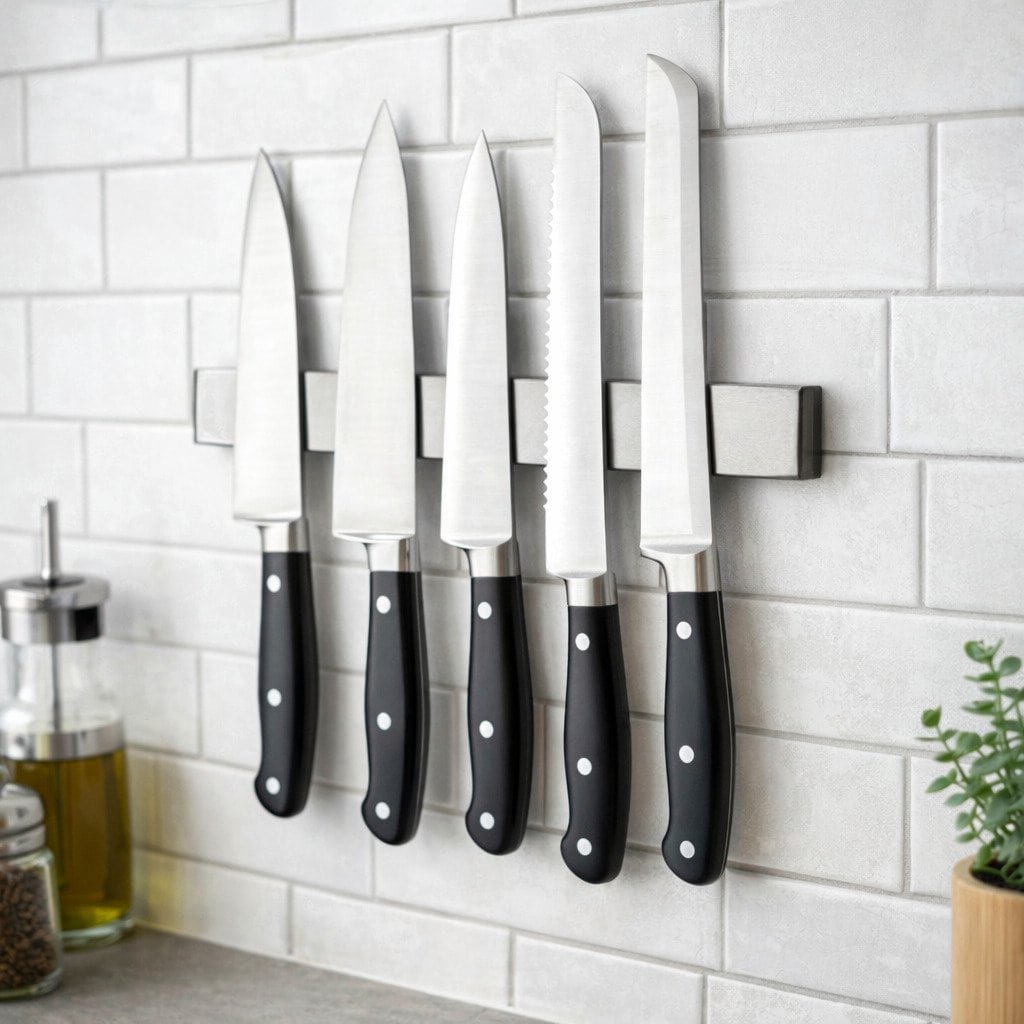
Proper storage keeps blades visible, accessible, and safe.
Knife blocks, drawer organisers, and magnetic strips all improve safety while preserving blade condition.
These solutions protect both the user and the tool.
Knife safety habits extend beyond sharpening. They include storage, handling, and maintenance.
When your tools are organised properly, risk decreases naturally
Simple Kitchen Safety Habits Build Long-Term Confidence
One of the most overlooked benefits of safety habits is confidence. When your tools function properly and your workspace supports you, cooking becomes easier and more enjoyable.
You stop second-guessing your movements.
You trust your control.
You move naturally and confidently.
Simple kitchen safety habits reduce uncertainty. They replace hesitation with clarity.
Confidence grows when risk decreases.
This creates a safer and more enjoyable cooking experience overall.
Kitchen Injury Prevention Is Built Through Consistency
Kitchen injury prevention is not achieved through a single decision. It develops through repetition.
Each time you maintain your tools, organise your workspace, and move intentionally, you reinforce safety.
Over time, these habits become automatic.
You don’t need to think about them consciously.
They become part of how you cook.
This is the true goal of safety—not effort, but integration.
Why These Simple Kitchen Safety Habits Protect You Every Day
The kitchen will always involve tools, movement, and attention. Risk cannot be eliminated entirely. But it can be dramatically reduced.
Simple kitchen safety habits provide structure, awareness, and control.
They allow you to cook confidently.
They protect you quietly.
They improve your experience every day.
Kitchen accident prevention doesn’t require complexity. It requires consistency.
Small habits create powerful protection over time.
Conclusion: Safety Is Built Through Simple Kitchen Safety Habits
Simple kitchen safety habits are one of the most effective ways to prevent kitchen accidents and protect yourself at home. They improve awareness, strengthen control, and create a safer environment without disrupting your routine.
By maintaining your tools, organising your workspace, and moving intentionally, you reduce risk naturally.
Kitchen injury prevention isn’t about restriction. It’s about empowerment.
These habits allow you to cook with confidence, clarity, and control.
And over time, they become second nature.
Safety becomes part of who you are in the kitchen.