
A 3 stage knife sharpeners is often marketed as a simple solution for dull kitchen knives, but many home cooks are unsure whether it genuinely improves knife performance or just creates a short-term effect. With so many sharpening methods available, it’s reasonable to question whether a multi-slot manual sharpener is enough for everyday use.
This article explains how these sharpeners work, what each stage is designed to do, and when they are and aren’t a sensible option for home kitchens
How 3-Stage Knife Sharpeners Are Designed to Work
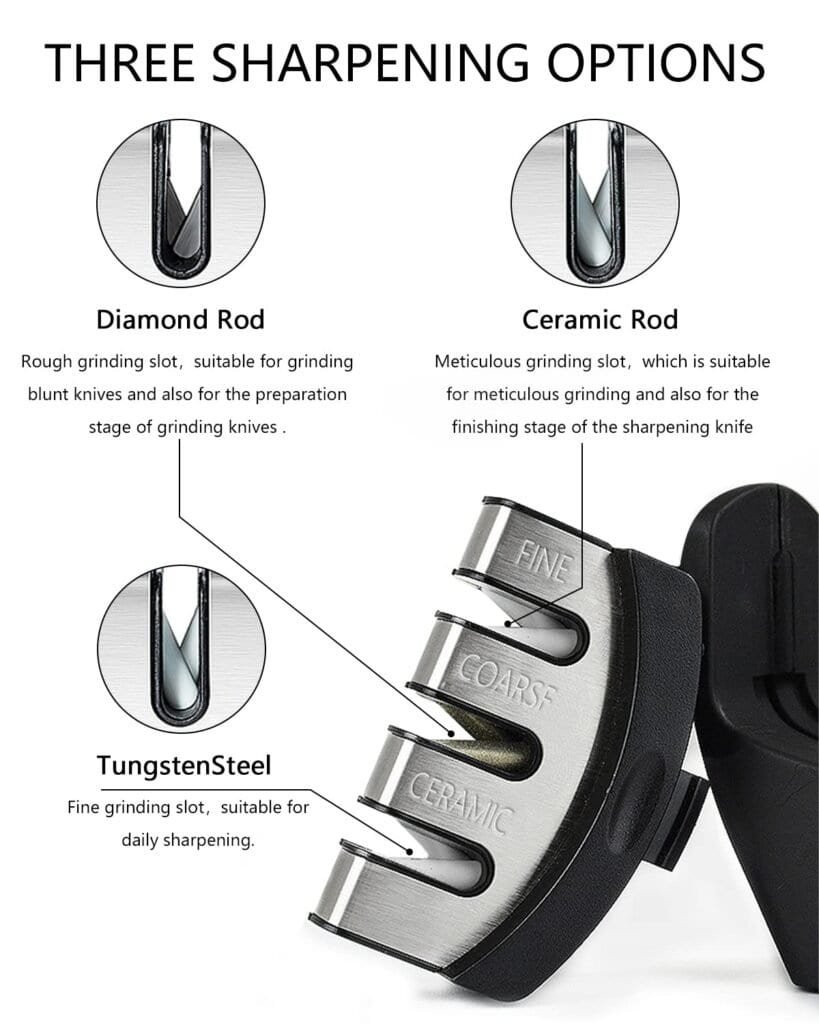
Most multi-slot sharpeners follow a gradual sharpening process rather than trying to restore a blade in a single step. Each slot is intended to address a different level of wear, making the process easier to control for non-professionals.
The first stage reshapes a worn edge by removing a small amount of metal. This step is only needed occasionally. The second stage refines the edge, improving sharpness and consistency. The final stage smooths and aligns the blade so it cuts more predictably during normal food preparation.
This structured approach removes much of the guesswork that causes uneven sharpening when people try to sharpen freehand.
Do They Actually Improve Knife Performance?
For everyday kitchen use, these sharpeners do work when used correctly. They are particularly effective at restoring cutting ability to dull household knives and maintaining sharpness over time.
Their main benefit isn’t extreme sharpness, but control. Knives that cut smoothly require less pressure, which reduces slipping and makes handling safer during routine cooking tasks.
That said, they are not designed to fix severely damaged blades or replace professional sharpening for high-end knives. Their purpose is maintenance, not repair.

Why Results Vary Between Households
When people say these sharpeners don’t work, it’s often due to how they’re used rather than the tool itself. Applying too much pressure, rushing through the stages, or overusing the coarse slot can reduce effectiveness and wear down the blade unnecessarily.
Another common issue is expectation. These tools are designed to produce safe, practical sharpness, not razor-thin edges. When used gently and consistently, the results are reliable but they won’t replicate professional techniques.

When a 3-Stage Knife Sharpener Makes Sense
This type of sharpener is well-suited to homes where:
- Knives are used regularly
- Multiple people share the same tools
- Ease of use matters more than technical precision
- Safety and consistency are priorities
For busy households, a guided system provides predictable results without requiring specialist knowledge.
When It May Not Be the Right Tool
Certain knives particularly high-end or specialised blades may require alternative sharpening methods. Heavily chipped knives or blades with unusual angles are also better handled by professionals or more advanced tools.
It may also not appeal to those who enjoy the craft of sharpening and want full control over angles and finishes.
Safety Considerations for Home Sharpening
Guided sharpeners reduce many risks associated with freehand sharpening, but safe handling still matters. Using a stable surface, light pressure, and slow strokes helps maintain control. For beginners, protective gloves can add confidence during the process.
Regular maintenance with safe technique is far better than waiting until knives become dangerously dull.

Final Verdict
Used correctly, a 3-stage knife sharpener is a practical maintenance tool for everyday kitchens. It won’t replace professional sharpening, but it doesn’t need to. Its value lies in keeping knives consistently sharp enough to cut smoothly, safely, and with less effort.
For most households, that balance is exactly what makes it effective.