

How to sharpen kitchen knives safely at home is something many people want to learn, but often delay. After realising their knives are dull, most home cooks still hesitate because sharpening feels risky, technical, or easy to get wrong. In reality, learning how to sharpen kitchen knives safely is less about skill and more about following a calm, controlled process designed for everyday kitchens.
This guide explains how to sharpen kitchen knives safely at home using simple steps that prioritise control, consistency, and confidence not professional techniques or complicated tools.
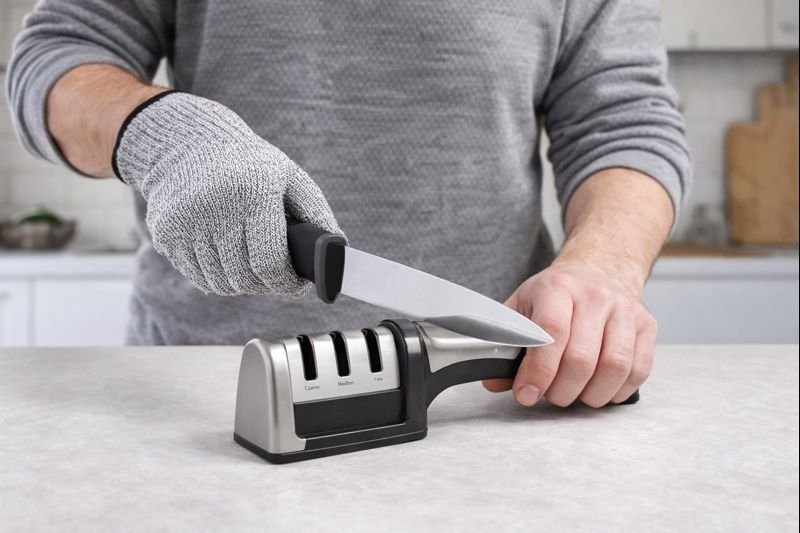
Why learning how to sharpen kitchen knives safely matters
As discussed in Why Dull Knives Are Dangerous, dull blades increase the risk of slipping and loss of control. And as explored in Why Knife Sharpening Feels Scary, many people avoid sharpening altogether because they associate it with danger.
The result is a common cycle in many homes:
- knives become dull
- more pressure is applied during cutting
- control decreases
- accidents become more likely
Understanding how to sharpen kitchen knives safely breaks this cycle and restores predictability to everyday cooking.
What it really means to sharpen kitchen knives safely
Sharpening kitchen knives safely does not mean making them razor sharp. It means restoring a smooth, predictable edge that responds to light pressure and steady movement.
Safe knife sharpening focuses on:
- control rather than force
- consistency rather than precision
- protection rather than speed
When these principles are followed, sharpening becomes routine instead of intimidating.
Step 1: Prepare a safe and stable sharpening setup
Before sharpening, take a moment to prepare your space.
- Place the sharpener on a flat, non-slip surface
- Clear the counter of distractions
- Ensure good lighting
- Wear a cut-resistant glove on the hand holding the knife (recommended)
This preparation reduces tension and helps you approach sharpening calmly.
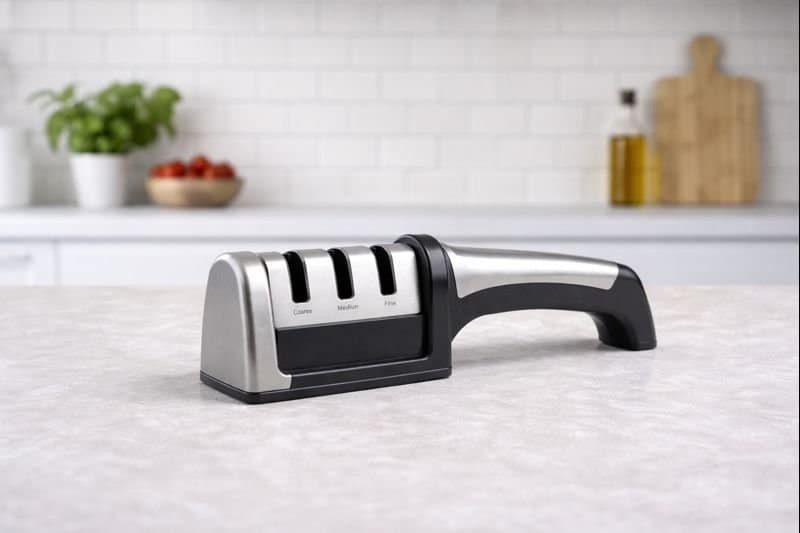
Step 2: Use a guided system to sharpen kitchen knives safely
For most homes, guided sharpening systems are the safest option. They remove guesswork by keeping the blade aligned and reducing uneven pressure.
Using a guided sharpener helps people learn how to sharpen kitchen knives safely at home because:
- the blade angle is controlled
- exposed edges are minimised
- sharpening happens in gradual stages
This makes the process predictable and easier to manage.
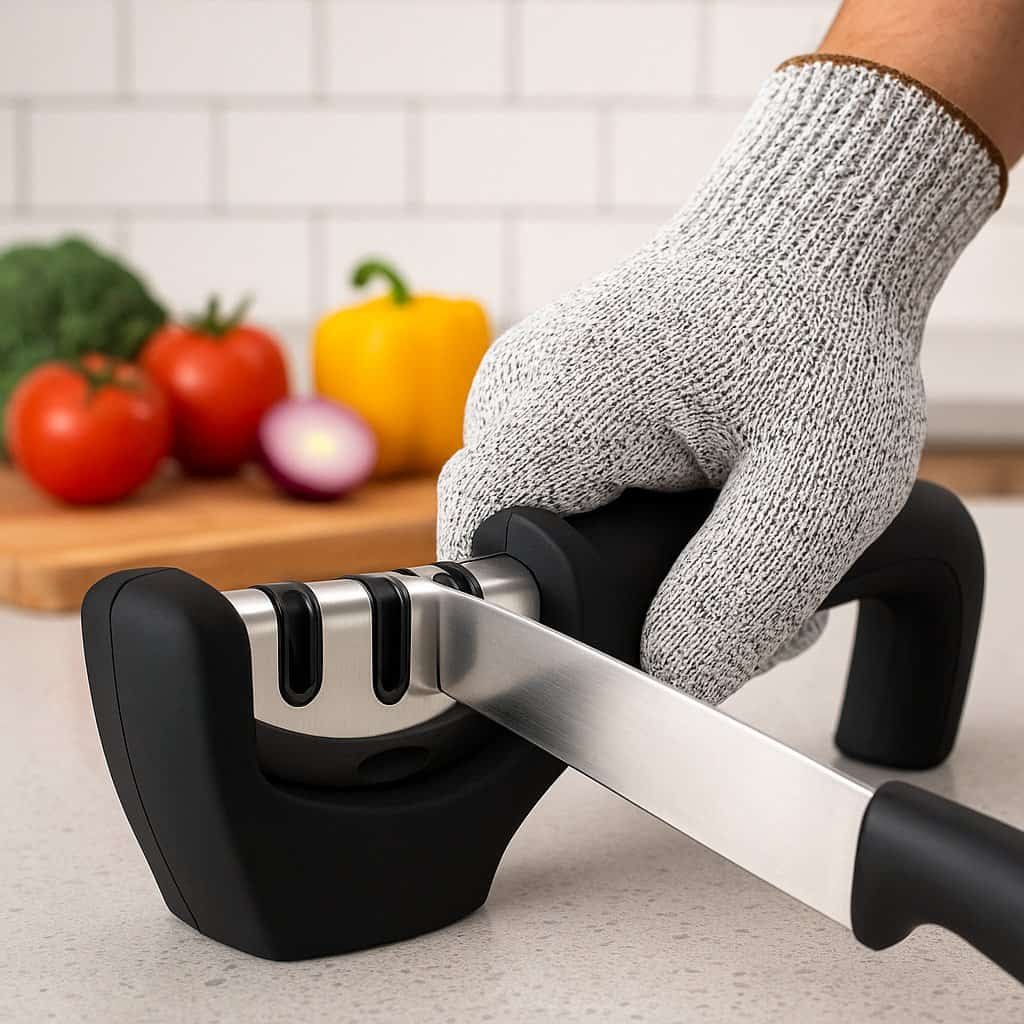
Step 3: Use slow, controlled movements
Insert the knife into the sharpening slot and pull it through gently.
To sharpen kitchen knives safely:
- apply light pressure only
- pull the blade straight toward you
- move slowly and deliberately
- avoid rushing or forcing the knife
One controlled pass is safer and more effective than several aggressive ones.
Step 4: Progress gradually through sharpening stages
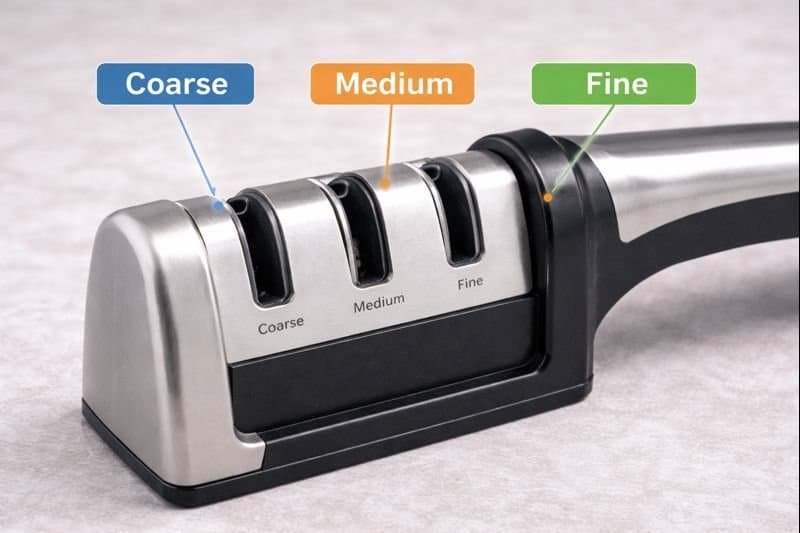
If you are using a multi-stage sharpener:
- start with the coarse stage only if the knife is very dull
- move to finer stages to smooth and refine the edge
- avoid repeating stages unnecessarily
Learning how to sharpen kitchen knives safely is about gradual improvement, not speed.
Step 5: Test sharpness safely
Never test sharpness with your fingers.
Safe ways to test include:
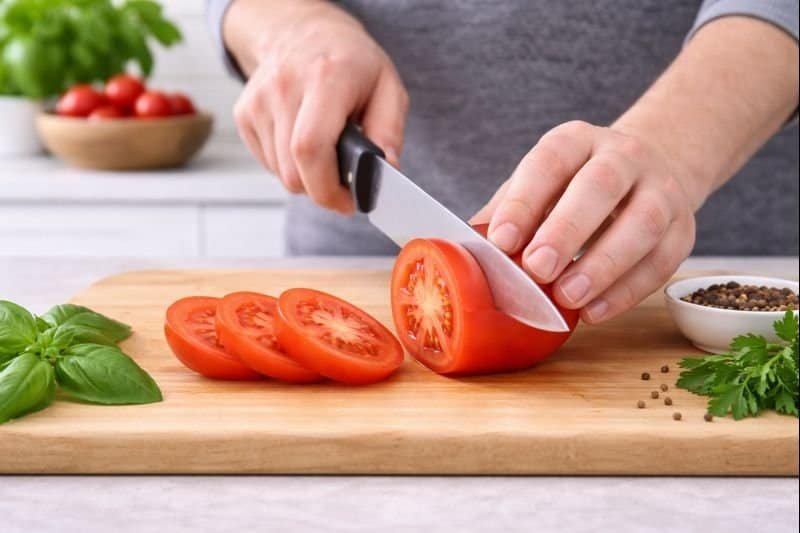
- slicing soft food like a tomato
- cutting paper on a flat surface
- observing how smoothly the knife moves through ingredients
If the knife cuts cleanly without force, the edge is ready.
Common mistakes when sharpening kitchen knives at home
Many accidents happen not because people sharpen knives, but because they haven’t learned how to sharpen kitchen knives safely.
Common mistakes include:
- pressing too hard
- rushing the process
- sharpening too infrequently
- skipping safety preparation
- using unstable or poorly designed tools
Avoiding these mistakes makes sharpening far more manageable.
How often should you sharpen kitchen knives safely?
For most households:
- light sharpening every few weeks is sufficient
- avoid waiting until knives are extremely dull
Regular, gentle maintenance is safer than infrequent, aggressive sharpening and helps keep knives predictable during everyday use.
A practical, confidence-led approach to knife sharpening
At DTDF, the focus is on practical kitchen safety not professional techniques. Learning how to sharpen kitchen knives safely at home should feel approachable, not stressful.
Guided sharpening tools and simple safety measures exist to help people maintain their knives calmly and consistently, without fear or guesswork.
Final thought
Learning how to sharpen kitchen knives safely isn’t about mastering technique. It’s about restoring control, reducing risk, and building confidence in everyday cooking.
When knives are sharpened calmly and predictably, the kitchen becomes a safer place to work one step at a time.