

The kitchen is one of the busiest rooms in every home and also one of the most accident-prone. Understanding the most common kitchen injuries is the first step toward preventing them. Every day, small mistakes, rushed habits, and poorly maintained tools lead to avoidable cuts, burns, and slips. The good news is that with a little awareness and a few smart changes, most kitchen accidents can be stopped before they happen.
Many people assume that kitchen injuries are just part of everyday life. They believe that getting a few cuts and burns is normal when cooking. However, most injuries are not random at all. They are the result of predictable habits and preventable mistakes. Once you understand where the dangers are, you can begin to cook with more confidence and far less risk.
This guide explains the most common kitchen injuries, why they happen, and how simple changes can make your home kitchen much safer.

Why Kitchen Injuries Happen So Often
Cooking involves heat, sharp tools, heavy objects, and slippery surfaces. Combine those with busy schedules, distractions, and tiredness, and accidents become more likely.
Most injuries happen because of:
- Rushing through food preparation
- Using the wrong tools for the job
- Poor lighting or cluttered workspaces
- Lack of attention or distractions
- Dull or damaged equipment
- Unsafe habits learned over time
Recognizing these risk factors is essential. When you know what causes problems, you can begin to change the way you cook and prepare food.
Most Common Kitchen Injuries A Practical Breakdown
When we talk about the most common kitchen injuries, several types appear again and again in homes all over the world. Let’s look at them one by one.
Knife Cuts The Number One Kitchen Injury
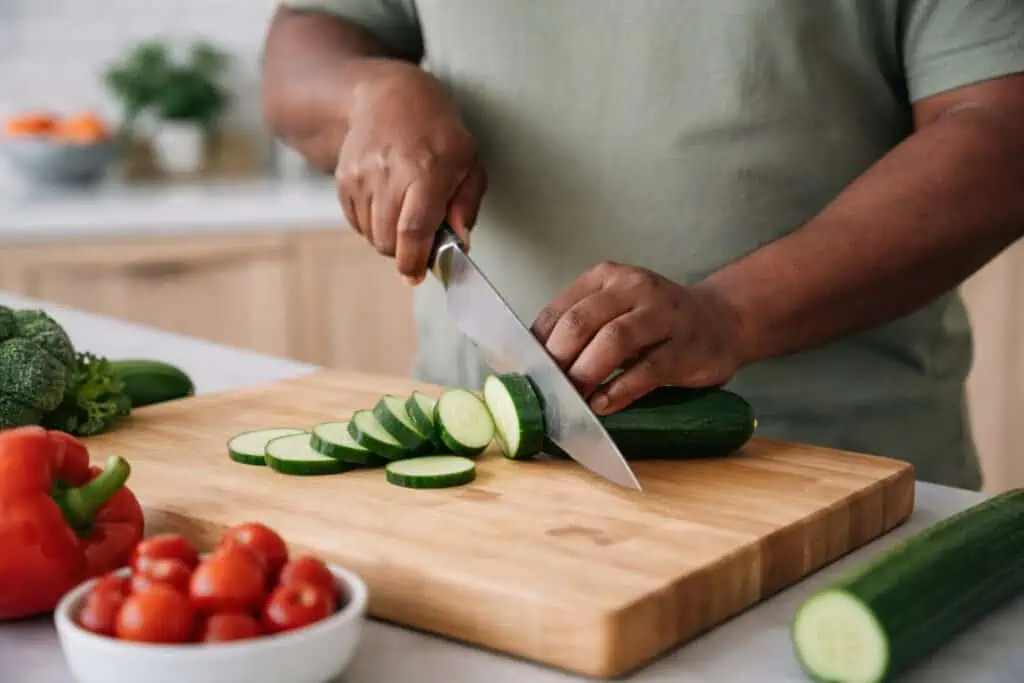
Knife cuts are by far the most frequent of all kitchen injuries. Almost every cooking task involves cutting, slicing, or chopping. Because of this, knives are responsible for more accidents than any other kitchen tool.
Many people assume that sharp knives are the problem. In reality, the opposite is true. Dull knives are far more dangerous. A blunt blade requires extra force, which makes it more likely to slip and cause injury.
Common situations where knife cuts occur include:
- Trying to cut hard vegetables with a dull knife
- Holding food incorrectly while slicing
- Using the wrong size knife
- Cutting too quickly while distracted
- Reaching into drawers with loose knives
Prevention Tips:
- Keep knives properly sharpened at all times
- Use a stable cutting board that does not slide
- Curl your fingers inward while cutting
- Never rush chopping tasks
- Store knives safely in blocks or guards
A well-maintained sharp knife is one of the safest tools in your kitchen.
Burns and Scalds from Heat and Steam
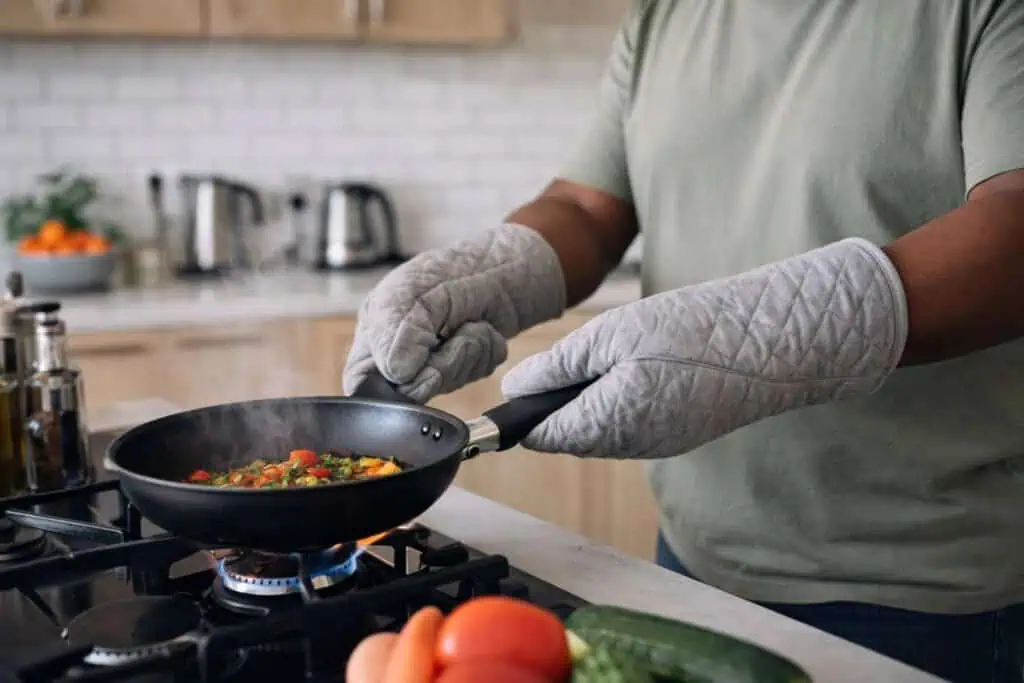
Burns are another major part of the most common kitchen injuries. Hot pans, boiling water, steam, and oil splashes are everyday hazards that can cause serious pain.
These injuries often happen in very ordinary situations:
- Grabbing a hot pan handle by mistake
- Reaching over boiling pots
- Removing food from the oven without protection
- Spilling hot drinks or soup
- Touching hot baking trays
Prevention Tips:
- Always use oven gloves or heat-resistant mitts
- Turn pan handles inward on the stove
- Open pot lids away from your face
- Keep children and pets away from cooking areas
- Avoid loose sleeves near open flames
Slowing down around heat is one of the simplest ways to avoid injury.
Slips, Trips, and Falls in the Kitchen
Many people are surprised to learn that slips and falls are among the most common kitchen injuries. Kitchens are full of liquids, oils, and food scraps that can quickly make floors dangerous.
Accidents happen when:
- Water splashes onto tiled floors
- Oil drips while frying
- Food spills are ignored
- People wear smooth-soled shoes
- Clutter blocks walkways
Prevention Tips:
- Clean spills immediately
- Use non-slip kitchen mats
- Keep floors dry and tidy
- Avoid running in the kitchen
- Wear sensible footwear
A clean, organized kitchen is automatically a safer kitchen.

Injuries from Graters, Peelers, and Mandolins
Not all sharp tools in the kitchen are knives. Graters, vegetable peelers, and mandolin slicers cause many small but painful injuries.
These accidents usually happen when:
- People grate food down to the very last piece
- Fingers get too close to sharp blades
- Safety guards are ignored
- Tools are used too quickly
- Equipment is old or damaged
Prevention Tips:
- Use protective guards whenever available
- Slow down as food pieces get smaller
- Replace blunt or damaged tools
- Never try to clean blades with bare hands
Respect every sharp tool, not just knives.
Appliance-Related Accidents
Modern kitchens are full of helpful machines blenders, mixers, food processors, and electric slicers. While these save time, they can also be dangerous if used carelessly.
Common appliance injuries include:
- Cuts from blender blades
- Electric shocks from wet hands
- Fingers caught in moving parts
- Burns from toasters or grills
Prevention Tips:
- Unplug appliances before cleaning
- Never reach into a plugged-in device
- Keep cords away from water
- Read safety instructions carefully
- Replace damaged appliances immediately
Treat kitchen machines with caution and respect.

Food Poisoning and Hygiene-Related Injuries
Not all kitchen injuries involve cuts or burns. Illness from poor food hygiene is also one of the most common kitchen injuries people experience.
Problems occur when:
- Raw and cooked foods mix
- Meat is undercooked
- Hands are not washed
- Old leftovers are eaten
- Surfaces are not cleaned
Prevention Tips:
- Wash hands before and after handling food
- Use separate boards for meat and vegetables
- Store foods at correct temperatures
- Clean countertops thoroughly
- Follow safe cooking times
A safe kitchen protects your health as well as your body.
The Real Causes Behind Most Kitchen Accidents
When you study kitchen injuries closely, three main causes appear again and again:
- Rushing
- Distractions
- Poorly maintained tools
Most accidents do not happen because cooking is dangerous. They happen because people are tired, in a hurry, or not paying attention.
By slowing down and improving your habits, you remove most of the risk instantly.
Everyday Habits That Prevent the Most Common Kitchen Injuries
You don’t need professional training to stay safe. A few daily routines can make a huge difference.
Before You Start Cooking:
- Clear and organize your workspace
- Make sure you have good lighting
- Check that your knives are sharp
- Put away clutter and distractions
While Cooking:
- Focus on one task at a time
- Keep handles turned inward
- Use the right tool for each job
- Clean spills as soon as they happen
After Cooking:
- Store knives safely
- Clean tools properly
- Unplug appliances
- Keep floors dry
Turning these steps into habits dramatically reduces the chance of injury.
Teaching Children to Stay Safe in the Kitchen
Children are naturally curious and love to help with cooking. However, they are also at higher risk for the most common kitchen injuries.
To keep kids safe:
- Supervise them at all times
- Give age-appropriate tasks
- Keep sharp tools out of reach
- Teach them about heat and danger
- Encourage slow, careful movements
With proper guidance, the kitchen can be a safe learning space for children.
When to Seek Medical Help
Even in the safest kitchens, accidents can still happen. It is important to know when to get professional help.
Seek medical attention if:
- A cut is deep or keeps bleeding
- A burn covers a large area
- You feel faint after an accident
- Food poisoning symptoms are severe
Never ignore injuries that seem serious
Final Thoughts
The most common kitchen injuries are not unavoidable. They happen because of habits, tools, and environments that can all be improved.
By staying organized, keeping your knives sharp, paying attention, and following simple safety steps, you can make your kitchen a much safer place.
Cooking should be enjoyable, relaxing, and creative not painful or stressful. With a little care and awareness, you can protect yourself and your family every single day.
Stay safe, cook smart, and take control of your kitchen safety today.