

Why Dull Knives Are Dangerous
Why dull knives are dangerous is something most people don’t think about. Many believe sharp knives are the real risk in the kitchen, but in everyday cooking, accidents often happen for the opposite reason. This article explains why dull knives increase the chance of injury, where most homes go wrong, and what actually makes knife use safer and more controlled.
If you’ve ever slipped while cutting vegetables, pressed harder than you should, or felt uneasy using your kitchen knives, you’re not alone. These small moments are often signs of a problem most households overlook.
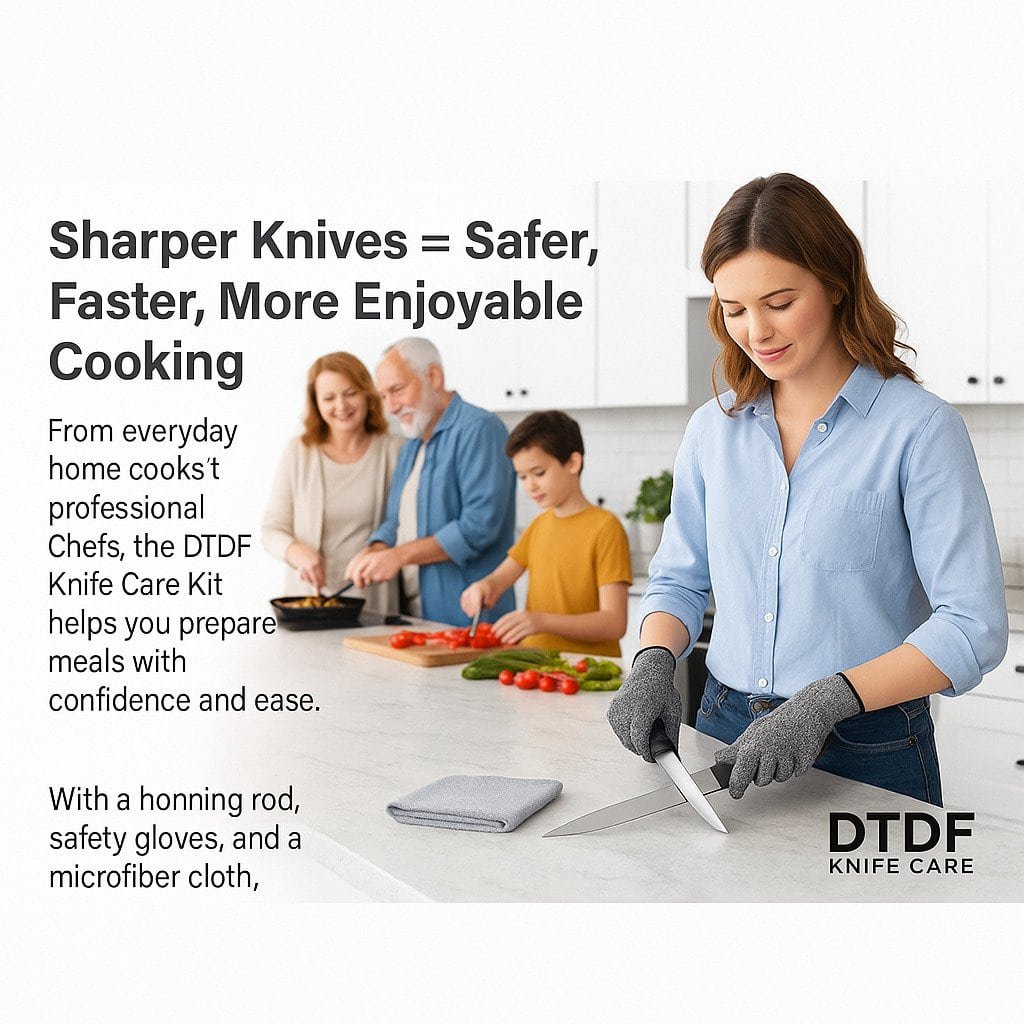
The common myth: “Sharp knives are more dangerous”
The idea that sharp knives are risky feels logical. After all, sharp objects can cut. But in the kitchen, danger isn’t just about sharpness it’s about control.
When a knife is sharp, it cuts with minimal pressure. The blade goes where you guide it. When a knife is dull, it resists the food, forcing you to push harder. That extra force increases the chance of slipping, twisting, or losing balance mid-cut.
This is where many kitchen accidents begin.
Why dull knives are dangerous in real life
A dull knife creates several risks at once, especially during everyday cooking tasks.
1. You apply more pressure
Dull blades don’t glide through food. They drag. To compensate, you press down harder, which reduces control and increases the likelihood of the blade slipping suddenly.
2. Slipping becomes more likely
When a dull knife fails to bite into food properly, it often slides off smooth surfaces like onions, tomatoes, or courgettes. These sudden slips are a major cause of finger and hand injuries.

3. Cuts are often worse, not better
Dull knives tend to cause ragged cuts rather than clean ones. These injuries can be more painful and slower to heal than clean cuts from a sharp blade.
4. Fatigue increases risk
Using a dull knife is physically tiring. Over time, tired hands and reduced focus make accidents more likely especially during longer prep sessions.
All of this is why dull knives are dangerous, even though they don’t look intimidating.
Why most homes delay sharpening knives
If dull knives are risky, why do so many households keep using them?
The answer usually comes down to fear, confusion, or inconvenience.
-
Many people think sharpening is difficult or technical
-
Some worry they’ll damage the knife
-
Others associate sharpening with professional tools or training
-
Electric sharpeners and stones can feel intimidating
As a result, sharpening gets postponed again and again — until knives become unsafe to use.
The real issue isn’t sharpness — it’s unsafe sharpening
Another reason people avoid sharpening is concern about doing it wrong.
Freehand sharpening, angle control, and inconsistent pressure can damage blades if done incorrectly. That’s why many home cooks never feel confident enough to sharpen regularly.
The solution isn’t avoiding sharpening it’s simplifying it.
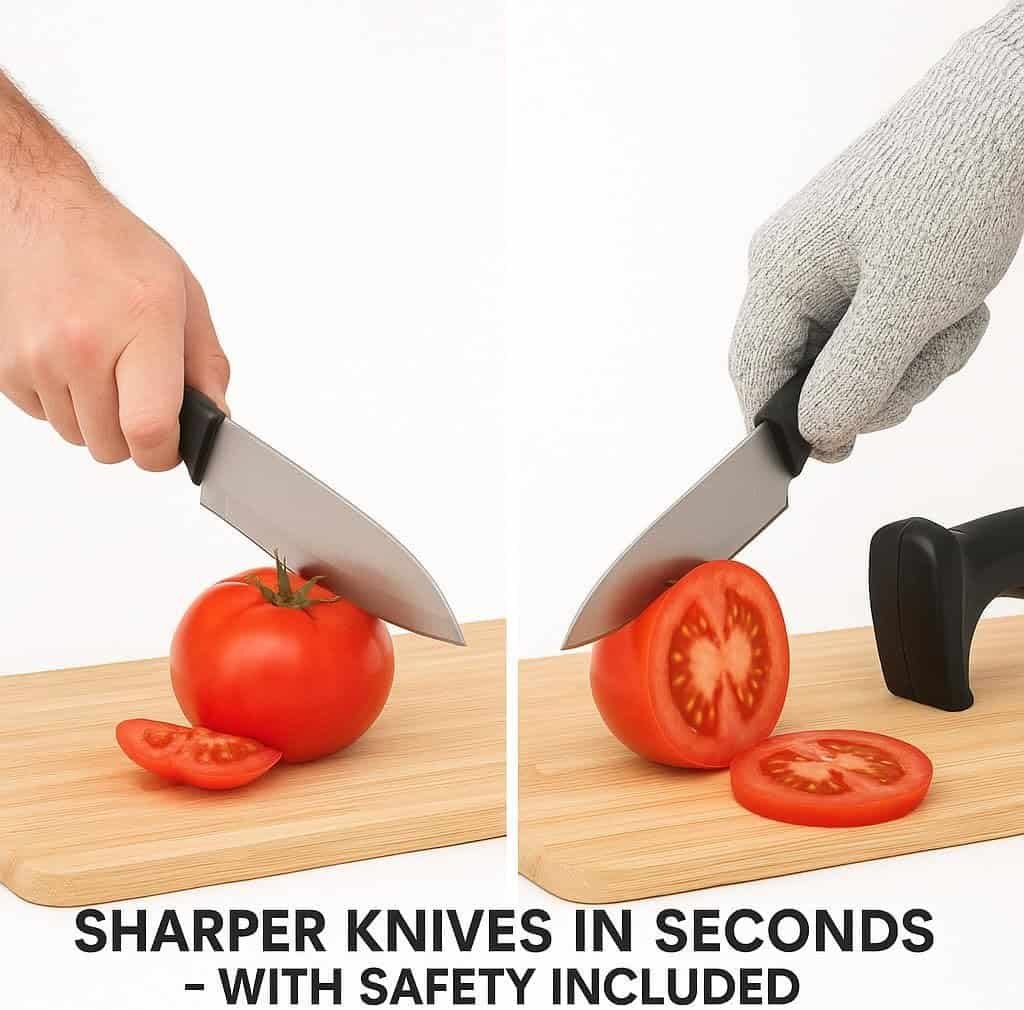
What actually makes knife use safer at home
Kitchen safety improves when three things come together:
1. Consistent blade maintenance
Knives don’t need to be razor-sharp. They need to be properly maintained so they cut smoothly without force.
2. Controlled sharpening systems
Simple, guided systems help keep blades aligned while reducing guesswork. This removes the fear factor that stops many people from sharpening in the first place.
3. Hand protection
Even with good tools, safety matters. Protective gloves reduce risk during sharpening and help build confidence, especially for beginners.
When sharpening feels safe and manageable, people are far more likely to maintain their knives properly.
A practical approach most homes can handle
For everyday kitchens, complex sharpening setups often create more hesitation than help. What works best for most households is a clear, step-by-step system that restores dull blades without requiring technical skill.
A three-stage approach is commonly used because it:
-
realigns dull edges
-
refines the blade
-
smooths the finish for safer cutting
When paired with basic hand protection, this method allows people to sharpen confidently without forcing the blade or rushing the process.
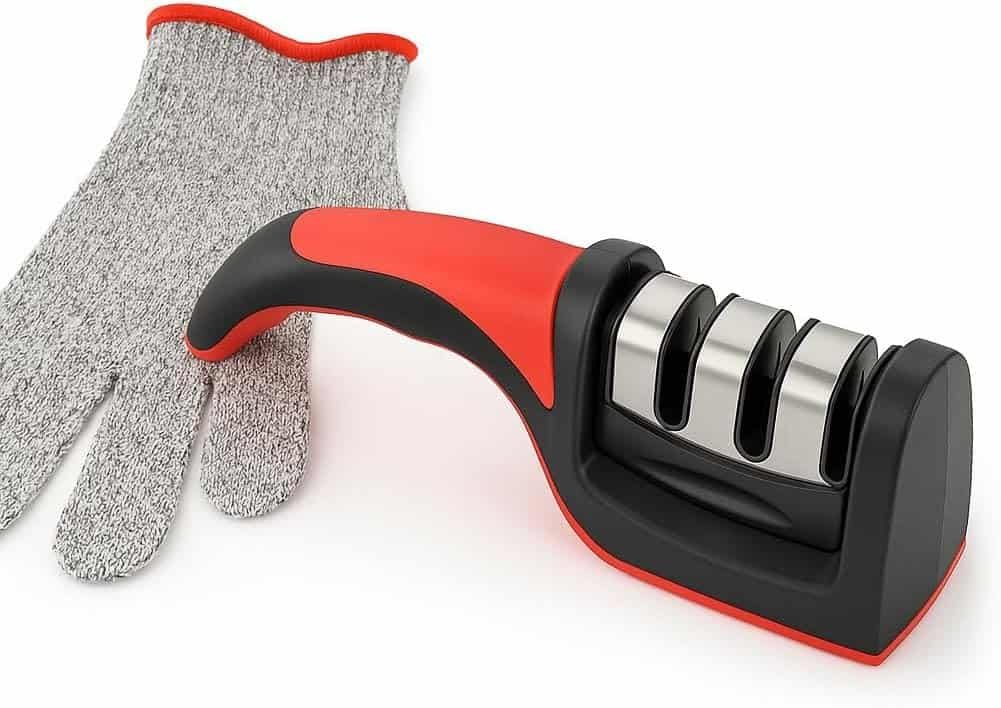
At DTDF, this philosophy is exactly why tools like the DTDF 3-Stage Manual Knife Sharpener with Safety Glove exist to remove fear, not create it. The goal isn’t extreme sharpness; it’s control, safety, and everyday usability.
Everyday knife safety tips (even without buying anything)
Regardless of what tools you use, these habits reduce risk immediately:
-
Always cut on a stable chopping board
-
Keep knives clean and dry while working
-
Avoid forcing cuts stop and adjust instead
-
Store knives properly to protect the edge
-
Sharpen regularly rather than waiting too long
These small changes make a noticeable difference.
The takeaway most kitchens miss
harp knives aren’t the problem.
Neglected knives are.
Understanding why dull knives are dangerous changes how you think about kitchen safety. With the right approach, sharpening becomes a normal part of maintenance — not something to fear or postpone.
When knives cut cleanly and predictably, cooking becomes faster, safer, and far less stressful.
Final thought
Kitchen safety isn’t about having professional tools or perfect technique. It’s about using equipment that supports control, confidence, and consistency every day, in real homes.
If you’d like to learn more about safer sharpening options designed for everyday kitchens, you can explore DTDF’s approach to simple, controlled knife care.