

Why Knife Sharpening Feels Scary
Why knife sharpening feels scary is something many home cooks quietly experience. Even people who cook regularly often avoid sharpening their knives, not because they don’t care about safety, but because the process feels risky, technical, or easy to get wrong.
If you’ve ever delayed sharpening a knife because you were worried about damaging the blade or cutting yourself, you’re not alone. Why knife sharpening feels scary for so many people often comes down to fear of making a mistake or getting hurt. This hesitation is understandable, but it’s also one of the main reasons many kitchens continue using dull, unsafe knives.

Why knife sharpening feels intimidating in the first place
Knife sharpening carries a certain reputation. It’s often associated with professional chefs, specialist tools, and techniques that seem difficult to master. For many households, sharpening feels like something you either need training for or should avoid entirely.
There are a few reasons this fear persists:
-
Sharpening involves sharp objects, which naturally triggers caution
-
Online tutorials often make the process look complicated
-
Many people worry about ruining an expensive knife
-
Past experiences with poor tools can shake confidence
Over time, this creates a mental barrier. Knives become dull, but sharpening is delayed again and again.
The misunderstanding that keeps people stuck
One of the biggest misconceptions is that sharpening needs to be perfect to be safe. In reality, most home kitchens don’t need precision sharpening. They need consistency and control.
The goal of sharpening at home isn’t to create razor-sharp blades. It’s to restore a clean, predictable edge that cuts smoothly without force. When this distinction isn’t clear, sharpening feels far more dangerous than it actually is.
Common knife sharpening mistakes that increase fear
Fear often comes from real mistakes people have made or seen others make. Some of the most common include:
Using the wrong tools
Cheap or unstable sharpeners can slip, apply uneven pressure, or damage blades. This reinforces the idea that sharpening is unsafe.
Applying too much force
Rushing the process or pressing too hard reduces control and increases the risk of accidents.
Inconsistent angles
Freehand sharpening without guidance can feel unpredictable, especially for beginners.
Sharpening too infrequently
Waiting until knives are extremely dull makes sharpening feel harder and more intimidating than it needs to be.
These experiences don’t mean sharpening is dangerous they mean the approach wasn’t suited to everyday home use.
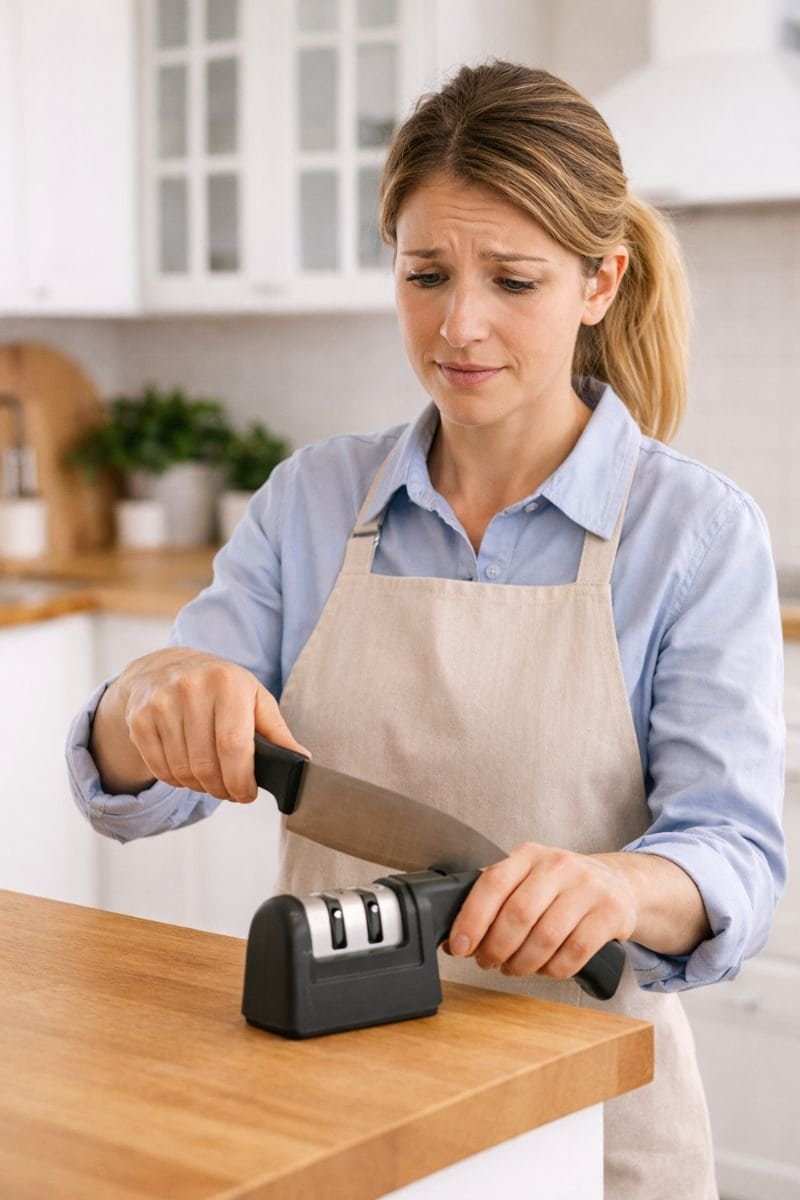
What people think knife sharpening should look like
Many people picture sharpening as a professional skill that requires stones, perfect angles, and years of practice. This image alone is enough to discourage most home cooks.
In reality, modern knife care for everyday kitchens has evolved. Sharpening no longer needs to be technical or stressful to be effective.
What safe knife sharpening actually looks like at home
Safe sharpening focuses on control, stability, and simplicity.
For most homes, this means:
-
Using guided systems rather than freehand techniques
-
Sharpening in clear, deliberate steps
-
Working slowly, without forcing the blade
-
Prioritising safety over speed
When sharpening feels structured and predictable, fear naturally fades.
The role of safety tools in building confidence
One often overlooked factor in knife sharpening confidence is protection. Simple safety measures can completely change how sharpening feels.
Protective gloves, stable surfaces, and well-designed tools all help reduce hesitation. When hands feel protected and movements feel controlled, sharpening becomes less stressful and far more approachable.
This is why tools like the DTDF 3-Stage Manual Knife Sharpener with Safety Glove are designed around reassurance rather than complexity. A clear, step-by-step system combined with hand protection allows people to maintain their knives without feeling exposed or rushed.
Practical tips for beginners who want to sharpen safely
Even if you’re new to sharpening, these habits help immediately:
-
Sharpen little and often rather than waiting too long
-
Let the tool do the work avoid forcing the blade
-
Use slow, controlled movements
-
Keep the sharpening surface stable
-
Test sharpness gently on soft foods, not fingers
Sharpening should feel calm, not tense.
Why confidence matters more than technique
The biggest shift for most people isn’t learning a new skill it’s letting go of the fear surrounding sharpening. When sharpening feels manageable, it becomes a normal part of kitchen care rather than a task to avoid.
This confidence leads to safer knives, better control, and fewer accidents during everyday cooking.
A safer way forward for everyday kitchens
Knife sharpening doesn’t have to be complicated or intimidating. With the right approach, it becomes a simple habit that supports safety rather than threatening it.
If sharpening has always felt daunting, the problem isn’t you it’s the way sharpening is often presented. Simple systems, guided steps, and basic protection are usually all that’s needed to make knife care feel accessible again.
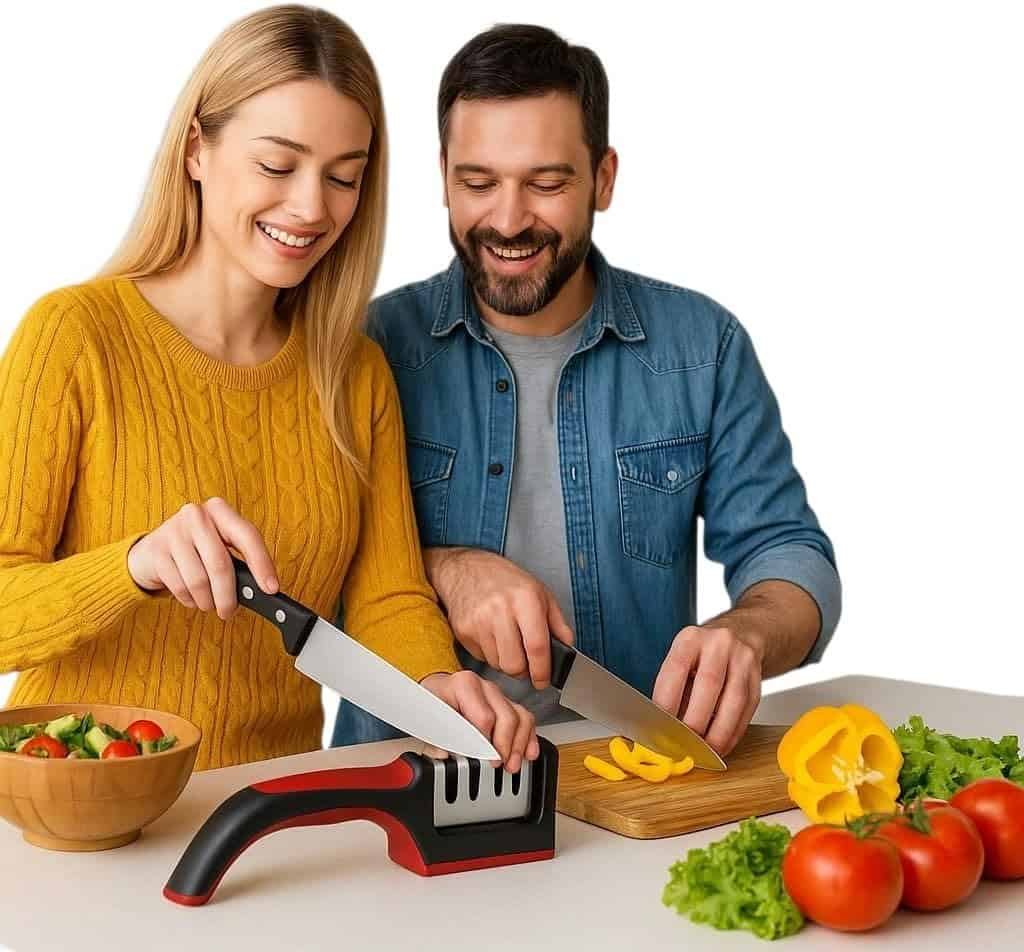
Final thought
Safer cooking isn’t about bravery or skill. It’s about using tools and habits that support control, consistency, and confidence in real kitchens every day.
If you’d like to explore safer, beginner-friendly ways to maintain kitchen knives, you can learn more through DTDF’s approach to practical knife care.