
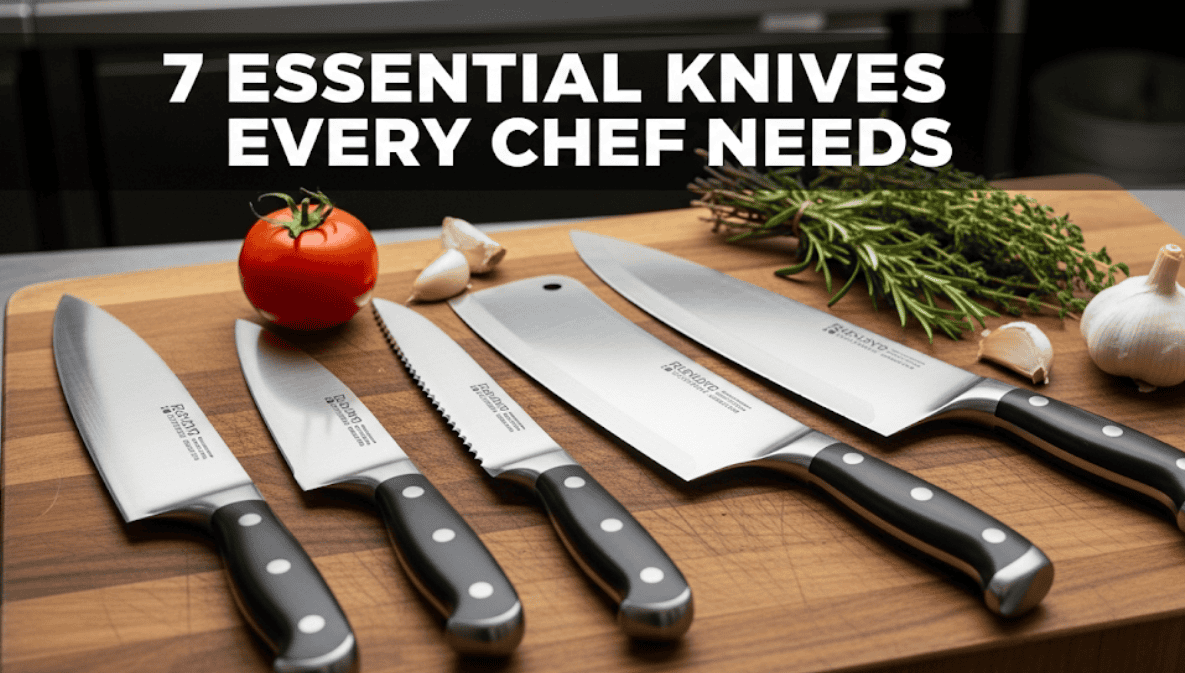
For the excellent chef, essential knives are the backbone of the kitchen. Whether you’re a home cook beginning your culinary journey or a professional chef looking to complete your toolkit, the decision of which cutting tools to invest in can transform your cooking life.
The gap between laboring over prep work with dull, imprecise knives and breezing through culinary tasks can be a matter of knowing which kitchen knives matter and having these essential tools at your fingertips. For most home cooks, the challenge is knowing to never buy the large set of knives that packs all the tools they won’t ever use. Instead, concentrate on seven thoughtfully chosen essential knives and you will be better off than if you had bought a bloated chef knife set.
This guide will take you through every blade that you absolutely should have, why those cutting tools deserve to find their way into your kitchen and how to use them to best effect.
Why You Need a Few Really Good Kitchen Knives—Not a Huge Set
Before discussing individual types of knives, let me dispel one myth. It’s a popular notion that the more knives one owns, the better a cook one is. Professionals make do with just a few high-quality blades.
Quality kitchen knives have a number of advantages over cheaper ones:
- Sharper blades: Long length stays sharp for long use
- Improved ergonomics and control while in use
- Faster, more precise cutting
- Less fatigue on hands during long prep sessions
- Greater safety through predictable performance
Also, an investment in few, high-quality crucial knives is more budget friendly than constantly replacing inexpensive knives. Don’t get me wrong: With plenty of TLC, a well-made blade can stick around for decades.
The 7 Knives Every Home Cook Must Have
1. Chef’s Knife – The Workhorse of the Kitchen
The most important weapon in any cook’s arsenal is the chef’s knife. This workhorse blade will handle around 80% of your cutting tasks and is the foundation of essential knives.
Size and Specifications: Eight inches is right for most home cooks. Professional kitchens tend to favor a 10-inch size to accommodate bigger items. The blade should be slightly curved to facilitate rocking while chopping.
Primary Uses:
- Chopping vegetables and herbs
- Slicing meat and fish
- Flattening garlic with the flat side
- Rough chop for soups and stews
Why It’s Important: The chef’s knife is great for both the fine detail work and the heavy lifting. Its weight lends momentum and power to cut through even thick material and the fine point is ideal for precise work.
2. Paring Knife – Small Knife But Mighty in Design
This steps in when your chef’s knife seems like too much. This little knife is a beast for such small work that requires fine motor control.
Size and Style: Paring knives are around 3 to 4 inches in size. The knife should be secure in the hand and give you superb control for intricate tasks.
Primary Uses:
- Peeling fruits and vegetables
- Deveining shrimp
- Creating garnishes
- Removing seeds from peppers
- Trimming small items
Why It’s Essential: The paring knife’s diminutive size can achieve precise work not possible with a larger-bladed knife. It works well for detail work or any work that requires a gentle touch and precision.
3. Serrated Knife – Not Just for Bread
Don’t be misled by its name — this cutting tool does so much more than slicing loaves of bread. The serrated edge slices through the thick crust of rustic bread, without compromising the interior.
Size and Specs: You’re looking for blades roughly 8-10 inches long with deep, aggressive serrations. The length aids in cutting through large items in one clean pass.
Primary Uses:
- Slicing crusty bread without crushing
- Cutting tomatoes cleanly
- Portioning cakes and pastries
- Slicing citrus fruits
- Handling tough-skinned items
What It’s Good For: The serrated edge catches and slices through materials that would otherwise slip under smooth blades. Which is why, for specific jobs, it is irreplaceable.
4. Utility Knife – The Compromise Solution
The utility knife fills the void between your chef’s knife and your paring knife. This mid-sized blade handles jobs too large for a paring knife but too small for a chef’s knife.
Size and Specification: The size of a utility knife generally falls between 4 to 6 inches. It comes with minor serration or straight edge.
Primary Uses:
- Slicing sandwiches
- Cutting small vegetables
- Trimming meat
- General food preparation
- Picnic and outdoor cooking
Added Value: The utility knife is versatile and portable. It’s likely to be the knife you grab for quick prep or casual cooking.
5. Boning Knife – The Master of Breakdown
For those of us who work with whole fish, poultry, and large cuts of meat, the boning knife is indispensable. The slim, flexible blade is able to work its way around bones with ease.
Size & Specifications: Narrow blade that measures between 5 to 6 inches are the perfect size for a boning knife. The degree of flexibility varies — opt for stiffer blades for meat, more flexible for fish.
Primary Uses:
- Deboning meat and fish
- Separating skin from flesh
- Trimming fat and silverskin
- Butchering whole chickens
- Filleting fish
Why You Need This Tool: Whole proteins are made far more manageable with the correct knife. The shape of the boning knife lets you work along the natural contours of the protein.
6. Cleaver – The Muscle for Heavy Jobs
The cleaver may look intimidating, but is not just for heavy duty jobs. This workhorse of the essential knives is designed to safely cut large foods such as melons and squash, remove meat and fish from the bone and slice through tough materials.
Size and Type: Traditional cleavers are characterized by large, rectangular blades that are much heavier than other kitchen knives. The weight provides the cutting power for larger jobs.
Primary Uses:
- Chopping through bones
- Splitting whole chickens
- Crushing ginger and garlic
- Transferring chopped ingredients
- Breaking down large vegetables
When It’s Used: Though not an everyday kitchen tool for many home cooks, when that cleaver is needed, you’re going to want to have it with you. Its distinct design does what other blades can’t.
7. Santoku Knife – Japanese Precision
The santoku is brought to you by Japanese knife-making philosophy. Its name means “three virtues” — the tool is capable of handling meat, fish and vegetables with the same skillful manner.
Size and Specs: Santoku knives are generally around 6-7 inches long. The blade is straighter (less curve) than a chef’s knife, and has a blunted or rounded tip as opposed to a pointed tip. It also has granton edges (small divots) to prevent food from sticking.
Primary Uses:
- Precise vegetable cutting
- Slicing cooked meats
- Chopping herbs finely
- General food preparation
- Asian cooking techniques
Why It’s Great: The Santoku is a great option for someone who wants easier prep work or just wants something between the heftiness of a full-on chef’s knife and the minimalism of a paring knife. Many cooks find its balance and build more comfortable for some tasks.
Knife Construction and Materials
Understanding how kitchen knives are made can help you make the best choice of knives to use and properly maintain them.
Blade Materials
High-Carbon Steel:
- Holds extremely sharp edges
- Requires more maintenance
- Develops patina over time
- Preferred by many professional chefs
Stainless Steel:
- Resists rust and staining
- Easier to maintain
- Slightly harder to sharpen
- Great for home cooks
Damascus Steel:
- Beautiful layered patterns
- Combines different steel types
- Often expensive but durable
- More about aesthetics than performance
Handle Considerations
The handle affects comfort and safety. Consider these factors:
- Material: Wood is natural and comfortable, plastic is affordable and easy to clean, while composite materials offer advantages of both
- Ergonomics: Must fit comfortably and feel natural in your hand
- Balance: The knife should feel well balanced, not top heavy
- Texture: Textured handles provide better grip
How to Build Your First Knife Collection
You don’t have to buy every knife at once to build your collection of essential knives. Begin with the main items you’ll need, adding more as your skills and interest grow.
Priority Order for Beginners
- Chef’s knife (8-inch recommended)
- Paring knife (3-4 inches)
- Serrated bread knife (8-10 inches)
- Utility knife (4-6 inches)
These four knives handle 95 percent of the jobs you need at home. Add the other knives as you take on more complex cooking projects.
Budget Considerations
Quality essential knives are an investment, but they don’t need to break the bank. Consider these price ranges:
| Knife Type | Budget | Mid Range | High End |
|---|---|---|---|
| Chef’s Knife | $30-$50 | $80-$120 | $200+ |
| Paring Knife | $15-$25 | $40-$60 | $80+ |
| Bread Knife | $25-$40 | $60-$90 | $150+ |
| Utility Knife | $20-$35 | $50-$75 | $100+ |
Most of the best mid-range knives offer 90% of the performance of high-end knives at a fraction of the cost.
Proper Knife Care and Maintenance
Extending the life of your essential knives requires proper care. When using cutting tools, follow these guidelines to ensure they stay sharp and safe.
Daily Care
Cleaning:
- Hand wash immediately after use
- Use warm, soapy water
- Dry completely before storing
- Never put knives in the dishwasher
Storage:
- Use knife blocks, magnetic strips, or blade guards
- Avoid loose drawer storage
- Don’t let blades touch each other
- Store in dry locations
Regular Maintenance
Honing:
- Weekly honing with steel for regular users
- Maintains the blade’s existing edge
- Doesn’t actually sharpen the knife
- Takes seconds but makes a big difference
Sharpening:
- 1-2 times per year for professional sharpening
- Or learn to use whetstones yourself
- Restores the blade’s cutting edge
- Essential for maintaining performance
Signs Your Knives Need Attention
Look for these signs that your kitchen knives require maintenance:
- Difficulty cutting through tomato skin
- Crushing rather than slicing
- Requiring excessive pressure
- Slipping during use
- Visible nicks or chips
Safety Tips for Using Essential Knives
Sharp knives are actually safer than dull knives because they require less pressure and offer more control. However, proper technique remains crucial.
Basic Safety Rules
Cutting Technique:
- Keep fingers curled under, knuckles facing forward
- Cut away from your body
- Use a stable cutting board
- Stay focused — don’t get distracted
Kitchen Setup:
- Ensure good lighting
- Keep workspace clean and organized
- Use appropriate cutting boards
- Store knives properly when not in use
Common Mistakes to Avoid
Many accidents happen through bad habits rather than equipment issues:
- Trying to catch falling knives
- Using inappropriate knives for tasks
- Cutting on unstable surfaces
- Rushing through prep work
- Neglecting knife maintenance
Advanced Techniques for Better Results
Once you get comfortable with your essential knives, these techniques will help you become faster and more efficient.
Knife Skills to Master
The Rock: Great for herbs and small vegetables. Keep the knife tip on the cutting board and rock the blade through the ingredients.
The Chop: Lift the whole blade for each cut. Best for dense vegetables and uniform pieces.
The Slice: Use the entire length of the edge to draw the blade through food. Perfect for delicate items and clean cuts.
Cutting Board Selection
The right surface helps you make the best use of your cutting tools:
Wood:
- Gentle on knife edges
- Naturally antimicrobial
- Requires regular oiling
- Beautiful and durable
Plastic:
- Easy to sanitize
- Dishwasher safe
- Can dull knives faster
- Multiple boards for different foods
Bamboo:
- Eco-friendly option
- Harder than wood
- Lightweight and attractive
- Good middle ground choice
For quality kitchen tools and accessories, DTDF Home and Kitchen offers a comprehensive selection to complement your knife collection. Additionally, the Culinary Institute of America provides excellent resources for developing professional knife skills.
Building Knife Skills Over Time
Like anything else, the more you use your essential knives, the more you develop your skills. Start with basic techniques and gradually move on to advanced skills.
Practice Exercises
Julienne Cut: Learn to cut vegetables into matchstick shapes. This develops consistency and control with your knife.
Brunoise: Perfect those tiny, uniform squares. This classic technique improves precision.
Chiffonade: Learn to make fine ribbons of leafy herbs and vegetables. Great for garnishes and sauces.
Speed vs. Accuracy
Don’t rush the learning process. Focus on proper form first, and speed will naturally develop as muscle memory builds.
Focus on:
- Consistent piece sizes
- Smooth, controlled movements
- Proper hand positioning
- Clean, efficient cuts
Speed isn’t something you force — it naturally develops as your technique improves.
When to Replace Your Kitchen Knives
Even good essential knives eventually need replacing. Know when it’s time for new cutting tools.
Signs You Need New Knives
Performance Issues:
- Won’t hold an edge even after professional sharpening
- Handles become loose or damaged
- Permanent staining or deep scratches on blades
- Chips that cannot be repaired
Changing Needs:
- Your cooking style has evolved
- You’re handling larger quantities
- Professional cooking requirements
- Specific cuisine preferences
Upgrading Strategy
Consider upgrading one knife at a time rather than replacing your entire set. This allows you to:
- Spread the cost over time
- Compare old and new performance
- Make informed decisions about features
- Keep familiar tools while learning new ones
Frequently Asked Questions
Q: How often should I have my essential knives sharpened? A: Home cooks typically need professional sharpening 1-2 times per year. However, you should hone your knives weekly if you use them daily. Frequency depends on how much you cook and how well you maintain your blades.
Q: Can I wash my kitchen knives in the dishwasher? A: No, never put quality knives in the dishwasher. The harsh detergents, high heat and jostling with other items can damage both blade and handle. Always hand wash your knives after each use and dry them immediately.
Q: What’s the difference between honing and sharpening? A: Honing realigns the edge of your blade while sharpening actually removes metal to create a new edge. Honing is maintenance; sharpening is restoration. You’ll hone much more frequently than you sharpen.
Q: What should I budget for my first knife set? A: Plan to spend $150-300 for the four most essential knives if you’re new to cooking: an 8-inch chef’s knife, paring knife, bread knife, and utility knife. This provides good value without over-investing in specialized tools you may not need.
Q: Are expensive knives really worth it? A: Mid-range knives offer the best value for most home cooks. Expensive knives can perform better, but the difference mainly matters to professional chefs or serious knife enthusiasts. Focus on technique and maintenance rather than luxury features.
Q: What’s the best way to store essential knives? A: Knife blocks, magnetic strips, or individual blade guards all work well. The key is keeping blades separated and protected. Avoid loose storage in drawers where blades can contact each other and cause damage or injury.
Q: How do I know if my knife is sharp? A: A sharp knife should easily cut through a ripe tomato without crushing it, or cleanly slice through paper without tearing. If your knife struggles with these tests, it needs attention. Sharp knives require less pressure and offer more control.
Q: Should I choose Japanese or German-style knives? A: Both styles have merits. German knives are generally heavier with more curve, ideal for rocking motions. Japanese knives tend to be lighter with straighter edges, perfect for precise cuts. Choose based on your cooking style and comfort preferences.
Conclusion: Building Your Perfect Knife Collection
Mastering the seven essential knives covered in this guide will transform your cooking experience. Remember, technique matters more than tools — even the most expensive cutting instruments won’t compensate for poor skills. Start with a solid foundation, care for your tools properly, and build your skills over time.
Whether you’re just starting your culinary journey or looking to upgrade your existing knife collection, focus on these fundamentals. Invest in quality, practice regularly, and take pride in working with properly selected and maintained cutting tools.
Quality essential knives, properly cared for, will serve you faithfully for years to come, making every cooking session more enjoyable and efficient. Begin with the basics, master the fundamentals, and enjoy the satisfaction that comes with using the right tool for every job.