
Fresh, creamy dairy-free drinks have never been simpler and more delicious thanks to the right nut milk makers. These revolutionary kitchen appliances turn raw nuts into smooth, rich and delicious drinks in just minutes. Whether you’re hankering for indulgent almond milk for your morning coffee or silky cashew milk for the baking projects taking over your Instagram feed, the right machine awaits your kitchen counter.
Rapidly rising to success is the availability of high quality nut milk makers, as plant-based diets become ever more popular. Home cooks now look for a way to avoid shop-bought alternatives which are frequently laced with preservatives and enhancers. When you make your own nut milk, you’re able to control what exactly goes into it, the texture and flavour.
Why Make Your Own Nut Milk Instead of Buying It at the Store?
Advantages of Homemade Nut Milk
There are many advantages to crafting your own nut milk over buying it in stores. First, you have complete control of what goes into your drink. Shop-bought versions often have stabilizers, emulsifiers and preservatives that some people prefer to avoid.
The cost savings quickly accumulate when you are making your own nut milk at home. One bag of almonds makes several batches of milk for a fraction of store prices. And by the way, homemade nut milk tastes fresh, rather than chalky, like the packaged alternatives you can find on store shelves.
Many consumers also care about the environmental benefits. By making almond milk or cashew milk at home, you avoid the packaging waste that comes from cartons or bottles. You may also want to consider purchasing the nuts locally from a bulk bin to reduce your environmental impact.
Key Features to Consider Before Buying a Nut Milk Machine
When you’re shopping for the best appliance, it’s helpful to know what to look for to avoid spending an arm and a leg for something that doesn’t work. Tough nuts (such as almonds) are no match for the powerful motors in these appliances, so they don’t overheat or fight you along the process. To achieve consistent outcomes, search for a model with a minimum of 1000 watts of power.
Being easy to clean is crucial in your day to day life. Dishwasher-safe parts: Time and effort are two of life’s most valuable commodities, and all removable parts should be dishwasher-safe. Self-cleaning capability: There is a certain amount of convenience with self-cleaning cycles, though you still need to do thorough cleaning if you want to keep your machine nice.
Capacity considerations are based on the number of people in the household and their usage. Single-serve is good for the individual, and families can enjoy larger batches. The average quality machines make anywhere from 16 up to 32 ounces per cycle.
Look for built-in straining systems that eliminate the need for a separate nut milk bag or fine mesh strainer. This function will speed the process up and cut the cleanup time greatly.
Best Nut Milk Makers: Reviews of the Top 6
Best Overall Performance: Almond Cow Nut Milk Maker
The Almond Cow is the premium option for those who must have the very best in nut milk. This stylish device can produce up to 5 cups of smooth, delicious milk in only 5-6 minutes! It features a powerful 1400-watt motor, which can crush all nuts.
Key Features:
- Self-contained system with built-in strainer
- Produces 1-5 cups milk per batch
- Compatible with almonds, cashews, oats, seeds etc.
- Dishwasher-safe components
- Quiet operation
The Almond Cow does a great job of creating smooth, even texture without any grit. Its innovative filtration system delivers restaurant-quality taste every time you brew. Though, being slightly more expensive can turn off some budget-minded shoppers.
Best For: Customers who use the unit daily and are willing to spend up on the quality and convenience.
Nutr Machine Nut Milk Maker – Best for Speed
You can have this handy little bit of gear around and get that nuts-to-milk step done in a matter of minutes.
The Nutr Machine’s value comes from its speed for those with busy households. Only 30 seconds to make fresh nut milk with its revolutionary blender and heating element design. Perfect for individual portions thanks to its single serve format.
Key Features:
- 30-second milk production
- Single-serve portions (8-12 oz)
- Compact countertop footprint
- Easy one-button operation
- Great with soaked or unsoaked nuts
The machine is fast, with its progress owing to its novel method of simultaneous heating and blending. This recipe is especially perfect with cashew milk and other creamy nut milks. The downside is that it offers less batch size than a typical blender-style maker.
Ideal For: Those in need of immediate single serving portions with no preparation hassle.
ChefWave Milkmade Non-Dairy Milk Maker – Best for Versatility
ChefWave Milkmade sets itself apart with its versatility. This machine doesn’t just make nut milk, but also plant-based versions from oats, rice and seeds. There are six preset programs that manage various ingredients with automatic accuracy. For more kitchen appliance reviews and recommendations, check out DTDF Home and Kitchen for comprehensive guides.
Key Features:
- Six automated programs
- 20-ounce capacity
- Works with nuts, seeds, and grains
- Self-cleaning function
- Digital display with timer
The ChefWave excels with more varieties beyond basic nut milk. Its programs for different ingredients as well as its automated timing and temperature control take away the guesswork. With well-marked settings, it still has a pretty small learning curve.
Best For: Families seeking more than one type of plant-based milk from a single machine.
Lekue Nut Milk Maker Kit – Best Budget Pick
The Lekue’s straightforward, efficient design is popular amongst frugal shoppers. This manual system pairs a specialized container with an ultra-fine mesh strainer. Although it requires more hands-on work, it’s a great bang for your buck.
Key Features:
- Manual operation keeps costs low
- BPA-free plastic construction
- Fine mesh strainer included
- Compact storage design
- Works with all nut types
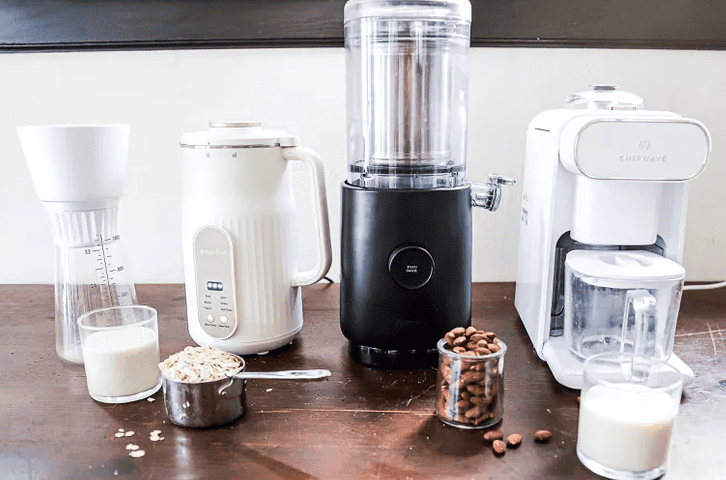
The Lekue also needs the nuts soaking first, and requires mixing by hand with a hand blender. But its fine strainer gives you a memorably silky finish. This pick is best for non-daily users who are willing to deal with an extra step or two in exchange for savings.
Good For: Occasional nut milk makers who value savings over automation.
Nama J2 Cold Press Juicer with Nut Milk Kit Premium Multi-Function
The Nama J2 excels in cold-press juicing and nut milk making. Slow masticating technology makes the smoothest beverages while ensuring nutrients aren’t destroyed. This deluxe tool does double duty in your kitchen.
Key Features:
- Dual function of juicing and nut milk
- Cold-press technology preserves nutrients
- Extra-fine straining system
- Large 32-ounce capacity
- Commercial-grade construction
The slow extraction process ensures all the nutrients from each nut makes it into your milk. Cold-press also retains more vitamins and minerals over traditional high-speed blending. Its price tag is matched by its professional construction and versatility. Learn more about cold-press technology at Healthline’s guide to cold-pressed juices.
Best For: Health enthusiasts looking to be able to make fresh juice and premium nut milk.
Tribest Soyabella Nut and Soy Milk Maker – Best For Large Families
Big families get great use from the Tribest Soyabella’s spacious capacity and durability. This workhorse can produce up to 1.7 liters of milk per batch – perfect for families or regular entertainers.
Key Features:
- Extra-large 1.7-liter capacity
- Automatic heating and blending
- Perfect for nuts, soybeans, and grains
- Durable stainless steel construction
- Multiple batch size options
The Soyabella has an efficient heating element that produces smooth and consistent milk in minutes that is ready to drink. The material is strong enough that it does not get damaged in day to day use. It’s available in two sizes a regular 64-ounce one and a 48-ounce version that takes up less counter space.
Best For: Large families, anyone who drinks nut milk almost daily.
Comparison Table: The Best Nut Milk Makers
| Model | Capacity | Speed | Price Range | Best Feature |
|---|---|---|---|---|
| Almond Cow | 1-5 cups | 5-6 minutes | $$$ | Built-in strainer |
| Nutr Machine | 8-12 oz | 30 seconds | $$ | Blazing fast |
| ChefWave Milkmade | 20 oz | 3-5 minutes | $$ | Six presets |
| Lekue Kit | Variable | Manual | $ | Inexpensive |
| Nama J2 | 32 oz | 10-15 minutes | $$$$ | Cold-press |
| Tribest Soyabella | 1.7 liters | 15-20 minutes | $$ | Large capacity |
How to Make the Best Almond Milk Recipe
“Almond milk doesn’t have to taste like water.” First pick out some fine raw almonds with no salt or other additives. Organic ones often taste better.
Preparation Steps:
Soak one cup of almonds in filtered water for 8-12 hours. This step in the softening process allows for smoother mixing and extraction. The longer it soaks the better the texture and digestibility.
Rinse and drain soaked almonds really well. Peel off any loose skins that came off from the almonds during soaking. These processes are designed to avoid the final product from being bitter.
Blending Process:
Place soaked almonds into your nut milk maker along with 3-4 cups of fresh filtered water. The water-to-nut ratio will change the final texture. More water will give you lighter milk, and less will give you a richer mouthfeel.
Just follow your machine’s own timing and settings. The majority of automated machines are able to handle this step automatically. Manual models need to be operated at the desired speed for best results.
Finishing Touches:
Strain the mixture through the built-in system in your machine or a fine-mesh strainer. Gently press the pulp to get out the rest of the liquid and don’t squeeze too hard, since you don’t want to force bitter compounds through.
Add natural sweeteners, like dates, vanilla or maple syrup, to the milk while in the machine. This timing also guarantees homogeneous distribution throughout the batch.
Cashew Milk: The Creamiest Alternative
Cashew milk is one of the creamiest of nut milks. The naturally occurring fat content in it is delicious in beverage and culinary applications such as coffee, cereals and baking.
Unroasted cashews do not need a long time to soak, as harder nuts do. Even soaking for 30 minutes is beneficial, and longer soaking times enhance digestibility. This easy preparation makes cashew milk great for those spur of the moment cravings.
The mild taste of cashews takes to added flavors well. Vanilla, cinnamon or cocoa transform basic cashew milk into gourmet territory. It can be used for making cream sauces and soups.
Health Benefits of Fresh Nut Milk
Nuts are nutrient dense and while the vitamin and mineral content will vary slightly according to the type of nut, they all contain good sources of vitamins and minerals. Almonds contribute vitamin E, magnesium and healthy fats. Cashews provide copper, zinc and phosphorus for bone health.
Nut milk is a satisfying drink because of its protein content. Though not as high as dairy milk, the plant-based proteins are good for muscle health and satiety. Nut milks combined with whole grains or fruit provide a complete complement of amino acids.
The digestive advantages attract people who are lactose-intolerant or sensitive to dairy. Because fresh nut milk has no lactose, casein or other dairy proteins that can cause digestive upset for so many people.
Cost Comparison: Homemade vs Store Bought Nut Milk
Cost savings are immediately evident when you contrast the amount of homemade nut milk with what is on offer in the shops. Almonds cost $8-12 a pound and make eight to ten cups of milk. Equivalent store-bought quantities cost $15-25.
Ongoing operating expenses are minimal, and the initial equipment purchase is amortized in a few months for frequent users. Even the least expensive manual systems will pay for themselves quickly, and for higher end equipment it will take longer to break even, but you receive the ultimate in convenience.
And then there are the less obvious savings, like less packaging waste and transportation costs. Purchasing nuts in larger packages also improves economics and by storing them correctly you can guarantee they are fresh.
How to Clean and Maintain a Nut Milk Maker
Good maintenance will also influence the life of the machine and food safety. All parts should be cleaned directly after each use to avoid clogs. Nut oils go rancid if you leave them on surfaces.
When you’re done, some machines have parts that are dishwasher safe. But most oily residues come off more easily with a good scrub in warm soapy water. Pay attention to the straining parts and filters, where bits of pulp collect.
Perform a deep clean by soaking the detachable parts in warm water and mild soap once a week. This clears away any oils or hard water mineral deposits in the process.
Blades are really sharp and require careful handling. Typically, high end machines come with special cleaning brushes for blade cleaning which are safe to use. Never use scouring pads or powders; they may scratch cutting surfaces.
Troubleshooting Common Issues
Sometimes lumpy texture is due to the strainer parts being worn or not blending long enough. Use more time or change filtering element to regain the smooth taste. Some nuts’ milk will also be slightly gritty, even if you process them for quite some time.
Separation is also normal in fresh nut milks that haven’t been enhanced with commercial stabilizers. Particles that have settled are redistributed by gentle stirring or shaking. This separation is not an indicator of spoilage or a reflection on quality.
Bland flavour is a sign of either improper nut/water ratios or old nuts. Double the nuts or halve the water for more flavour. Fresh nuts yield tastier milk than nuts that have been sitting for weeks.
Overheating of motor occurs when the machines are overloaded. Let machines cool between batches and avoid overfilling. However, better quality machines will have thermal protection installed to prevent that.
How to Store Fresh Nut Milk
Fresh nut milk is refrigerated and best used within 3-5 days. Glass bottles preserve taste better than plastic ones. Airtight containers eliminate air from entering, which will keep your stored milk fresh.
Freezing prolongs storage but alters texture upon thawing. The ice crystals disrupt the overall smoothness, leaving milk slightly separated. Frozen nut milk can be fine in smoothies or baking, where the texture doesn’t much matter.
Spoiled milk will have a sour smell, be too thick or show some signs of mould. Fresh nut milk should have a nutty, pleasant aroma with a smooth, pourable texture. Once the milk looks like it is going off, throw it out.
Different Recipes to Try with Your Nut Milk Maker
In addition to basic nut milk, these hardworking machines whip up all manner of healthy beverages and ingredients. Flavoured options include chocolate almond milk, vanilla cashew milk, and cinnamon walnut milk. Natural sweeteners and other additions blend well during making.
Breakfast uses include overnight oats, smoothie bowls and cereal toppings. The richness of fresh nut milk adds an upgrade to these morning staples, providing sustained energy.
Baking substitutions perform very well in most recipes calling for dairy milk. The mild flavour of cashew milk is appropriate for subtle desserts; almond milk works with chocolate and spice flavours.
They work in savoury dishes like sauces, soups, and salad dressings. Unsweetened nut milk also lends richness without clashing with other flavours in dishes that are more complex.
The Environmental Impact of DIY Nut Milk
If you’re making homemade nut milk you’ll be cutting the packaging waste you would get from the store by a large proportion. Every batch removes one carton or bottle from the waste stream. Over time, such savings provide substantial environmental advantages.
Nut production still uses water, especially with the amount of water required for almonds in water scarce areas. But by making your own, all of the energy used for transport, processing, and packaging of commercial products can be bypassed.
There are local sourcing possibilities in a lot of areas with nuts and seeds. Farmers markets and co-ops frequently offer bulk options that minimize environmental waste and promote local agriculture.
How to Choose the Right Nuts
Quality nuts make excellent milk which gives a more delicious taste and better nutrition. Opt for raw, unsalted nuts without oil and flavouring treatments. Organic options typically provide cleaner taste profiles.
Storage affects nut quality significantly. Store in airtight containers, away from light and heat. Refrigeration helps them stay fresh, especially with types that are rich in oils, like walnuts and pecans.
The soaking time needed for different nuts will be different. Tougher nuts, like almonds, benefit from overnight soaking, while softer cashews can be ready in a relatively short period of time. Well-soaked nuts are easier to digest and extract nutrients from.
Safety Tips for Using Nut Milk Makers
It bears mentioning that it is always important to use caution with any electrical kitchen appliance. Keep hands dry when connecting to electrical outlets or using appliances. Keep cords away from water sources and cutting areas.
Safe food handling practices prevent contamination and illness. Clean all surfaces and tools before nut-processing. Filtered water will help avoid any unwanted taste from chlorine or minerals.
It is important to have consideration for people with nut allergies when making nut milk for others. Clearly label homemade items and let your guests know what’s in them. Cross contamination is always a risk if more than one variety of nut is processed through the same machine.
Advanced Techniques for Flavour Enhancement
Step outside basic recipes with professional techniques for homemade nut milk. Toasted nuts can be more interesting than raw ones, and soaking them after toasting delivers depth and nuance to the final product. Lightly toast to enhance natural notes without overshadowing subtle flavours.
Mixing assorted nuts creates unique flavour combinations. Almond-cashew blends offer a good balance of nutrition and taste. Walnut-pecan pairings offer indulgent, full-bodied flavour for dessert applications.
Add natural flavourings such as vanilla beans, cinnamon sticks or fresh dates during the blending process. These integrate completely during the manufacturing process, ensuring no grittiness during consumption – something that cannot be said for when spices are added afterward!
Comparison: Manual vs. Automatic Nut Milk Makers
With manual operations, you have the most hands-on oversight of your production. Soaking time, blending time, and straining pressure is up to the user. This approach appeals to customization-loving perfectionists.
Busy lifestyles benefit from automated convenience. Pre-programmed modes prevent the guesswork and guarantee repeatable results. Automatic features ensure extraction is always at its best without having to make adjustments.
Cost differences relate to complexity and convenience. Manual options are much cheaper, but require more work. Automated machines are more expensive but they can save time and reduce skill requirements.
The Seasonality of Making Nut Milk
Summer heat influences the storage of nuts and milk. Machines and ingredients should be kept well-cooled to avoid rancidity of the oils. In hot weather with no air-conditioning, shorter storage times are required.
Demand for hot, spiced nut milk options may spike during winter. Gentle heating of ready-to-drink products preserves nutrients while providing comfort. Be careful not to boil, which can result in separation and loss of nutrients.
Demand for nut milk rises during holiday baking seasons, both for baking recipes and as gifts. Forward planning helps maintain reasonable stock during high demand periods. Many customers buy in bulk when stores offer sales, which creates savings for frequent users.
Frequently Asked Questions
How long do nut milk makers typically last?
You can expect a good nut milk maker to last between 5-10 years with proper maintenance and regular use. Most high end units come with long warranties as a testament to their longevity. Lifespan will vary by how well the product is cleaned and stored, regardless of brand or price point.
Can I use a nut milk maker to make oat milk?
With most nut milk makers being relatively versatile, processing oats is possible, and the answer generally depends on the model. You can soak oats (not as long as nuts but may require more than one straining pour for good smoothness). Refer to the manufacturer’s instructions for precise grain recommendations.
Should I use soaked or unsoaked nuts for milk production?
Soaked nuts give creamier, easier-to-digest milk with more nutrient availability. Unsoaked nuts do work in high power machines but will yield a grittier texture. The soaking process also reduces machine runtime and strain on motors.
Why does my nut milk keep separating?
Natural separation will occur in fresh nut milk which has no stabilizers added like commercially available nut milks. Gentle stirring evenly redistributes the settled particles. A little lecithin added during making will help it stay emulsified longer.
What nuts make the creamiest milk?
Cashews produce the creamiest milk by nature, thanks to their high fat content and soft texture. Macadamia nuts also create very creamy milk. Almonds require longer soaking time, but become creamy milk if blended well.
Can I use the nut pulp leftover from making nut milk?
Nut pulp is wonderful for use in baking, smoothies and energy balls. Dried pulp makes flour substitutes for gluten-free baking. Composting is another eco-friendly disposal option.
How much electricity does a nut milk maker use?
Most appliances are low energy users, around 0.1-0.2 kWh per batch. More powerful models use more energy, but their cycles run more quickly. Total electrical costs are still relatively minor for most home use.
Is a nut milk maker worth it for a single person or small household?
If you have a small household that frequently consumes plant-based milk, then a nut milk maker is a great addition to your kitchen. Break-even points are typically 6-12 months, depending on consumption habits and machine investment. Consider manual options for occasional use.
Picking the Perfect One for Your Kitchen
The right nut milk maker for you will depend on your specific needs, budget and usage patterns. Premium automatic models pay off for heavy users who want to streamline daily production. For occasional users, a manual system can offer sufficient features at a minimal investment.
Available counter space should be considered when choosing the size of machine you prefer. For cramped kitchens, compact models will suffice, though larger families may need machines with more capacity.
Consider what nuts you’ll use most or get the most benefit from. Single-purpose machines are the best at doing their specific job, while multi-function ones will grant you more diversity as you experiment with various ingredients.
Conclusion: Start Your Dairy-Free Journey Now
When it comes to making nut milk at home, the possibilities are truly endless with all the delicious, creamy drinks you can whip up to your exact taste. Whether you go for a high-quality automatic machine or choose a basic manual model, the flavours of fresh milk with no preservatives make the investment worthwhile.
Nut milk makers produce high-quality, fresh nut milk to rival anything from the store. The ability to control what goes into the drink, the cost savings, and the positive environmental benefits are compelling arguments for starting to make your own plant-based milk.
Start your dairy-free lifestyle by choosing the nut milk maker that’s perfect for you. With regular care these versatile machines should last for years, offering a simple, cost effective way to make fresh, healthy and nutritious alternatives to commercial products. Both your palate and your wallet will thank you if you make the switch to homemade nut milk.