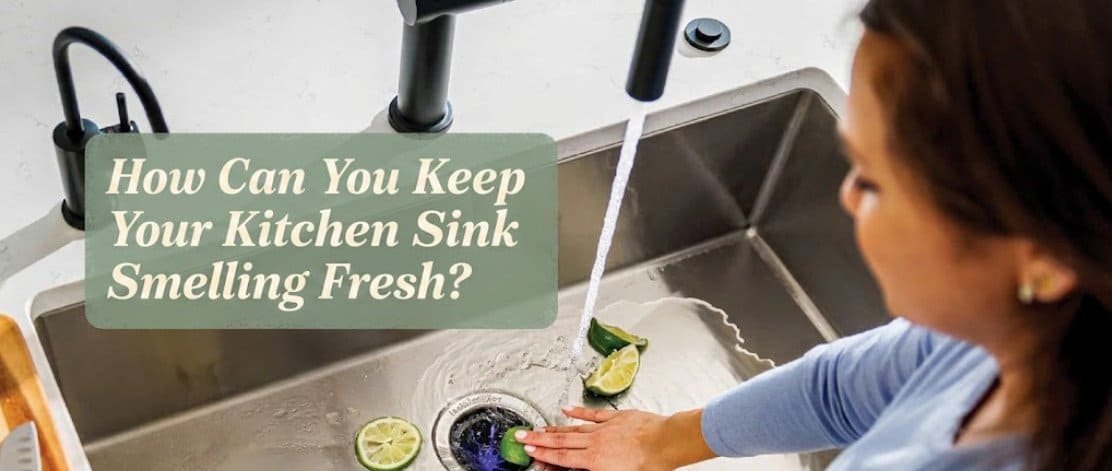
Has a big pot of pasta ever gotten cleaned up, the kitchen sink wiped down, only for an unexplained foul smell to rise from the sink a couple of days later? Plenty of people run into this exact problem. Per the plumbing industry’s own definition, the core source is a biological film called biofilm, a sticky buildup of bacteria and organic matter that clings to the inner walls of pipes and the underside of the sink strainer. Small amounts of biofilm don’t cause any health harm, but it’s the leading cause of unexplained kitchen sink odor by a wide margin.
Spraying air freshener near the sink doesn’t solve this, and it’s worth saying plainly why: the odor’s source sits inside the pipe, not floating around in the air above it.
TWO COMMON MISCONCEPTIONS ABOUT WHERE THE SMELL COMES FROM
The first misconception is assuming the odor traces back to visible rotting food scraps sitting in the sink. In reality, the smell comes from a thin film built up on pipe walls over months of accumulated food scraps, grease, and soap scum. Bacteria break that film down and produce a sulfurous smell, similar to rotten eggs or a damp gym sock.
Garbage disposals complicate this in a way that runs against intuition: food scraps chopped up by the blades travel much farther up the pipe than large, uncut scraps would, coating a wider area of pipe wall in the process. Households running a disposal daily without flushing it properly are, somewhat ironically, more likely to develop lingering odor than households that skip the disposal entirely.
The second misconception is that bleach permanently eliminates the odor. Bleach only kills surface bacteria it directly touches and does almost nothing to biofilm sitting deeper inside the pipe. Long-term use can also corrode pipe sealing rings, which means bleach masks the smell temporarily at best, without ever resolving the actual cause.
A WEEKLY CLEANING ROUTINE THAT ACTUALLY HOLDS UP
Fixed weekly maintenance beats an occasional deep clean by a wide margin, and the specific routine looks like this: flush the sink with hot water for 20 to 30 seconds after washing anything greasy; once a week, pour half a cup of baking soda and half a cup of white vinegar down the drain, let it sit for 10 minutes, then flush with hot water; every two weeks, remove the sink strainer and give it a full scrub; and for households with a garbage disposal, clean the unit once a month using ice cubes and coarse salt.
One thing worth being clear about: the baking soda and vinegar combination needs to run for 2 to 3 consecutive weeks to actually show results. A single application won’t clear odor that’s built up over a long stretch of time. Anyone assembling supplies for this routine can check Dtdf Home and Kitchen’s list of grease removers, since grease buildup is the main thing this weekly routine is fighting against in the first place.
THE P-TRAP: WHERE MOST DEEP ODORS ACTUALLY LIVE
The P-trap, the P-shaped water seal under the sink, exists specifically to hold a layer of standing water that blocks sewage gases from flowing back up into the kitchen. When a rotting odor suddenly rises from a sink, the first instinct for most people is to pour in a bottle of drain cleaner. That approach only ever addresses the symptom, not the source.
Because the P-trap holds nearly stagnant water, it’s an easy place for unflushed food scraps and congealed grease to settle, and it accounts for over 90% of sink odor on its own. Two checks confirm whether the P-trap is the actual source: smelling the outer wall of the trap to gauge how strong the rotting smell is there specifically, and opening the access port to inspect the buildup on the inner walls directly.
Disassembling and cleaning
Disassembling and cleaning the P-trap is the only method that removes odor at the root rather than around it. The process: shut off the water supply valve under the sink, place an old towel underneath to catch spilled water, unscrew the access port to empty out accumulated debris, then rinse the inner walls with high-pressure water. The whole thing takes roughly 15 minutes. This beats pour-in drain cleaners by a wide margin, since those only dissolve some surface grease and mask odor temporarily, without ever touching the caked-on debris deeper in the trap. One caution worth repeating: never force the plastic access port while unscrewing it, since cracking it open leads to leaks that are a bigger headache than the smell itself.
| Cleaning Method | Target | Frequency | Deep Odor Effectiveness |
|---|---|---|---|
| Hot water flush | Fresh grease | After greasy meals | Preventive only |
| Baking soda + vinegar | Surface biofilm | Weekly, 2-3 weeks running | Moderate |
| Strainer scrub | Trapped debris | Every 2 weeks | Good |
| P-trap disassembly | Deep, settled buildup | Every 2-3 months | Strongest |
| Bleach | Surface bacteria | Rarely, if ever | Weak, temporary |
DAILY HABITS AND ONLINE MYTHS WORTH IGNORING

A popular claim online says coffee grounds work as a natural drain deodorizer. That’s untrue. Coffee grounds absorb moisture and then breed mold, which produces its own odor rather than neutralizing anything.
A simple pre-cleaning habit cuts down significantly on how much grease reaches the P-trap in the first place: wiping pots and dishes with a paper towel before washing them. Dish sponges left soaking in standing water beside the sink are another hidden odor source worth addressing directly, they need to be squeezed dry and left to air out after every single use rather than sitting in a puddle. Dtdf Home and Kitchen’s roundup of eco-friendly dish brushes is a reasonable place to look for something that dries faster and holds up better than a standard sponge.
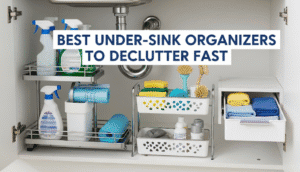
Research from Dtdf Home and Kitchen also points to a commonly overlooked source: many people mistake the smell of leaking cleaning agents from a failed under-cabinet seal for sink odor, and that spot deserves a check of its own. Anyone dealing with cramped or poorly ventilated cabinet space under the sink can find more in the site’s guide to under-sink organizers, since better airflow and organization down there reduces the odds of a second, separate smell source forming. Households with a disposal should also run it with hot water alone once a month to flush residual buildup off the inner walls, and Dtdf Home and Kitchen’s guide to garbage disposals covers model-specific maintenance differences worth knowing.
WHEN THE SMELL ISN’T BUILDUP AT ALL
The drying out of water inside the P-trap is its own separate root cause, and it shows up mostly in long-idle sinks, such as a guest bathroom or a small kitchen sink that rarely gets used. This kind of odor, caused by disuse rather than buildup, resolves easily: run the faucet for about a minute to refill the trap.
A sudden, strong sulfur smell that’s clearly different from the gradual, accumulating kind points to a fault in the plumbing vent pipe instead. That one shouldn’t get treated with baking soda at home, it needs a professional plumber for inspection and repair. Similarly, if a full P-trap refill and thorough clean doesn’t clear the odor within a day, that points to a deeper fault somewhere in the pipeline that also needs a professional look.
For routine upkeep, folding P-trap checks and strainer cleaning into a weekly task list prevents odor at the source without ever requiring larger modifications to the sink setup. Keeping easy-to-reach cleaning tools stored right at the sink is really the only reliable way weekly maintenance actually keeps happening. Specialized kitchen deodorizers can serve as a supplement to this, but they were never built to replace the routine itself.
FREQUENTLY ASKED QUESTIONS
Why does my sink smell worse first thing in the morning?
Bacteria and biofilm in stagnant pipe water produce stronger odor overnight when there’s no water flow to disturb them. Running the faucet for 20 to 30 seconds usually clears it.
Is it safe to pour boiling water into a garbage disposal?
No. High temperatures can warp plastic components inside the unit. Room-temperature warm tap water is sufficient for regular flushing.
How can I tell if a sink smell is a major plumbing fault rather than routine buildup?
A sudden sulfur smell, odor that persists after a thorough cleaning, and slow drainage happening at the same time usually mean a blocked vent or a ruptured pipe, and that combination calls for a plumber’s visit.
Can my dishwasher be making my sink smell worse?
Yes, if they share the same drain line, which is common in most home setups. Grime built up inside the dishwasher can push odor back through the shared pipe and show up at the sink instead.
How long does baking soda and vinegar take to actually work?
Same-day results for mild, recently developed odor. Grime that’s built up over several months needs weekly treatments for 2 to 3 consecutive weeks, since each application only breaks down what it directly touches.
For a broader supplement to this routine, Dtdf Home and Kitchen’s guide to kitchen odor eliminators is worth a look once the P-trap and weekly cleaning habits above are already in place.