
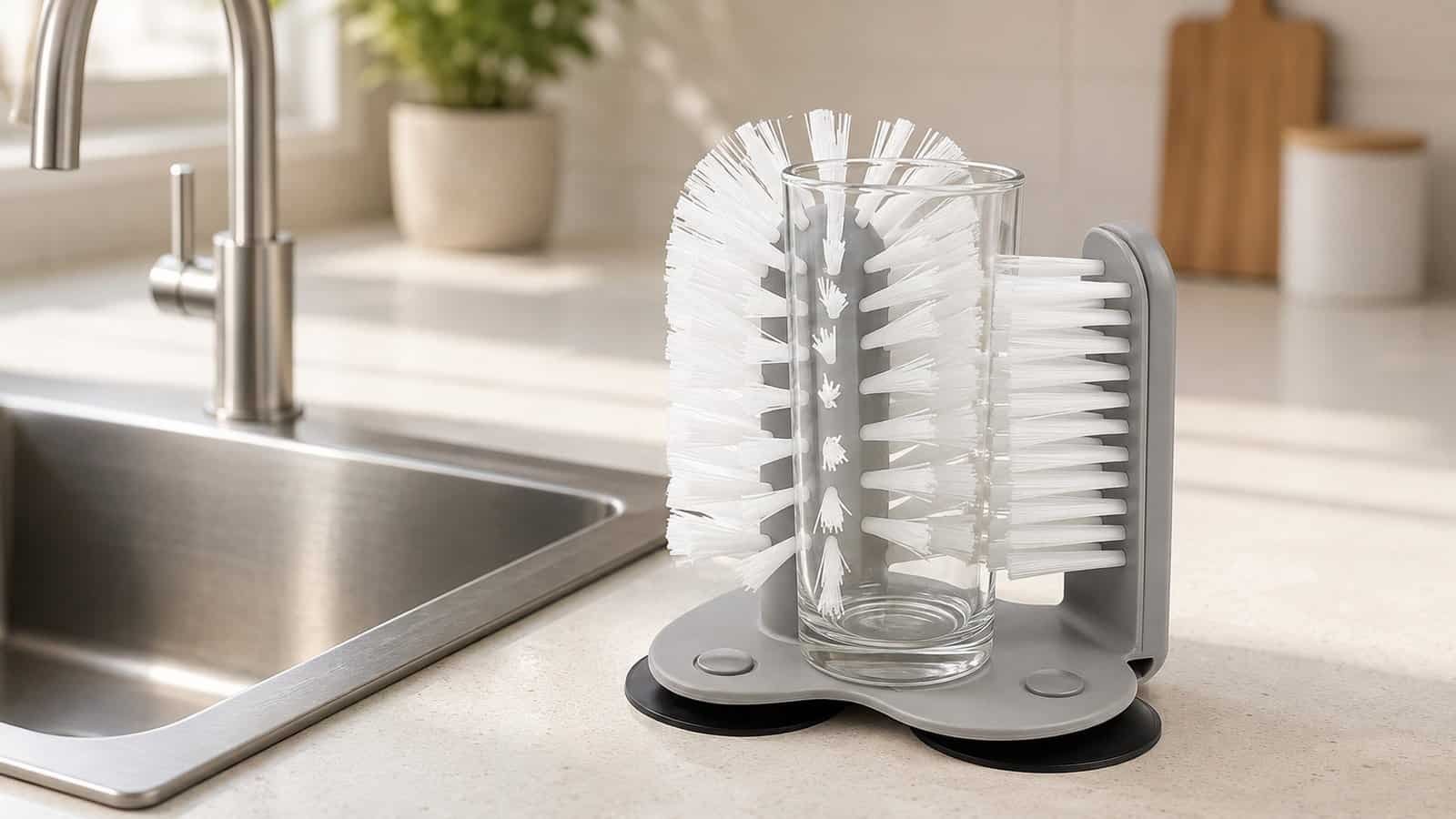
Learning how to clean glasses and cups properly can help you remove drink residue, fingerprints and cloudy marks while protecting delicate glassware. Although washing a cup may seem simple, tall tumblers, narrow beer glasses and wine glasses often contain areas that an ordinary sponge cannot reach comfortably.
Clean glassware makes water, juice, wine and other drinks look more appealing. It also helps prevent old flavours, odours and visible residue from remaining inside frequently used cups.
With a suitable washing method and the right cleaning tool, you can clean the inside, outside, rim and base more thoroughly without making the job unnecessarily difficult.
Why glasses and cups can be difficult to clean
Most glasses look simple from the outside, but their shape can make handwashing awkward. A narrow opening may prevent your hand from reaching the bottom, while curved interiors can leave small areas untouched by a flat sponge.
Common problem areas include:
- The bottom of tall glasses and tumblers
- Narrow interiors
- Curved edges around the base
- The rims of mugs and drinking glasses
- Delicate wine-glass bowls and stems
- Mug handles and decorative grooves
- Dried tea, coffee or juice residue
- Lipstick and grease marks around the rim
- Fingerprints on the outside
- Cloudy patches caused by dried water droplets
Trying to force a sponge into a narrow glass does not always solve the problem. The sponge may become stuck, or you may need to grip the glass tightly while your hands are wet and slippery.
A purpose-designed glass-cleaning brush offers a more practical way to reach these awkward areas.

How to Clean Glasses and Cups Properly
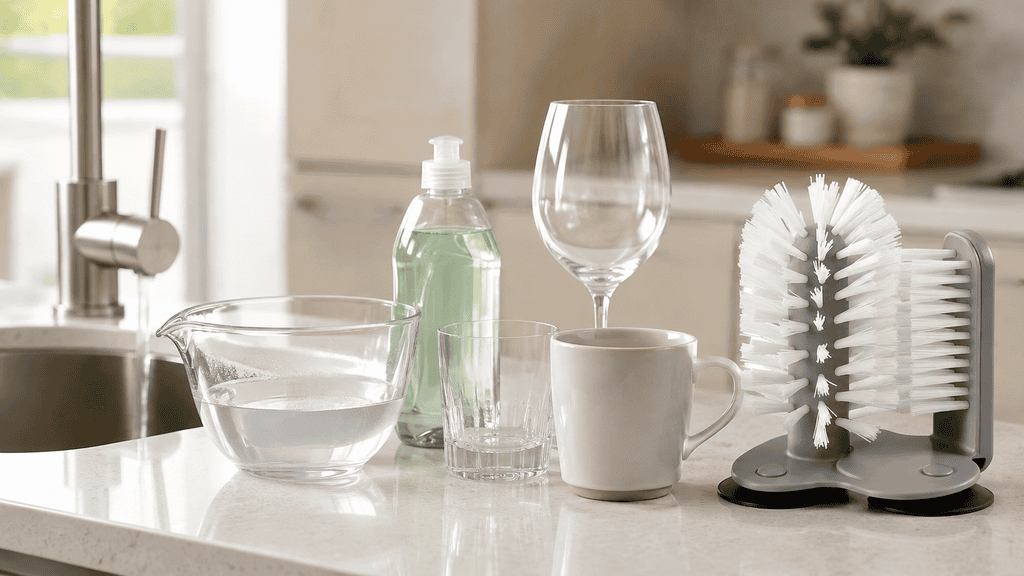
A good washing routine should clean every part of the glass without using excessive force. You will normally need:
- Warm water
- A small amount of washing-up liquid
- A clean sponge or cup-cleaning brush
- A clean draining rack
- A lint-free drying cloth, if required
Before washing delicate glasses, remove knives, heavy pans and metal utensils from the sink. This reduces the chance of your glassware being knocked or scratched while you are cleaning it.
If you have several items to wash, clean the least greasy glasses first. Washing them after oily plates and cookware may leave a film on their surfaces.
Rinse the glass before cleaning
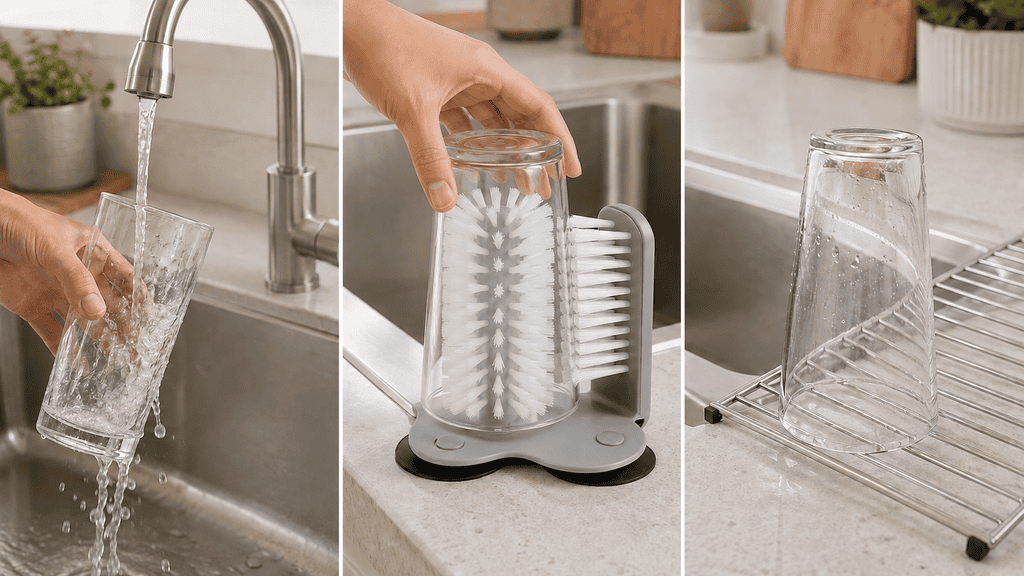
Empty any remaining liquid, ice, fruit or other contents from the glass. Rinse it with warm water to loosen fresh residue before it has time to dry.
If residue has already dried, allow the glass to soak briefly in warm, soapy water. Avoid exposing delicate glassware to sudden temperature changes, as extreme changes may place unnecessary stress on the material.
Use a small amount of washing-up liquid
Using more soap does not always produce a cleaner result. Too much washing-up liquid can take longer to rinse away and may leave a visible film on the glass.
Apply a small amount to your sponge or brush. Add more only when it is genuinely needed.
Clean the inside thoroughly
Pay close attention to the bottom of the glass and the curved area where the base meets the sides. These are common places for drink residue to remain.
With mugs, check for tea, coffee or hot-chocolate staining. With wine and beer glasses, look for marks around the lower bowl, bottom and rim.
Wash the outside, rim and base
Cleaning only the interior can leave fingerprints, grease and lipstick marks visible on the outside.
Wash around the entire rim and exterior surface. Remember to clean the base, mug handle or wine-glass stem where appropriate.
Rinse with clean water
Rinse away all washing-up liquid and loosened residue. Turn the glass carefully so that clean water reaches its inside and outside surfaces.
Inspect and dry the glass
Check the glass for cloudy areas or remaining marks. If necessary, wash the affected area again.
Place the glass on a clean draining rack and allow it to air-dry. If you prefer to dry it by hand, use a clean, lint-free cloth.
Avoid twisting a cloth forcefully inside a delicate wine glass. Holding the bowl in one hand while twisting the base or stem with the other may place unnecessary pressure on the glass.
The Best Way to Clean Tall Glasses and Tumblers
Tall glasses and tumblers can be particularly awkward because the bottom may be beyond the comfortable reach of a sponge. Pushing your hand into a narrow opening can also make the glass harder to hold safely.
A brush with long bristles can reach further into the interior and clean around the bottom edges. For regular washing, a fixed double-sided brush can help clean the interior and exterior during the same action.
How to clean tall glasses with a cup cleaning brush
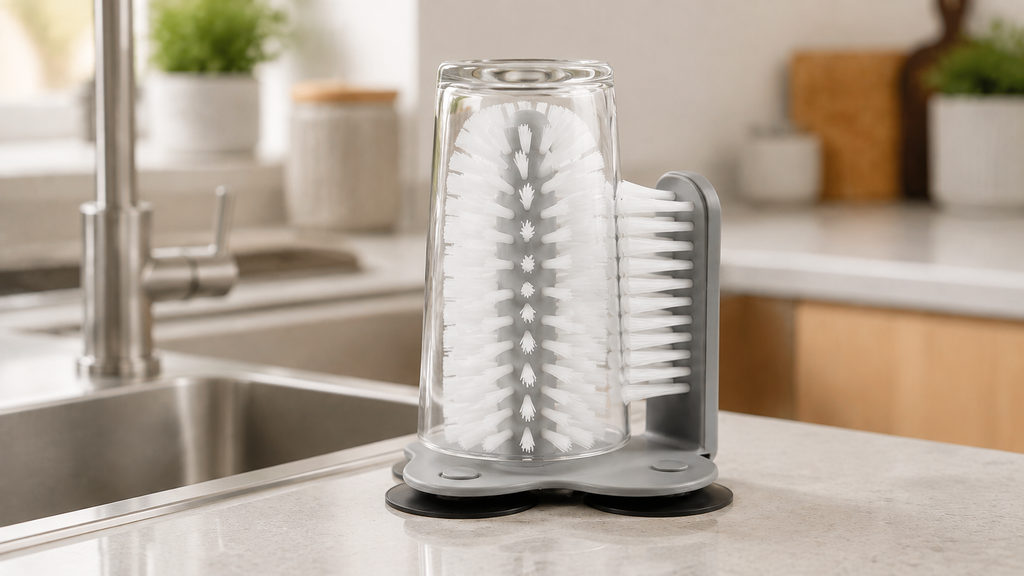
Rinse the tall glass first to loosen any residue. Wet the brush, apply a small amount of washing-up liquid and guide the glass gently over the inner brush.
Move the glass slowly up and down while rotating it. This helps the bristles reach around the interior, including the lower sides and base.
If the brush has an outer section, it can clean the external surface while the inner brush works inside the glass.
Never force a narrow glass onto a brush. If the glass does not fit comfortably, use another suitable cleaning method.
Using a Double-Sided Glass Cup Cleaner
Washing glasses individually with a small sponge can become repetitive, especially after family meals, parties or gatherings.
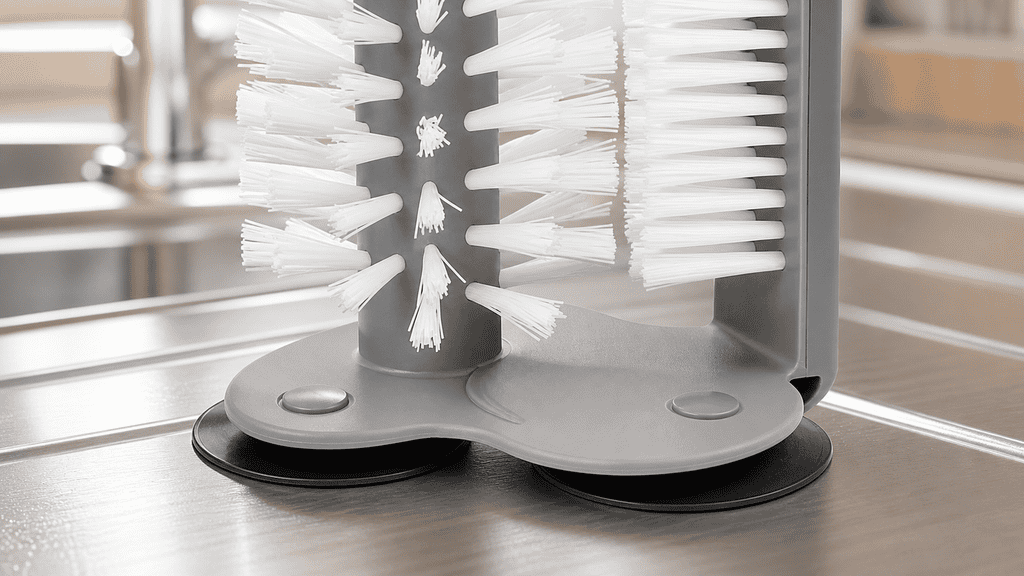
The DTDF Glass Cup Brush Cleaner with 3 Suction Base has a double-sided brush arrangement designed to clean the inside and outside of a cup at the same time.
The glass is positioned between the brushes and moved gently up and down. As it moves, the bristles make contact with both surfaces. Turning the glass slightly helps the brushes clean around its shape.
Its 360-degree cleaning action makes it suitable for a selection of everyday drinkware, including:

- Wine glasses
- Beer glasses
- Mugs
- Tumblers
- Water bottles
This double-sided design can be particularly helpful when the interior of a glass is too deep or narrow to reach comfortably by hand.
Using a cup cleaning brush safely
Before inserting a glass, make sure the brush is stable and the item fits comfortably between the bristles.
Hold the glass firmly enough to control it without squeezing it tightly. Use gentle up-and-down movements and rotate it gradually.
Take extra care with thin wine glasses and other delicate drinkware. Avoid sudden movements, twisting or heavy downward pressure.
Why a Stable Suction Base Matters
A glass-cleaning brush is easier to use when it remains steady beside the sink. If its base slides while you are cleaning, controlling the glass becomes more difficult.
The DTDF Glass Cup Brush Cleaner has three suction cups designed to help secure its base to a suitable smooth surface. A stable position allows you to guide the glass between the brushes with greater control.
For a secure attachment:
- Choose a clean, smooth and level surface.
- Remove grease, crumbs and soap residue.
- Lightly dampen the suction cups if necessary.
- Press the base down firmly.
- Check that all three suction cups have attached.
- Test the base gently before inserting a glass.
Suction performance can be affected by textured, uneven or dirty surfaces. Check the attachment before every use rather than assuming it is still secure.
How to Use the DTDF Glass Cup Brush Cleaner
Once the suction base has been attached securely, the cleaner is straightforward to use.
Step 1: Wet the glass and brushes
Rinse the glass and dampen the bristles with warm water. Wet bristles can move more easily over the surface.
Step 2: Add washing-up liquid
Apply a small amount of your normal washing-up liquid to the brush or glass.
Step 3: Position the glass
Place the glass carefully between the inner and outer brushes. Keep your movements slow and controlled, particularly when cleaning thin or delicate drinkware.
Step 4: Move and rotate it gently
Guide the glass up and down while turning it gradually. This allows the 360-degree bristles to clean around its shape.
Do not force a glass that does not fit comfortably between the brushes.
Step 5: Check the rim and base
Make sure the rim has received enough attention. Depending on the shape of the drinkware, you may need to clean its handle, stem or outer base separately.
Step 6: Rinse thoroughly
Remove the glass carefully and rinse away all washing-up liquid and loosened residue.
Step 7: Dry safely
Place the glass on a clean draining rack or dry it gently with a lint-free cloth.
Following these steps provides a simple answer for anyone wondering how to clean glasses and cups properly without struggling to reach the bottom by hand.

Cleaning Different Types of Drinkware
Although the basic method is similar, each type of drinkware may require slightly different handling.
Cleaning wine glasses with a glass cleaning brush
Wine glasses can be delicate, especially around the stem and where it joins the bowl. Hold the glass gently and avoid sudden twisting movements.
Move the bowl carefully between the brushes without pushing down firmly. Wash the stem and base separately if the bristles do not reach them completely.
Always check that the wine glass fits the brush comfortably before cleaning it.
Cleaning beer glasses and deep tumblers
Beer glasses and tumblers are often tall enough to make the bottom difficult to reach with an ordinary sponge. A suitable long or double-sided brush can clean the interior without requiring you to force your hand into the glass.
Rinse thoroughly afterwards so that no washing-up liquid remains.
Cleaning tea and coffee mugs
Tea, coffee and hot chocolate can leave visible marks inside mugs. Rinsing the mug shortly after use helps prevent residue from drying.
When washing, pay attention to:
- The bottom of the mug
- The curved interior edges
- The drinking rim
- The handle
- The outside base
Persistent stains may require additional soaking with a cleaning method suitable for the mug’s material.
Cleaning everyday drinking glasses
Everyday drinking glasses often collect fingerprints outside as well as residue inside. A double-sided glass brush helps clean both surfaces during the same washing action.
Inspect the glass in good light before placing it on the draining rack.

Why Clean Glasses Can Still Look Cloudy
A glass may have been washed with soap and water but still appear cloudy or marked after drying. Several factors can cause this.
Washing-up liquid residue
Using too much washing-up liquid may leave a light film when the glass is not rinsed thoroughly. A small amount is normally sufficient for everyday drinkware.
Hard-water marks
Minerals in hard water may remain on the glass after water droplets evaporate. These can appear as pale spots or a cloudy coating.
Drying the glass with a clean, lint-free cloth can reduce visible water marks. An occasional diluted vinegar treatment may help with mineral deposits, provided it is suitable for the type of glassware being cleaned.
Grease and fingerprints
A glass may be clean inside but still look marked outside. Grease, fingerprints and lipstick sometimes require more attention than ordinary drink residue.
Cleaning both surfaces instead of concentrating only on the interior helps produce a clearer result.
A dirty sponge or brush
Sponges and brushes collect grease, residue and moisture. If they are not rinsed and dried properly, they may transfer unpleasant smells or residue onto other items.
Clean your washing tools regularly and replace them if they become badly worn.
No Electricity or Batteries Required
The DTDF Glass Cup Brush Cleaner works entirely by hand. It does not require electricity, charging or batteries.
There are no power cables to keep close to the sink and no powered parts to operate. Once the base is attached and the brushes are wet, it is ready to use with your usual washing-up liquid.
Its manual operation and compact design make it a practical option for:
- Home kitchens
- Home bars
- Entertaining areas
- Small kitchen spaces
- Busy sink areas
How to Keep a Glass Cleaning Brush Clean

A cleaning brush also needs regular care. Drink residue, food particles and soap can remain between the bristles if the brush is not rinsed properly.
The removable brush head on the DTDF cleaner makes routine maintenance more convenient.
After using the brush:
- Rinse the bristles thoroughly with clean water
- Check for trapped fruit or drink residue
- Remove and wash the brush head when needed
- Clean soap residue from the base
- Rinse the suction cups
- Allow the components to dry in a ventilated position
- Reattach the base only to a clean surface
- Replace the brush if its bristles become badly worn or damaged
Do not leave dirty washing water around the brush or suction base. A quick rinse immediately after use is easier than removing dried residue later.
Common Glass-Cleaning Mistakes to Avoid
A few simple mistakes can leave glassware looking marked or increase the risk of accidental damage.
Using too much washing-up liquid
Excess soap takes longer to rinse and may leave a visible film. Begin with a small amount.
Applying excessive pressure
Forcing delicate or narrow glassware onto a brush may damage it. If an item does not fit comfortably, choose another cleaning method.
Ignoring the outside surface
Fingerprints and grease can remain visible even when the interior has been cleaned. Wash both sides.
Using a dirty cleaning tool
An old sponge or unwashed brush may spread residue and odours. Rinse cleaning tools after use and allow them to dry.
Attaching suction cups to an unsuitable surface
A greasy, textured or uneven surface may prevent a secure grip. Choose a clean, smooth surface and test the base before use.
Mixing glassware with heavy cookware
Pans, knives and metal utensils can knock against glasses in a crowded sink. Keep delicate drinkware separate whenever possible.
Allowing residue to dry
Tea, coffee, juice and blended drinks are generally easier to remove when the glass is rinsed shortly after use.
Choosing the Right Cup Cleaning Brush
A useful brush should suit your drinkware and the amount of space available around your sink.
Consider the following features:
- A shape that reaches deep inside glasses
- Bristles that contact difficult interior areas
- A stable attachment
- A design that cleans inside and outside
- Easy access for rinsing
- A removable brush head
- Compact dimensions
- Durable construction
- Manual operation without batteries or cables
The DTDF Glass Cup Brush Cleaner combines a double-sided 360-degree brush, a three-suction-cup base and a removable head in one compact design. It is made from durable PP and PVC materials for regular kitchen, bar and sink use.
Useful Situations for a Cup Cleaning Brush
A suction-mounted brush can be helpful in more places than an everyday family kitchen.
After family meals and gatherings
Entertaining guests can leave several glasses waiting beside the sink. Cleaning the inside and outside simultaneously may help make washing up more efficient.
Beside a home-bar sink
A compact glass cleaner can remain conveniently placed near a home-bar sink for suitable beer glasses, tumblers and wine glasses.
In a smaller kitchen
A compact manual brush can be useful where storage, electrical sockets and worktop space are limited.
For reusable mugs and tumblers
People who use reusable mugs or tumblers throughout the day may find a dedicated cup-cleaning brush more convenient than repeatedly forcing a sponge into deep containers.
Frequently Asked Questions
What is the best way to clean tall glasses?
Rinse the glass promptly, use warm water and a small amount of washing-up liquid, and clean the full interior with a brush that can reach the bottom. Turn the glass gently to make sure the sides and lower edges are cleaned.
Can the brush clean inside and outside simultaneously?
Yes. Its double-sided design allows the inner brush to clean inside the glass while the outer brush contacts its exterior.
Does the glass cup cleaner need electricity?
No. It is manually operated and does not require electricity, charging or batteries.
What types of drinkware can it clean?
It is suitable for appropriately sized wine glasses, beer glasses, mugs and tumblers. Each item should fit comfortably between the brushes and should never be forced into position.
Will the suction cups attach to every sink?
The suction cups work best on clean, smooth surfaces. Textured, curved, uneven or greasy surfaces may reduce their grip.
Can the brush head be removed?
Yes. The removable brush head makes rinsing and routine cleaning more convenient.
How should delicate wine glasses be cleaned?
Use slow, gentle movements and avoid excessive downward pressure or twisting. Check that the glass fits comfortably before placing it between the brushes.
How often should the brush be cleaned?
Rinse it thoroughly after every use. Remove and wash the brush head whenever residue collects or a more complete clean is required.
How do I clean glasses and cups properly every day?
Rinse drinkware soon after use, wash its interior, exterior and rim with a clean tool, rinse away all soap and place it on a clean rack to dry. When cleaning deep drinkware, a double-sided cup brush can help reach areas that are difficult to access with a sponge.
Make Washing Glasses and Cups Easier
Knowing how to clean glasses and cups properly is partly about following a good routine and partly about choosing a suitable tool.
The DTDF Glass Cup Brush Cleaner with 3 Suction Base provides a practical alternative to pushing a sponge into deep glassware. Its double-sided 360-degree design cleans inside and outside together, while three suction cups help hold the base on a suitable smooth surface.
It requires no electricity or batteries, and its removable brush head makes regular care more convenient.
View the DTDF Glass Cup Brush Cleaner and order securely through our online self-checkout.