
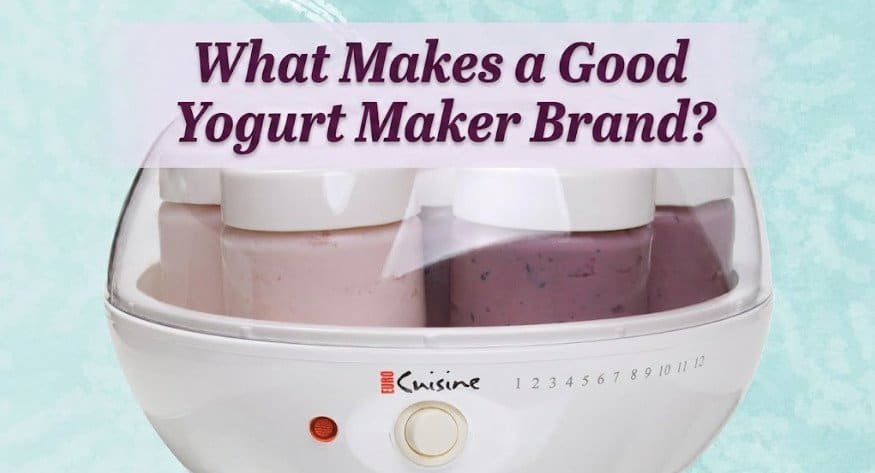
What makes a good yogurt maker brand? Many shoppers ask this question when comparing the growing number of models available online. Anyone who opens a mainstream retail platform to search for yogurt makers will notice something unusual within a few pages of scrolling. The listings often look nearly identical. Brand logos differ, price gaps amount to only a few pounds, and many products use the same photographs. Even the same grammatical mistakes sometimes appear in product descriptions from supposedly unrelated sellers.
What Makes a Good Yogurt Maker Brand?
Most shoppers instinctively choose a familiar, trustworthy-sounding brand, but that long-standing buying habit does not always work well in this category. Once you understand how most yogurt makers are manufactured, the reason becomes much clearer. A relatively small number of factories produce the majority of yogurt makers, while dozens of brands sell the same base product under different labels. As a result, a recognisable logo does not necessarily indicate a different manufacturing process, higher quality standards, or a different factory of origin.
Understanding what makes a good yogurt maker brand requires looking beyond the logo. Instead of relying on brand recognition alone, focus on verifiable factors such as build quality, replacement part availability, warranty coverage, and responsive customer support. These practical indicators provide a much better measure of long-term value than a familiar name on the packaging.
Why Brand Value Runs Thinner in This Category
Why Yogurt Maker Brands Offer Similar Products
Unlike more mature small appliance categories such as stand mixers and food processors, where leading brands often maintain proprietary production standards, patented motor designs, and long internal testing cycles, a yogurt maker is a comparatively simple device. It’s a heating element, an insulated chamber, a timer, and a set of jars. That simplicity keeps the barrier to entry low for new sellers, and it’s the core reason brand value carries less weight here than it does in other kitchen appliance categories.
Why Simplicity Reduces Brand Advantage
The simple design of a yogurt maker means manufacturers have fewer opportunities to differentiate their products through exclusive engineering or complex technology. As a result, brand reputation often carries less weight than it does with more sophisticated kitchen appliances. Buyers should therefore focus on the product’s build quality, reliability, and long-term support rather than assuming a well-known brand automatically offers better performance.
What Matters More Than the Brand Name
This doesn’t mean brand recognition is entirely useless, and it’s worth avoiding both extremes, treating brand as either all-powerful or completely irrelevant. Three signals consistently carry more reference value than a logo: warranty length, replacement part availability, and after-sales responsiveness. Each one is independently verifiable before a purchase happens, which is exactly why they matter more than a name a shopper simply recognizes from advertising.

Why Warranty Matters When Choosing a Yogurt Maker Brand
You can verify warranty terms more easily than the other two signals because manufacturers usually publish them directly on their websites instead of burying them in customer reviews. A reasonable baseline for this category is one year of coverage on the core heating and insulation components. Anything shorter, six months or less, is worth treating as a quiet admission that the manufacturer doesn’t expect the unit to hold up much past that window.
It’s also worth checking exactly what the warranty covers. Some terms apply only to the base unit and specifically exclude the jars, lids, and rubber sealing rings, which happen to be the components that wear out fastest under regular use. A manufacturer confident in those parts tends to include them in the warranty rather than carving them out in fine print. This detail carries far more weight than a star rating, and it takes only a few extra minutes to check directly on the warranty page rather than trusting the summary shown on a product listing.
Citizens Advice – Consumer rights when buying goods
- Explains UK consumer rights, faulty goods, and your legal protections.
- Great for discussing warranty versus statutory rights.
Why Yogurt Maker Star Ratings Can Be Misleading
The most common mistake buyers make is treating a high star rating and a large review count as proof of long-term reliability. Most buyers post reviews on retail platforms within the first few weeks of ownership, so those reviews only show how well the product performed when they first switched it on. That window says nothing about how the unit performs a year in.
Real durability issues, a heating element that starts drifting after eight months of regular use, or a seal that cracks after a year of dishwasher cycles, almost never show up in those early reviews. The only reliable way to check for this kind of problem is filtering specifically for one and two-star reviews written by buyers who purchased the product six months or more before writing. That filtered subset concentrates genuine long-term complaints and predicts a product’s condition after a year of use far more accurately than an overall average rating does.
How to Evaluate a Yogurt Maker Brand Before Buying
Check Replacement Part Availability Before You Buy
What makes a good yogurt maker brand? One of the first things to check is replacement part availability, which provides a far more reliable indicator of long-term value than attractive packaging or persuasive marketing copy. If a manufacturer does not sell replacement jars, seals, or lids separately, the entire unit becomes disposable as soon as a single part breaks, even if the heating element continues to work perfectly. Searching for “replacement [part name]” alongside the specific model number usually reveals whether the manufacturer stocks spare parts. Brands that design products for long-term use typically offer these essential replacements, whereas many short-term white-label storefronts do not, as a significant number of these sellers disappear within a few years of launching.
The table below summarises five important verification signals, what each one suggests about a yogurt maker brand, and the action you should take before making a purchase.
| Signal | What It Suggests | Action to Take |
|---|---|---|
| Warranty shorter than 6 months | Manufacturer doesn’t expect long service life | Check the official warranty page, not the listing summary |
| No jars, seals, or lids sold separately | The product is essentially disposable | Search “replacement jar plus model name” |
| Reviews concentrated in the first 30 days | Long-term reliability data is largely missing | Filter reviews by purchase date, not just star rating |
| Identical listing across multiple store names | Likely a shared factory product resold under different labels | Cross-compare product photos and exact specifications |
| Pre-sale customer service responds promptly | Reasonable proxy for after-sales quality | Time the response to a simple pre-sale question |
The second dimension is customer service response time as a pre-purchase test. Asking something simple, jar capacity or whether the timer supports an extended cycle, and timing the response reveals a surprising amount. Manufacturers replying within a day or two before a sale even happens tend to carry that same attentiveness into after-sales support. A seller taking a full week to respond, or not responding at all, is worth factoring into the decision before any money changes hands, not after.
This method has real limits. It won’t catch every problem, and some sellers are responsive before a sale and considerably less so afterward. Even with that caveat, it filters out the worst offenders at almost no cost, and most buyers skip this step entirely in favor of star ratings alone. dtdf home and kitchen has repeatedly flagged this exact gap in testing: pre-sale responsiveness and after-sales support often turn out to be two largely unrelated things.
How to Compare Yogurt Maker Brands Like an Expert
How to Identify Yogurt Makers from the Same Factory
It helps to see what this looks like in practice rather than treating it as an abstract warning. Imagine two yogurt maker listings priced within a few pounds of each other and sold under different storefront names with no obvious connection. Both products list exactly the same jar capacity, use product photos with an identical background and camera angle, and even contain the same grammatical mistake in the second paragraph of the description.
None of these details alone proves that both products came from the same factory. However, when several similarities appear together, they create a strong indication that both sellers source the same unit from a shared manufacturer.

H3: Compare Warranty and Replacement Parts Before You Buy
Once you notice these similarities, look beyond the product itself. Check whether either brand sells replacement jars, lids, or seals separately and whether it provides a dedicated warranty page instead of a brief warranty statement hidden in the product listing.
In many cases, neither seller offers replacement parts or detailed warranty information. That reinforces an important point: the real difference between two nearly identical yogurt makers often comes down to customer support rather than hardware. A seller that responds quickly to emails and honours warranty claims can provide a much better ownership experience than one that simply offers the lowest price.
Why Shared Manufacturing Is Not a Problem
Finding that two yogurt makers come from the same factory should not automatically concern you. Many respected kitchen appliances across different categories come from a relatively small number of contract manufacturers, and shared production does not indicate poor quality.
The real difference appears after the purchase. Two identical yogurt makers can deliver completely different ownership experiences depending on whether the seller stocks spare parts, responds to support requests, and honours warranty claims months or even years later. Reliable after-sales support has a greater impact on your long-term ownership experience than the factory that manufactured the appliance.
When a Higher Price Actually Adds Value
TMany shoppers assume that a higher price automatically means better quality, but that relationship is only partly true for yogurt makers. More expensive models often include practical features such as:
- Glass jars instead of thin plastic containers
- Adjustable timers instead of fixed fermentation cycles
- Clear warranty terms with documented customer support
However, no price range guarantees these features. Some premium-priced models still omit them while focusing on extras that have little impact on everyday performance, such as smartphone app connectivity. Instead of relying on price alone, compare the features, warranty, replacement part availability, and customer support to decide whether a yogurt maker genuinely offers better long-term value.
What Reviews Can Still Tell You, Used Correctly
Don’t dismiss reviews altogether. Instead, read them differently from the way most shoppers do.A large volume of reviews is still useful for confirming basic functionality, whether the unit arrives working, whether the timer does what the listing claims, whether the jars actually hold the stated capacity. Early reviews provide genuinely valuable information because they help you answer that question.
What early reviews can’t answer is the question that actually matters most for a long-term purchase: what happens to this specific unit after eight, ten, or fourteen months of regular use. That’s a different question requiring a different filter, specifically reviews sorted by purchase date rather than by helpfulness or recency of posting. A handful of one and two-star reviews from buyers six months or more into ownership, describing a specific failure mode like a cracked seal or a drifting thermostat, carries more predictive weight than a hundred five-star reviews posted in the first week.
Applying the Three-Feature Test Directly
The more reliable approach is verifying those three specific configurations directly rather than treating price as a shortcut. Testing has consistently found that mid-range units with a written one-year warranty, glass jars, and an adjustable timer outperform premium products that lack all three but lean heavily on marketing language instead.
For readers comparing specific models rather than brand reputation in the abstract, the 5 Best Yogurt Makers roundup applies this exact framework to evaluate every listed model. A separate guide, the best yogurt makers for probiotic-rich snacks roundup, filters a narrower set of models for users prioritizing live culture retention over general durability specifically.
This same framework carries over cleanly into other small appliance categories. The stand mixer market follows a similar pattern, where a handful of long-standing manufacturers coexist alongside a much larger field of white-label products competing mostly on price. And for anyone considering a sous vide setup as a substitute for a dedicated yogurt maker, the best sous vide machines guide applies this same durability-first evaluation method, in a category with even higher manufacturer concentration and clearer brand track records than yogurt makers have.
What This Framework Can and Can’t Guarantee
None of this guarantees a perfect purchase every time. Reputable brands occasionally ship a defective unit, and unbranded, white-label products sometimes run for years without a single issue. But verifying warranty terms, part availability, and response speed before buying meaningfully improves the odds of picking a reliable product, in a way that relying on star ratings alone simply doesn’t.
Three Final Questions Worth Settling
A longer warranty doesn’t absolutely guarantee better build quality, but it remains a reasonable reference point, since brands offering short warranties are indirectly signaling their own expectations about service life.
White-label or unbranded yogurt makers aren’t necessarily lower quality on a hardware level. Some of the same factories that produce well-known brand models also manufacture these machines. The real problem with these products tends to be unstable after-sales support and inconsistent parts availability, a gap that comes from the seller rather than the underlying hardware itself.
Identifying identical products listed under separate store names is usually straightforward. Comparing product photos alongside precise specifications, like exact jar capacity and wattage, tends to reveal it quickly. The same factories that manufacture recognised name-brand yogurt makers also produce some of these models. This isn’t unique to yogurt makers either. The same pattern shows up across a wide range of low-complexity kitchen gadgets, and the verification steps that work here transfer directly to those categories as well.
Frequently Asked Questions
Is it worth paying a premium for a recognizable brand name?
Occasionally, but most of that premium covers marketing and packaging rather than meaningfully different hardware underneath. Checking warranty length and jar material directly is a more reliable use of research time than brand recognition alone.
What’s the single most useful thing to verify before buying?
Check whether the manufacturer sells replacement jars, lids, and seals separately. Manufacturers that sell individual replacement parts demonstrate confidence in the product’s long-term durability.
Can two listings from completely different sellers actually be the same product?
Yes, and it’s more common than most shoppers expect. Matching specifications and matching flaws reported across stores are strong indicators of a shared factory origin, regardless of how different the branding looks.
Does a high star rating mean a yogurt maker will hold up long term?
Not reliably.Most buyers post reviews within the first month of ownership, before durability issues such as heating drift or seal cracking become apparent. Filtering for older, lower-rated reviews gives a more accurate picture.
Should price be the main factor in choosing between two similar-looking machines?
No. Higher prices often include features such as glass jars and adjustable timers, but they do not guarantee better quality or performance. Checking those specific features directly is more reliable than assuming a higher price covers them automatically.
How much time should someone realistically spend verifying these signals before buying a basic appliance like this?
Ten to fifteen minutes covers most of it. Checking the warranty page, searching for replacement parts, and sending one pre-sale question takes less time than reading through a long thread of reviews, and it produces more useful information for a purchase this size.
Is it ever safe to just trust the top-rated listing without doing any of this?
For an occasional, low-stakes purchase, sure, the odds of a serious problem are still relatively low even without checking. For anyone planning to use the appliance weekly for years, the extra fifteen minutes of verification meaningfully reduces the chance of ending up with a unit that becomes disposable after its first part fails.
To compare specific models side by side using this same framework, the 5 Best Yogurt Makers roundup on dtdf home and kitchen remains the most detailed reference point.