
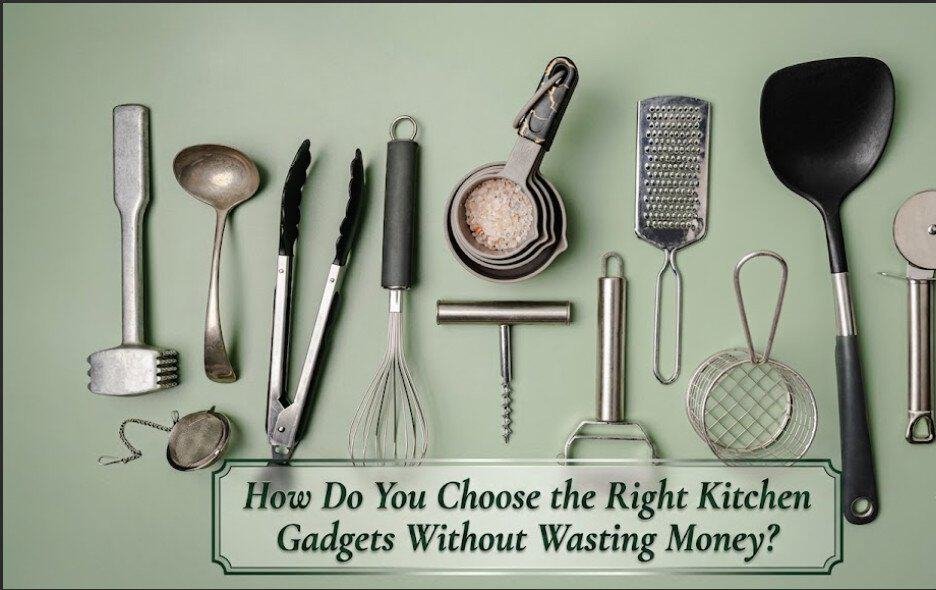
Learning how to choose the right kitchen gadgets can save you money, reduce clutter, and help you build a kitchen filled with tools you’ll actually use. With so many products on the market, it’s easy to buy gadgets that seem useful but end up sitting unused in a drawer. This guide explains how to choose the right kitchen gadgets without wasting money.
Open almost any kitchen drawer and there’s a good chance a small graveyard is hiding in there. An avocado slicer used twice. An egg separator still half in its packaging. Herb scissors that looked brilliant in a product video and pointless the second they got home.
That drawer exists for a simple reason. Gadget shopping usually happens on impulse, driven by influencer “must-buy” lists and slick recommendation videos rather than an honest look at how someone actually cooks. The fix isn’t buying less for the sake of it. It’s making sure every tool that earns a spot in the kitchen matches real, lived habits instead of an imagined version of them.
1. How to Choose the Right Kitchen Gadgets for Your Cooking Style
Start here: look back at the last ten meals actually made at home, not the ten meals someone hopes to start cooking eventually. If none of them involved fine julienne strips or spiralized vegetables, a dedicated julienne peeler or spiralizer probably won’t change that pattern overnight. Habits shift slowly, and a gadget rarely creates a new one on its own.
A 3-in-1 vegetable peeler that handles standard peeling, fine shredding, and coring in one tool tends to be the higher cost-effectiveness choice for most households, since it covers daily needs instead of one narrow use case.
2. How to Choose the Right Kitchen Gadgets for Small Kitchens
Price is usually the first filter people apply, and it’s often the least useful one. A $30 tool that takes up permanent counter space in a small kitchen ends up costing more in daily friction than a $60 version that folds flat or nests away neatly.
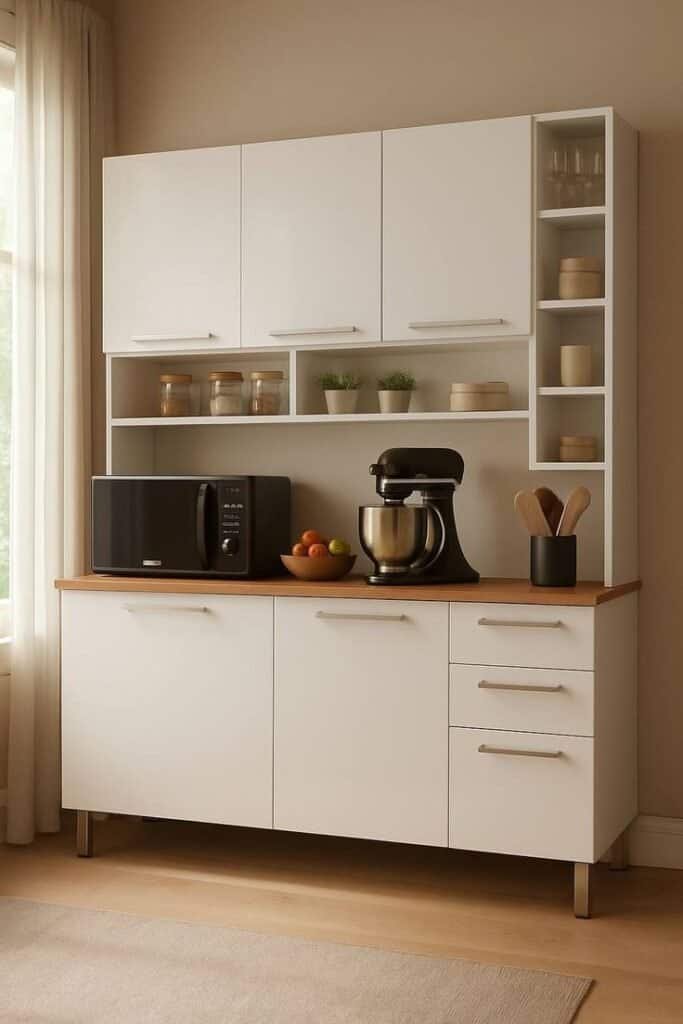
This ties directly into how a kitchen is organized in the first place. Anyone dealing with a drawer full of tangled tools already knows the real cost isn’t the purchase price, it’s digging for the thing every single time it’s needed. Good kitchen organization planning solves that problem before it starts, and a gadget without an obvious home tends to get used less and less until it’s forgotten.
Purchasing priorities, roughly in order of importance:
- How often the task actually comes up in a normal week
- Whether it fits existing storage without rearranging everything
- Build quality on parts that touch food or bear force (blades, hinges, motors)
- Ease of cleaning, since a hassle to wash gets used less over time
Items worth staying wary of: products marketed through flashy, idealized lifestyle scenarios, cheap low-quality builds, trend-driven tools tied to a single viral recipe, and anything that sells almost entirely on visual appeal.
3. How to Choose the Right Kitchen Gadgets That You’ll Actually Use
One of the biggest mistakes people make when learning how to choose the right kitchen gadgets is buying a tool designed for just one specific dish instead of one that can handle a range of everyday tasks. Waffle stick makers, cartoon-shaped rice cooker attachments, and dedicated avocado mashers all do exactly one thing. Once that particular recipe or trend falls out of your routine, the gadget usually ends up unused.
A simple test can help you choose the right kitchen gadgets before spending your money. Ask yourself whether you’ll still use the tool after the specific trend or recipe that inspired the purchase has faded. A stand mixer passes this test because it can make bread, cake batter, and whipped cream. By contrast, a single-use dumpling press rarely justifies its place in the kitchen unless dumplings are already part of your weekly routine rather than a one-time craving.
The same principle applies to appliances as well as hand tools. According to reader feedback received by DTDF Home & Kitchen, many appliances bought on impulse for a single trending recipe end up as expensive, unused clutter within a month. Choosing versatile tools instead is one of the smartest ways to choose the right kitchen gadgets without wasting money.
4. Read Reviews for Recurring Complaints, Not Star Averages
A product sitting at 4.6 stars can still be the wrong fit for a specific kitchen. The overall rating matters less than what’s written in the one and two-star reviews, since that’s where genuine usage problems tend to surface, things like cracked hinges, leaking seals, or blades that dull within weeks.
The pattern matters more than any single complaint. Consumer protection researchers have found that a batch of five-star reviews compressed into a short window, or reviews sharing suspiciously similar wording, are common signs of manipulated ratings rather than a genuinely reliable product; the Canadian Competition Bureau’s guidance on spotting fake reviews breaks this down well for anyone who wants the fuller picture. One or two isolated complaints buried in a sea of praise usually aren’t worth avoiding a purchase over. A repeated pattern across dozens of reviews is a different story entirely.
This same pattern-reading approach is the core logic behind DTDF’s appliance buying guides generally, where the goal is avoiding common kitchen mistakes that surface six months down the line rather than chasing the flashiest option on a shelf.
5. Give It a Cooling-Off Period Before Committing
For anything above a certain price point, waiting a couple of weeks after the initial impulse tends to filter out most bad purchases naturally. This isn’t a new idea. Consumer protection frameworks in several countries build a formal cooling-off period into certain types of purchases for exactly this reason, giving buyers time to separate the initial excitement from a considered decision.

During that gap, it helps to ask something more specific than “do I need this.” Ask instead: which meal this week would have been noticeably easier with this tool. Genuine demand tends to persist through that question. Purchases driven by a fleeting trend usually fade once the initial enthusiasm wears off, and there’s rarely a clean answer waiting when someone tries to force one.
Common Mistakes When Choosing the Right Kitchen Gadgets
Four categories of purchase regret show up across nearly every household DTDF Home & Kitchen hears from:
- Single-use appliances bought after one viral recipe, used once, then stored away
- Redundant tools that overlap with something already doing the job well enough
- Cheap, undersized, or underperforming versions bought to save a few dollars upfront
- Decorative purchases chosen mainly to match a renovation style rather than solve a task
Anyone curious about the flip side, the tools that actually earn their keep, can check DTDF Home & Kitchen’s rundown of kitchen tools people regret not buying earlier for that same decision-making logic run in reverse.
Buying well in the kitchen isn’t about restraint for its own sake. There’s no need for meaningless frugality here. Any kitchenware that earns a spot on the counter or in a drawer just needs its necessity proven by actual use, not by how good it looked in a thirty-second clip.
Frequently Ask Questions
Is it better to buy one multi-purpose gadget or several single-use ones?
Multi-purpose kitchenware fits the vast majority of households, since it covers more weekly meals and gets a higher usage rate overall. Specialized single-purpose tools are only worth it when that one task genuinely comes up often.
How much should a first-time buyer spend on a kitchen gadget?
There’s no need to rigidly chase the cheapest or most expensive option. Mid-range models are usually the smarter starting point, with an upgrade to a premium version only once it’s clear the tool actually fits daily habits.
How much counter clutter is too much before it’s worth decluttering?
If reaching a commonly used tool means moving two or three other things first, that’s a reasonable signal it’s time to re-evaluate what’s earning its spot on the counter versus what’s just sitting there.
Are gadgets seen in viral cooking videos usually worth buying?
Only in rare cases. Those videos show optimal usage scenarios and almost never demonstrate cleanup, storage, or wear after months of regular use, so it’s worth checking independent reviews before trusting a single demo.
Does the same logic apply when buying kitchen gadgets as gifts?
Yes, and arguably more so. A gift still needs to align with the recipient’s actual cooking habits rather than an assumed “standard set,” and a quick conversation beforehand beats guessing every time.
Anyone building a kitchen from scratch might also want to check DTDF Home & Kitchen’s essential kitchen gadgets priority list for where to start first.