
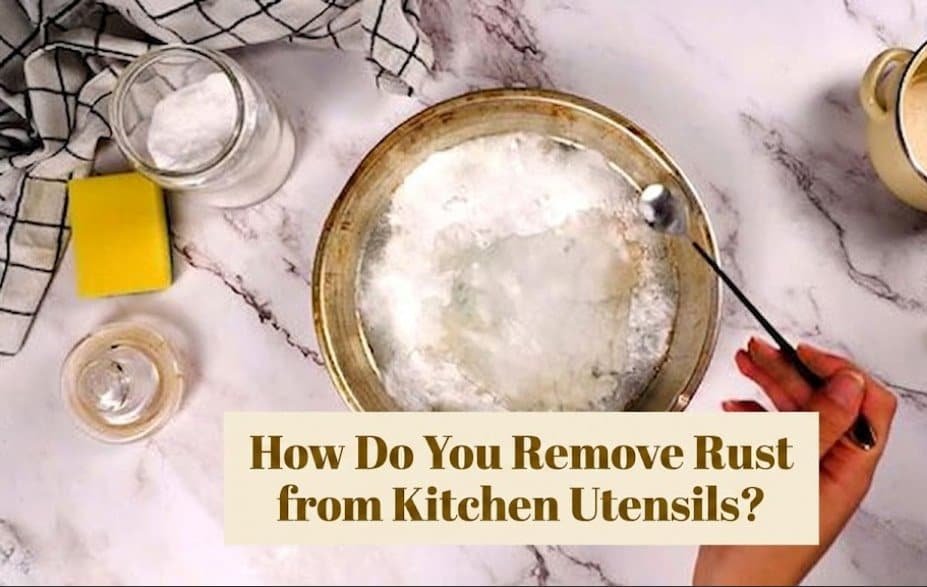
How to Remove Rust from Kitchen Utensils Starts with Understanding Rust
How to Remove Rust from Kitchen Utensils starts with understanding how rust forms in the first place. Many kitchen utensils are damaged by everyday habits that seem completely harmless. A still-warm cast iron pan may be left to soak in soapy water, a carbon steel kitchen knife might be stored in a wooden knife block while still damp, or a stainless steel milk pot could be put away before it has fully dried after scrubbing away burnt residue. Over time, these small mistakes can significantly reduce the lifespan and performance of your cookware and knives.
These small daily oversights, the kind most people never think twice about, are the main triggers behind rust on metal kitchen utensils. Rust never appears out of nowhere. It’s the result of moisture, oxygen and time working together, with minor conditions gradually building up until visible corrosion develops. Understanding this process is the first step in learning how to remove rust from kitchen utensils effectively and prevent it from happening again.
Why Rust Forms on Kitchen Utensils More Often Than You Think
When light brown rust spots first show up on a pan or knife, the instinct is often to assume the utensil is ruined and belongs in the bin. That reaction is usually premature. A kitchen utensil only truly needs replacing once rust has penetrated deep into the metal and compromised its structural strength. In fact, more than 90% of household rust cases can be restored using the correct cleaning and maintenance techniques.
The customer service team at DTDF Home & Kitchen receives this question regularly. Every month, readers send photos of pans, knives and other kitchen utensils that have developed rust after only a few months of use, asking whether the items are still safe to use or should be replaced. This guide explains how to remove rust from kitchen utensils safely, restore your cookware and cutlery, and protect them from future rust.
WHY DIFFERENT METALS RUST AT DIFFERENT SPEEDS
Fixing a rust problem starts with understanding the mechanism behind it. How to Remove Rust from Kitchen Utensils isn’t just about cleaning visible rust it’s also about knowing why different metals rust at different rates. Iron undergoes an electrochemical oxidation reaction when it reacts with water and oxygen in the air, producing rust. Different kitchen utensils resist this process to very different degrees.
Stainless steel contains chromium, which forms a protective passivation layer that helps prevent corrosion. As long as this protective layer remains intact and the utensil isn’t exposed to highly concentrated salt water for long periods, stainless steel is unlikely to rust.
Carbon steel, however, contains no additional alloy protection. As a result, bare carbon steel can develop surface rust within just a few hours of exposure to moisture, which often surprises first-time owners. Cast iron has a naturally dense structure, but it can still rust if it isn’t cared for correctly.
The most common mistakes with cast iron include allowing the pan to air-dry after washing, using strong washing-up liquid that removes the protective seasoning, or storing the pan in a damp cupboard for long periods. Understanding these causes is an important part of learning how to remove rust from kitchen utensils and preventing rust from returning in the future.

A FOUR-STEP RUST REMOVAL PROCESS FOR CAST IRON AND CARBON STEEL
For cast iron and carbon steel utensils specifically, a reliable four-step restoration process handles most cases:
- Thoroughly clean all oil stains and impurities off the pan’s body first.
- Treat the rust according to severity. Light rust responds well to repeated wiping with potato skins dipped in baking soda. Heavy rust needs 3000-grit fine sandpaper, sanded gently to remove the rust layer without scratching the pan body underneath.
- Turn on low heat and thoroughly dry every part of the pan. This step can never be skipped, since any trapped moisture undoes the previous two steps almost immediately.
- Spread a thin layer of cooking oil across the dry pan to rebuild a protective layer.
Following this process returns most utensils to a usable state and avoids the unnecessary waste of perfectly repairable kitchen tools. Readers looking for a fuller walkthrough on ongoing cast iron care can find more detail in Dtdf Home and Kitchen’s guide to cleaning cast iron properly.
RE-SEASONING A CAST IRON PAN IN THE OVEN
For household kitchenware it is a common pain point across countless homes, and the correct method varies completely depending on material, which is exactly why so many expensive pieces of kitchenware end up damaged by the wrong fix applied at the wrong time.
For cast iron specifically: after cleaning a rusted pan, place it upside down in an oven and bake it at 450°F for one hour, letting it cool completely inside the oven afterward.
Pans with only minor rust are usually fully re-seasoned after a single round of this process, while heavily rusted pans may need two to three repetitions. The protective coating that forms afterward tends to be more even and durable than whatever built up casually over years of ordinary use.
A TIERED APPROACH FOR STAINLESS STEEL KNIVES
Knives usually show small, shallow rust spots rather than widespread corrosion, and the fix scales with severity. Mild rust comes off with a baking soda paste wiped along the grain of the blade. Stubborn spots respond to white vinegar applied directly for 5 to 10 minutes before wiping clean.
One critical rule here: vinegar should never sit on a metal surface for long, since it will corrode the base material given enough time. A magnetic rack or a dry knife rack afterward helps prevent the rust from simply reforming during storage, and Dtdf Home and Kitchen’s roundup of knife blocks built for proper drying and airflow covers a few options worth considering for that. Commercial rust erasers are also a solid option for knives specifically, since they’re easy to use and won’t scratch the blade’s surface.
COMPARING FIVE COMMON RUST REMOVAL METHODS
| Method | Best For | Difficulty | Risk |
|---|---|---|---|
| Steel wool | Heavy rust, cast iron only | Moderate | Scratches stainless steel |
| Chainmail brush | Cast iron, baked-on residue | Low | Minimal on cast iron |
| Baking soda paste | Mild rust, knives and pans | Low | Very low |
| White vinegar soak | Stubborn spots, short exposure | Low | Corrodes metal if left too long |
| Commercial rust eraser | Knives, precision spots | Low | Minimal |
| Potato + dish soap | Mild rust, cast iron | Low | Very low, gentle on seasoning |
The potato and dish soap method is the lesser-known option on this list, and it works because the oxalic acid naturally present in potatoes reacts with rust directly. It’s gentle enough not to damage an intact protective coating on cast iron, though it’s only suited to mild rust rather than anything advanced.
DAILY HABITS THAT ACTUALLY PREVENT RUST
More long-term value than rust removal ever will, and a handful of daily habits go a long way toward avoiding the problem in the first place. Rinse and dry cookware immediately after contact with highly acidic ingredients like ketchup or vinegar-based marinades.
Clean oil and grease off surfaces thoroughly after use. Confirm cookware is completely dry before it goes back into storage. Avoid piling different metal types together for extended periods. And check for residual water trapped in edge crevices after every wash, since that’s the spot most people miss.

Coastal regions and kitchens with poor ventilation carry higher risk for the kind of moisture buildup that triggers corrosion, and this isn’t a matter of careless habits so much as ambient humidity doing its work quietly over time. A supplementary fix many readers have tested and confirmed works well. Placing silica gel desiccants in the drawers used to store kitchenware. Since they continuously pull excess moisture out of the space.
HOW STORAGE HABITS, NOT CLEANING HABITS, CAUSE MOST RUST
Across reader reports suggests rust on most metal kitchenware traces back to improper daily storage rather than poor cleaning technique. When cookware sits stacked together in sealed drawers with no air circulation. Different parts of each item dry at uneven rates, creating moisture-trapping dead zones .Kick off rust exactly where nobody’s looking.
Once correct storage habits are in place, this category of rust problem becomes almost entirely avoidable. Readers wanting to rework their broader kitchen storage setup can find more in Dtdf Home and Kitchen’s separate deep dive on smart kitchen organization.
THREE RUST-PREVENTION MISTAKES TO AVOID
3 mistakes come up constantly in reader questions: 1. Letting cast iron and carbon steel cookware air-dry naturally instead of towel-drying and heating it, 2. Scrubbing stainless steel with steel wool (which leaves tiny scratches that roughen the surface and give rust more places to grab onto), 3. Storing knives loosely enough that they knock against each other, chipping the protective coating and exposing bare metal underneath.
Looking to tighten up their overall routine can also check Dtdf Home and Kitchen’s rundown of common kitchen mistakes for more context beyond just rust.
FREQUENTLY ASKED QUESTIONS
Can rusted cookware be used normally once the rust is removed?
Yes, in the vast majority of cases, as long as the rust hasn’t eaten through the metal’s structural integrity. Surface rust that’s been properly treated and re-seasoned or re-coated performs the same as it did before.
Does iron rust actually harm human health?
Ingesting small amounts of iron oxide isn’t considered a significant health hazard on its own, though rusted cookware often also carries off-flavors and reduced cooking performance, which is reason enough to treat it rather than ignore it.
Does cleaning knives with vinegar too frequently cause damage?
Yes, if vinegar is left on the blade for too long or used too often without rinsing. Occasional short applications for spot rust removal are fine, but vinegar shouldn’t become a regular all-purpose knife cleaner.
How often do cast iron pans need to be re-seasoned?
Every 3 to 12 months, depending on usage intensity. Dull or rough pan surfaces, repeated food sticking to the bottom, or impact damage exposing raw cast iron are the three clearest signs it’s time to reapply the seasoning layer.
For a longer-term, more systematic approach to cast iron care beyond rust fixes, Dtdf Home and Kitchen’s in-depth cast iron pan maintenance guide is worth reading in full.