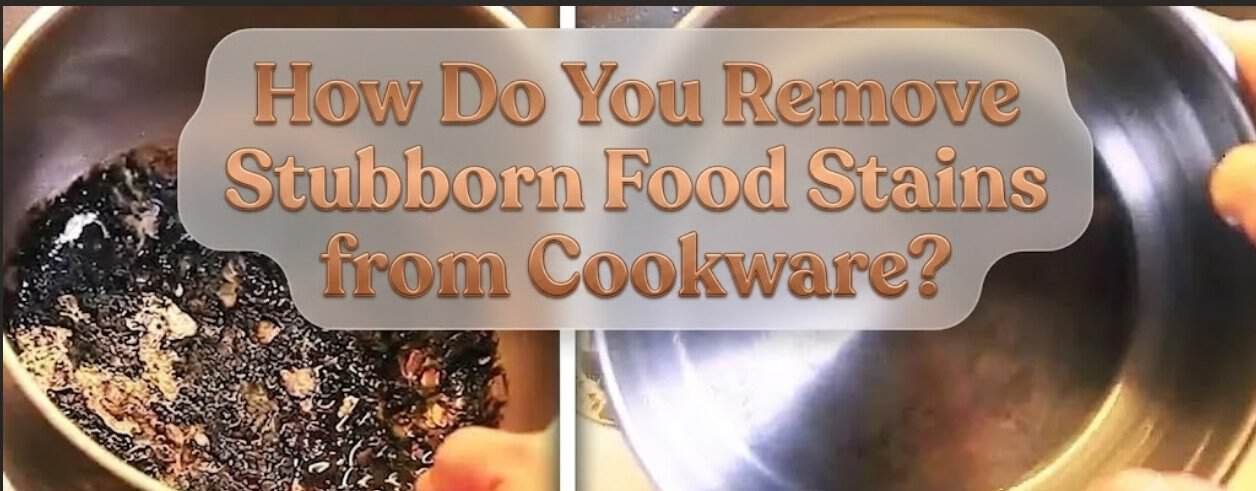
How Do You Remove Stubborn Food Stains from Cookware?
Many people hold two common misconceptions about cookware cleaning: first, they believe that burnt marks on pot bottoms and gray rings on the inner walls of stockpots are irreversible permanent marks that form after years of use, so they can only keep using their cookware in that worn state. Second, they assume that if a stain cannot be removed even with soap and a scouring pad, no other solution exists, they must either live with the stain or replace their cookware entirely.
In fact, both of these views are completely unfounded. From the perspective of how chemical cleaning formulas work, the ordinary dish soap people use daily can only remove fresh oil stains on dinner plates, and is completely unable to break down special tough stains such as grease cured by repeated high heat, stubborn discoloration left by tomato-based ingredients, and limescale formed from hard water.
However, the vast majority of these hard-to-clean stains can be fully eliminated with a targeted chemical cleaning solution, so there is no need to tolerate persistent stains or replace cookware ahead of time.
The Four Mainstream Cleaning Solutions
To help people quickly select the right method for their situation, we have compiled the core parameters of four mainstream cleaning solutions.
First, the two basic household solutions: baking soda paste relies on its weak alkaline decomposition power to remove burnt-on tough grease, and it must be left to sit for 15 to 20 minutes to take effect. White vinegar soaking relies on acidic dissolving power to remove hard water limescale, and it works after 30 minutes of soaking.
The other two solutions are a combination method of first applying baking soda then wiping with white vinegar, and oxalic acid based professional cleaners represented by Bar Keepers Friend. We have organized the applicable scenarios, prohibited materials, and working time of these four solutions into a clear supporting table below, which explicitly notes that oxalic acid based cleaners are forbidden for use on non-stick pans and aluminum pots, a restriction the brand’s own safety guidance also spells out in its advice on surfaces to avoid.
| Method | Best for | Avoid on | Contact time |
|---|---|---|---|
| Baking soda paste | Baked-on grease, scorching | Hard water marks | 15-20 minutes |
| Vinegar soak | Mineral deposits, discolouration | Burnt-on grease | 30 minutes |
| Combined (soda, then vinegar) | Heavy staining on stainless steel or cast iron | Non-stick coatings | Sequential, applied one after the other |
| Oxalic acid cleaner (e.g. Bar Keepers Friend) | Rust, mineral scale | Non-stick pans, aluminium | 5-10 minutes |
Finally, we correct the most common operational mistake that the general public makes: never mix baking soda and vinegar directly inside a pot. The two substances will undergo an acid-base neutralization reaction and lose all cleaning power. Only by using them sequentially, one after another, can both materials exert their respective intended cleaning effects.
As the opening of the cookware cleaning and maintenance series launched by Dtdf Home and Kitchen, this piece first releases the core conclusion from our site’s in-house testing: the step-by-step combined cleaning method evaluated in this test far outperforms the widely available one-step mixed-ingredient cleaning method common on the market, and delivers especially outstanding stain removal results for heat-induced ring discoloration on the bases of two frequently used cookware types, stainless steel and cast iron.
Material Changes Everything
This module addresses the core detail of material compatibility that is universally omitted from general stain removal guides. We lay out clear rules for three mainstream cookware categories.

Cast iron cookware can withstand the harshest cleaning methods suitable for any common cookware, including scrubbing with steel mesh and rubbing with coarse salt, after deep cleaning, users only need to lightly re-season the pan’s curing layer. Our guide on how to clean cast iron properly classifies cast iron care as a specialized maintenance category separate from general stain removal.
Stainless steel cookware can safely use baking soda, edible vinegar, and specialty cleaners like Bar Keepers Friend, but steel wool is strictly prohibited, as it will leave micro-scratches that make the pan far more prone to trapping future stains. Our roundup of the best stainless steel cleaners provides readers with a purchasing reference.
Non-stick cookware requires the most cautious care: abrasive scrubs, steel scrubbers, and long-term soaking in acidic substances are all forbidden, as these will degrade the non-stick coating and drastically shorten the cookware’s service life. We recommend gentle wiping with warm soapy water and a soft sponge. Our guide to 10 non-stick pans explains the properties of various coating types in detail, to help users verify the tolerance limits of their own cookware.
Prevention Matters as Much as Removal
This module focuses on key stain prevention practices to reduce the difficulty of future cleaning. Specific practices include: while the pan is still warm after cooking, add a small amount of water or stock to swish the pan and remove food residues, avoid letting leftover food cool on the pan’s surface, soak dirty pans promptly for cleaning instead of leaving them piled in the sink overnight, and match the appropriate heat level to the cookware’s material.
For example, high heat on stainless steel pans easily produces blue rainbow-coloured heat stains, these stains can be removed with vinegar or citric acid, and are not permanent damage. Our guide to the best cast iron skillets also notes that the inherent quality of cookware affects how easily stains accumulate, rather than only influencing the effectiveness of stain removal.
Common Mistakes Worth Naming
Many ordinary households often fall into three common pitfalls when cleaning their cookware: scrubbing stainless steel pans hard with steel wool, soaking non-stick woks for excessively long periods, and scrubbing newly used cookware vigorously as soon as stains are spotted. All these small habits, which stem from wanting to save time by skipping necessary waiting periods, are not severe mistakes, but they quietly shorten the service life of cookware.

The core principle for removing stains from cookware is actually clear: select cleaning chemicals that match the cookware’s material, leave enough time for the cleaning agents to take effect, then complete physical scrubbing.
FAQs
Does a rusted cast iron pan need to be discarded?
Almost all rust on cast iron pans can be removed, simply scrub the pan with coarse salt or steel wool, then re-season it. Mild surface rust is an easily fixed minor issue, and it will never render the pan unusable.
If a stainless steel pan develops rainbow or blue discoloration, is it damaged?
That discoloration is heat-induced, formed by the reaction between high temperatures and the chromium oxide layer on the pan’s surface. It only affects appearance and causes no substantial damage, and it can be easily removed with vinegar or a dedicated stainless steel cleaner.
Can bleach be used to wash all cookware?
Bleach is not recommended for the vast majority of cookware, as it corrodes metal surfaces, and it can even completely destroy the cured seasoning layer on cast iron pans. We recommend using baking soda, vinegar, or a dedicated chlorine-free cleaner instead.
What is the maximum safe soaking time for different types of cookware?
Stainless steel and cast iron pans can be soaked for at most 1 hour, prolonged soaking will easily cause cast iron to rust, while non-stick pans can only be soaked for 15 to 20 minutes.
If cookware is labeled dishwasher-safe, can I leave all cleaning to the machine?
Even these cookware items can retain residual stains. Dishwasher detergents only remove everyday grease, mineral deposits and burnt-on stains still require manual cleaning. Long-term use of a dishwasher can also cause stainless steel surfaces to become dull.
If you are troubled by heavy grease buildup, you can refer to our supporting guide to the top 5 grease removal products.