
What Foods Should Never Be Stored Together?
A familiar scene shows up in reader questions over and over: a fruit bowl on the counter holding apples, strawberries, and bananas, all piled together because that’s just where fruit goes. Within a couple of days, the berries have gone soft and the bananas have browned past the point anyone wants to eat them.
Nothing about that pairing looks wrong at a glance. It’s still one of the most common storage mistakes in home kitchens, and it rarely comes down to carelessness. Most people simply never learned the chemistry and biology sitting behind it.
Why Fruit Ripens Faster Next to Other Fruit
The short version: many fruits release ethylene gas as they ripen, and that gas speeds up ripening in whatever sits nearby. Apples, pears, and avocados are heavy ethylene producers. Strawberries, grapes, and mangoes that haven’t fully changed color are highly sensitive to it, and storing the two groups together can shorten the sensitive group’s shelf life by more than a third.

This is really the first category of mistake worth knowing, and it only affects how long ingredients last, not whether they’re safe to eat.
Quick Reference: What to Keep Apart on the Counter
| High Ethylene Producers | Ethylene-Sensitive Produce |
|---|---|
| Apples | Strawberries |
| Pears | Grapes |
| Avocados | Unripe mangoes |
| Bananas | Leafy greens |
| Tomatoes | Cucumbers |
Onions and Potatoes Belong in Separate Bins
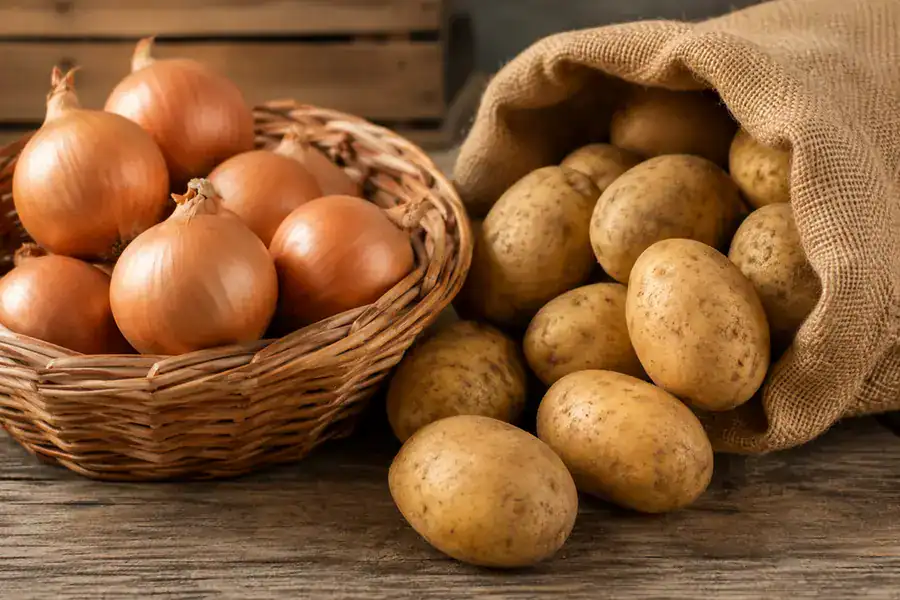
Plenty of households store onions and potatoes in the same basket or pantry bin, and that pairing actively shortens the life of both. Onions give off moisture that accelerates potato sprouting, and sprouted potatoes develop higher levels of solanine, a natural toxin the potato produces as sprouting progresses. Iowa State University Extension’s guidance on sprouting and greening potatoes explains why cutting away sprouts and green patches matters, and why heavily sprouted potatoes are safer thrown out than eaten.
The fix is simple. Keep onions and potatoes in separate, well-ventilated containers rather than sharing one bin. This is exactly the kind of detail that comes up constantly in questions about pantry organizers and how to actually keep produce that shouldn’t touch apart from each other.
Raw Meat Has No Business Near Ready-to-Eat Food
This is the one storage mistake that carries real safety weight rather than just affecting shelf life. Placing unsealed raw meat on an upper refrigerator shelf, directly above ready-to-eat salads or pre-cut fruit, lets leaking juices carry bacteria like salmonella or E. coli straight down onto food that won’t be cooked before it’s eaten.
The correct setup is straightforward: seal raw meat well and place it on the bottommost shelf, physically separated from anything ready-to-eat. The USDA’s food safety guidance on refrigeration confirms this same placement, along with keeping raw meat, poultry, and seafood in sealed containers to prevent juices from spreading. Cross-contamination tied to raw meat is one of the most common, and most preventable, triggers of foodborne illness traced back to home kitchens, and the same logic extends to cutting boards used for raw meat, which is covered in more depth in DTDF Home & Kitchen’s broader kitchen safety guidance.
Refrigerators Aren’t as Sealed as People Assume
Here’s where people usually go wrong: assuming a closed refrigerator door means everything inside stays in its own little bubble. Butter, eggs removed from their carton, and soft cheese all absorb surrounding odors easily, while onions, garlic, and certain fish spread their scent fast.
Eggs are the clearest example. Eggshells are porous, and storing eggs unsealed next to something strong-smelling doesn’t just affect the fridge’s overall odor, it can genuinely change how the eggs taste once cooked. Keeping eggs in their original carton solves this on its own, acting as a barrier the open shelf air doesn’t provide. Anyone dealing with a fridge that seems to pick up smells no matter what’s inside might also find DTDF Home & Kitchen’s roundup of odor eliminators worth a look alongside better shelf organization.
Garlic and Potatoes Are a Lesser-Known Pairing Problem
Less recognized than the onion-potato issue, but just as real: garlic stored close to potatoes tends to sprout, mold, or rot faster, since the moisture potatoes release damages the dry papery skin garlic depends on to stay fresh.
The fix mirrors the onion situation. Garlic wants a dry, well-ventilated spot, ideally hung in a mesh bag rather than sealed in plastic, kept apart from anything giving off moisture. Potatoes need darkness and cool room temperature, not the refrigerator, since cold temperatures convert their starches into sugar and change both texture and taste.
A Few More Hidden Storage Mistakes
- Storing tomatoes in the fridge next to herbs, which slows ripening and mutes flavor in a way people usually blame on the tomato itself
- Keeping bread near onions or garlic, since its porous crust absorbs stray odors easily
- Placing a fruit bowl under a poorly ventilated cabinet, which traps ethylene gas closer to everything sitting in it
- Assuming every vegetable belongs in the crisper drawer, when tomatoes and potatoes actually hold up worse in cold, humid conditions
None of these cause obvious, immediate harm. That’s precisely why they persist for years in most households, quietly shortening how long groceries last while the blame usually lands on the ingredients themselves rather than where they were sitting.
A little separation, based on what each food actually needs rather than what’s convenient in the moment, solves most of this without much extra effort.
Frequently Ask Qeustioins
Is it true that bananas can ripen other fruit faster just by sitting nearby? Yes. Bananas release high levels of ethylene, and placing them near ethylene-sensitive produce like berries or leafy greens speeds up spoilage in those items specifically.
Does storing onions and potatoes together cause a safety issue or just a spoilage one? Mainly spoilage. The bigger safety concern only comes in if potatoes are left long enough to sprout heavily, since sprouted and green potatoes contain elevated solanine levels that make them worth discarding rather than eating.
Is putting raw meat on the bottom shelf really necessary, or is that overly cautious? It’s a genuine food safety rule, not an overly cautious habit. Sealed raw meat on the bottom shelf prevents juices from dripping onto anything stored below it, which is one of the more direct ways cross-contamination happens at home.
Can eggs actually pick up smells from other food in the fridge? Yes. Eggshells are porous enough to absorb nearby odors, which is why storing them in their original carton blocks smell transfer and helps reduce moisture loss compared to an open egg tray.
Do all fruits and vegetables really need to go in the crisper drawer? No. Tomatoes and potatoes specifically hold up better stored outside the refrigerator, and treating every piece of produce the same way is one of the more overlooked storage habits worth rethinking.
For anyone looking to rework how their fridge and pantry are laid out, DTDF Home & Kitchen’s guide to food storage containers worth having on hand is a solid place to start.