
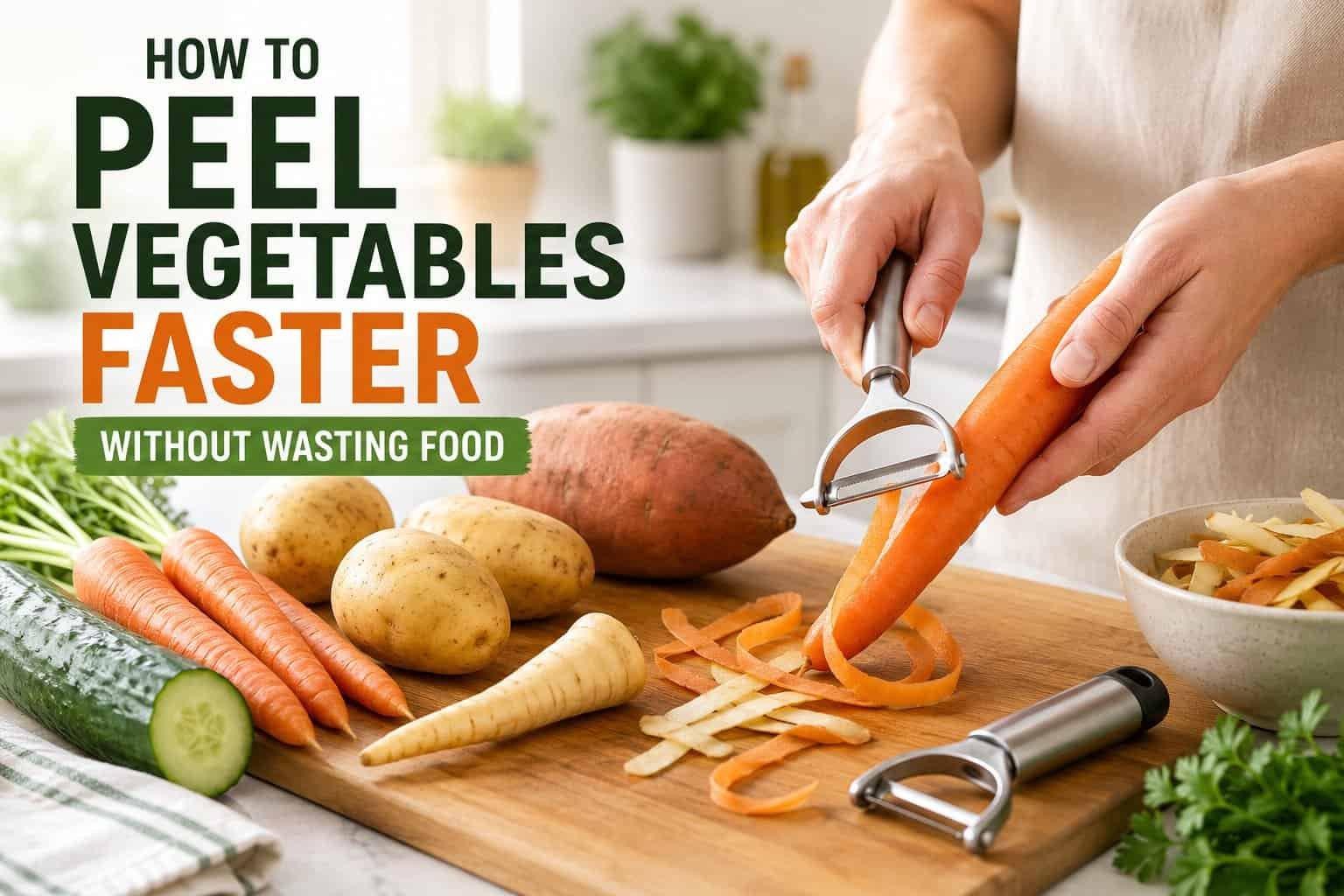
Introduction
Preparing vegetables is one of the most common tasks in any kitchen, yet it is also one of the easiest places to lose time and waste perfectly edible food. Many people peel vegetables out of habit without considering whether peeling is necessary or how much of the vegetable is being removed in the process. Using the wrong technique or a blunt vegetable peeler can make preparation slower, increase frustration and lead to unnecessary waste.
Fortunately, peeling vegetables efficiently is a skill that anyone can improve. Small changes such as choosing the right peeler, using the correct grip and removing only a thin layer of skin can make meal preparation quicker while helping you get more from every vegetable you buy.
In this guide, you’ll learn practical methods for peeling vegetables faster, discover which vegetables benefit from peeling and which often do not, understand the differences between common types of vegetable peelers, and explore simple habits that can reduce food waste in your kitchen. Whether you’re cooking for yourself or preparing meals for a busy family, these tips can help make everyday food preparation easier and more efficient.
Quick Summary
If you’re short on time, here are the key takeaways from this guide:
Use a sharp vegetable peeler for faster, cleaner results.
Wash vegetables before peeling to remove dirt and improve grip.
Peel only a thin layer to reduce unnecessary food waste.
Not every vegetable needs peeling many skins are edible and nutritious.
Match the type of peeler to the vegetable you’re preparing.
Clean and dry your peeler after each use to keep it working efficiently.
Replace a dull peeler rather than forcing it through vegetables.
Why Do People Waste So Much Food When Peeling Vegetables?
One of the biggest mistakes people make in the kitchen is removing far more of the vegetable than necessary. Every extra millimetre of flesh removed with the skin reduces the amount of usable food, which can add up over time especially if you prepare fresh vegetables regularly.
Several factors contribute to unnecessary waste:
- Using a blunt vegetable peeler.
- Applying excessive pressure.
- Using a knife instead of a peeler for thin-skinned vegetables.
- Peeling vegetables that don’t actually need peeling.
- Rushing through food preparation.
A sharp vegetable peeler is designed to remove only a thin outer layer, preserving more of the edible portion beneath. In contrast, a kitchen knife can remove much thicker slices, making it easier to waste food unless used carefully.
It’s also worth remembering that many vegetable skins contain fibre and nutrients. If the skin is clean, tender and suitable for the recipe, leaving it on can save time while increasing the nutritional value of the meal.
Kitchen Tip: Before peeling any vegetable, ask yourself whether the recipe actually requires the skin to be removed. In many cases, a thorough wash is all that’s needed.
Which Vegetables Should You Peel?

Not all vegetables need peeling. The decision often depends on the vegetable’s age, the recipe you’re making and personal preference. Young vegetables with thin skins can often be cooked and eaten without peeling, while older vegetables with tougher skins may benefit from having the outer layer removed.
The table below provides a general guide.
| Vegetable | Peel? | Why? |
|---|---|---|
| Potatoes | Usually | Older potatoes often have thicker skins, though new potatoes are commonly cooked with the skin on. |
| Carrots | Optional | Scrubbing is often enough if the carrots are fresh. |
| Cucumbers | Optional | Thin-skinned varieties can usually be eaten unpeeled. |
| Sweet Potatoes | Usually | Peeling creates a smoother texture for many recipes. |
| Parsnips | Usually | Peeling removes the tougher outer layer on larger parsnips. |
| Courgettes | No | Their skin is soft, edible and contains nutrients. |
| Beetroot | Usually after cooking | The skin often slips off easily once cooked. |
Rather than peeling automatically, think about the final dish. For soups and stews, skins may soften during cooking, whereas mashed vegetables or purées often benefit from a smoother texture.
How to Peel Vegetables Faster

If preparing vegetables feels slow or frustrating, the issue is often the technique rather than the task itself. Professional chefs don’t necessarily work harder they work more efficiently by using the right tools and developing consistent habits.
Follow these simple steps to speed up your vegetable preparation.
Wash Vegetables First
Always rinse vegetables under clean running water before peeling. This removes dirt and grit that can dull the blade and makes the surface easier to handle.
Dry the Vegetable
A slightly damp vegetable is easier to control than one that’s dripping wet. Pat it dry with a clean kitchen towel before peeling.
Hold the Peeler Correctly
Use a comfortable grip and allow the blade to glide over the surface. Avoid gripping too tightly, as this can lead to hand fatigue during longer preparation sessions.
Peel in Long, Smooth Strokes
Instead of making short, choppy movements, peel from one end of the vegetable to the other using long, controlled strokes. This is usually faster and produces a more even result.
Rotate the Vegetable
Rather than twisting your wrist, rotate the vegetable as you work. This improves control and reduces strain, especially when peeling round vegetables such as potatoes.
Keep the Blade Sharp
A dull peeler requires more pressure, making peeling slower and increasing the chance of slipping. If your peeler struggles to remove thin strips, it may be time to replace it.
Choosing the Right Vegetable Peeler

Choosing the right vegetable peeler can make food preparation quicker, safer and more enjoyable. While many peelers look similar, they are designed for different types of vegetables and user preferences. Understanding the differences can help you select a tool that matches your cooking habits.
Straight Peelers
Straight peelers have a blade aligned with the handle and are one of the most common designs found in home kitchens.
Best for:
- Potatoes
- Apples
- Pears
- Carrots
- Sweet potatoes
Advantages
- Familiar design for most users.
- Easy to control.
- Suitable for a wide range of vegetables.
- Widely available at different price points.
Disadvantages
- Can require more wrist movement than a Y peeler.
- May be slower for large batches of vegetables.
Y Peelers
A Y peeler has a horizontal blade positioned across the top of the handle.
Best for:
- Carrots
- Cucumbers
- Courgettes
- Large potatoes
- Butternut squash
Advantages
- Faster peeling for many people.
- Comfortable grip.
- Less wrist strain during extended use.
- Efficient on long vegetables.
Disadvantages
- Can feel unfamiliar if you’ve only used straight peelers.
- May require practice to master.
Serrated Peelers
Serrated peelers feature small teeth along the blade, allowing them to grip softer skins.
Best for:
- Tomatoes
- Peaches
- Kiwi fruit
- Aubergines
These peelers can remove delicate skins without crushing the fruit or vegetable.
Comparison Table
| Peeler Type | Best For | Ease of Use | Speed |
|---|---|---|---|
| Straight Peeler | General kitchen use | ★★★★★ | ★★★★☆ |
| Y Peeler | Large vegetables | ★★★★☆ | ★★★★★ |
| Serrated Peeler | Soft-skinned produce | ★★★★☆ | ★★★★☆ |
DTDF Kitchen Tip
If you prepare vegetables every day, owning both a straight peeler and a Y peeler gives you the flexibility to handle a wider variety of produce efficiently.
Common Vegetable Peeling Mistakes
Even experienced home cooks can develop habits that make peeling slower or create unnecessary waste. Recognising these mistakes can improve both efficiency and safety.
Mistake 1: Using a Blunt Peeler
A dull blade forces you to apply extra pressure, making peeling slower and increasing the likelihood of slipping.
Solution: Replace or sharpen the blade when it no longer produces thin, smooth strips.
Mistake 2: Peeling Too Deeply
Removing thick layers wastes edible food and increases costs over time.
Solution: Allow the blade to do the work. A quality peeler should remove only a thin layer of skin.
Mistake 3: Peeling Every Vegetable
Many vegetables have edible skins that contribute fibre, vitamins and texture.
Examples include:
- New potatoes
- Carrots
- Courgettes
- Cucumbers
Always consider the recipe before peeling.
Mistake 4: Using the Wrong Tool
Using a kitchen knife instead of a vegetable peeler for thin-skinned vegetables often removes more flesh than necessary.
Use a peeler whenever appropriate to reduce waste.
Mistake 5: Ignoring Safety
Attempting to peel too quickly without maintaining a secure grip increases the risk of cuts.
Always:
- Keep fingers away from the blade.
- Use a dry handle.
- Work on a stable surface.
- Avoid distractions while preparing food.
How to Reduce Food Waste While Peeling

Reducing food waste begins long before leftovers reach the bin. Small changes during food preparation can make a noticeable difference over time.
Peel Only When Necessary
Not every vegetable requires peeling.
For example:
- Scrub carrots instead of peeling them.
- Leave the skin on new potatoes.
- Keep cucumber skins if they’re tender.
Compost Vegetable Peelings
If you compost at home, many peelings can be recycled into nutrient-rich compost for your garden.
Suitable peelings include:
- Potato skins
- Carrot peelings
- Parsnip peelings
- Cucumber skins
Use Vegetable Skins in Recipes
Some peelings can become useful ingredients.
Ideas include:
- Homemade vegetable stock.
- Crispy potato peel snacks.
- Vegetable broth.
- Compost for herbs and vegetables.
Buy Fresh Produce
Fresh vegetables often have thinner skins and require less peeling than older produce that has been stored for longer periods.
Store Vegetables Properly
Proper storage helps vegetables stay firm, reducing waste during preparation.
General tips include:
- Store potatoes in a cool, dark place.
- Keep carrots refrigerated.
- Avoid storing onions next to potatoes.
- Use produce before it becomes soft or damaged.
Food Waste Fact
Reducing unnecessary peeling not only saves food but also helps you get better value from the vegetables you buy over time
How to Care for Your Vegetable Peeler

A well-maintained vegetable peeler performs better, lasts longer and makes food preparation safer.
Clean After Every Use
Wash the blade with warm water and washing-up liquid to remove food residue.
Dry thoroughly before storing.
Store Safely
Avoid throwing peelers loosely into a kitchen drawer where the blade can become damaged.
Instead, store them:
- In a utensil holder.
- On a magnetic strip (if appropriate).
- In a drawer organiser.
Replace Worn Blades
Unlike kitchen knives, many peelers are inexpensive to replace. If the blade becomes dull or damaged, replacing the peeler is often more practical than continuing to use it.
Check the Handle
Loose or cracked handles can make peeling uncomfortable and less safe.
Replace damaged peelers promptly.
Avoid Dishwashers if Recommended
Some peelers are dishwasher-safe, while others benefit from hand washing to help preserve the blade and handle. Check the manufacturer’s instructions where available.
Expert Kitchen Tips
Choose vegetables of a similar size when preparing large batches to make peeling more consistent.
Prepare all your vegetables before you begin cooking to improve workflow.
Keep a compost bowl nearby to reduce mess and make cleaning easier.
Invest in good-quality kitchen tools that feel comfortable to hold.
Replace worn peelers before they become frustrating to use.
Frequently Asked Questions
Below are answers to some of the most common questions people ask about peeling vegetables and choosing the right vegetable peeler.
Can you sharpen a vegetable peeler?
Some premium vegetable peelers can be lightly sharpened using a ceramic sharpening rod or a fine sharpening stone. However, many modern peelers are designed with inexpensive replaceable blades, making replacement a more practical option once the blade becomes dull.
If your peeler struggles to remove thin strips or starts tearing the vegetable instead of slicing cleanly, it may be time to replace it.
Is it better to peel vegetables before or after washing?
Vegetables should always be washed before peeling.
Washing first removes dirt, bacteria and debris from the surface. If you peel an unwashed vegetable, contaminants on the skin can be transferred to the edible portion by the blade.
A quick rinse under cold running water followed by gentle scrubbing with a vegetable brush is sufficient for most produce.
Which vegetables do not need peeling?
Many vegetables have edible, nutritious skins.
Examples include:
- New potatoes
- Carrots
- Courgettes
- Cucumbers
- Aubergines
- Bell peppers
Whether you peel them depends on the recipe, texture and personal preference rather than food safety.
What is the fastest way to peel potatoes?
For most home cooks, a sharp Y peeler or straight peeler is the quickest option.
To speed up the process:
- Wash potatoes first.
- Hold them securely.
- Peel using long, smooth strokes.
- Rotate the potato rather than twisting your wrist.
- Use fresh, sharp blades.
Preparing several potatoes in sequence also helps develop a smoother rhythm.
Why is my vegetable peeler tearing vegetables?
This is usually caused by one of the following:
- A blunt blade
- Excessive pressure
- Damaged blade edges
- Soft or overripe vegetables
- Poor-quality peeler
Replacing the peeler often solves the problem immediately.
Are expensive vegetable peelers worth it?
Not always.
Many affordable peelers perform extremely well if they have:
- Stainless steel blades
- Comfortable handles
- Good build quality
- Sharp cutting edges
Rather than focusing on price alone, choose a peeler that feels comfortable to hold and suits the vegetables you prepare most
often.

Final Thoughts
Preparing vegetables doesn’t have to be slow or frustrating. With the right technique, a suitable vegetable peeler and a little practice, you can reduce preparation time while wasting less food.
The most effective approach is surprisingly simple:
- Choose the right peeler for the job.
- Wash vegetables before peeling.
- Remove only a thin layer of skin.
- Avoid peeling vegetables unnecessarily.
- Look after your kitchen tools so they continue performing well.
These small habits not only make cooking easier but also help you get better value from the fresh produce you buy. Over time, improving your food preparation routine can reduce waste, improve efficiency and make everyday cooking a more enjoyable experience.
Whether you’re preparing a quick weekday meal or cooking for the whole family, efficient vegetable preparation is one of the simplest ways to make your time in the kitchen more productive.