
Knowing how to use a cheese grater properly saves time, saves cheese and saves your knuckles. A 6-in-1 grater gives you several blades in one tool, but most people only ever use one side. Here’s which side to use for parmesan, cheddar, vegetables, lemon zest, garlic and ginger, using our DTDF 6-in-1 Cheese Grater as the example.
🧀 10% off the DTDF 6-in-1 Cheese Grater
Use code DTDF10 at checkout on our shop. Shop only, ends 5 December 2026.
How to use a cheese grater: the basics
- Stand it on its non-slip base on a chopping board or worktop, so it can’t move while you grate.
- Hold the handle firmly with one hand and the food with the other.
- Grate downwards in long, steady strokes. Let the blades do the work instead of pressing hard.
- Stop before your fingers get close. Keep the last small piece for a salad or snack rather than risk your knuckles.
- Use the container to catch what you grate, so there’s less mess and it’s easy to measure.
Which side of a cheese grater to use
- Coarse blade: cheddar, mozzarella and potato. Big, chunky shreds that melt well on pasta bakes and pizza, and the right size for hash browns.
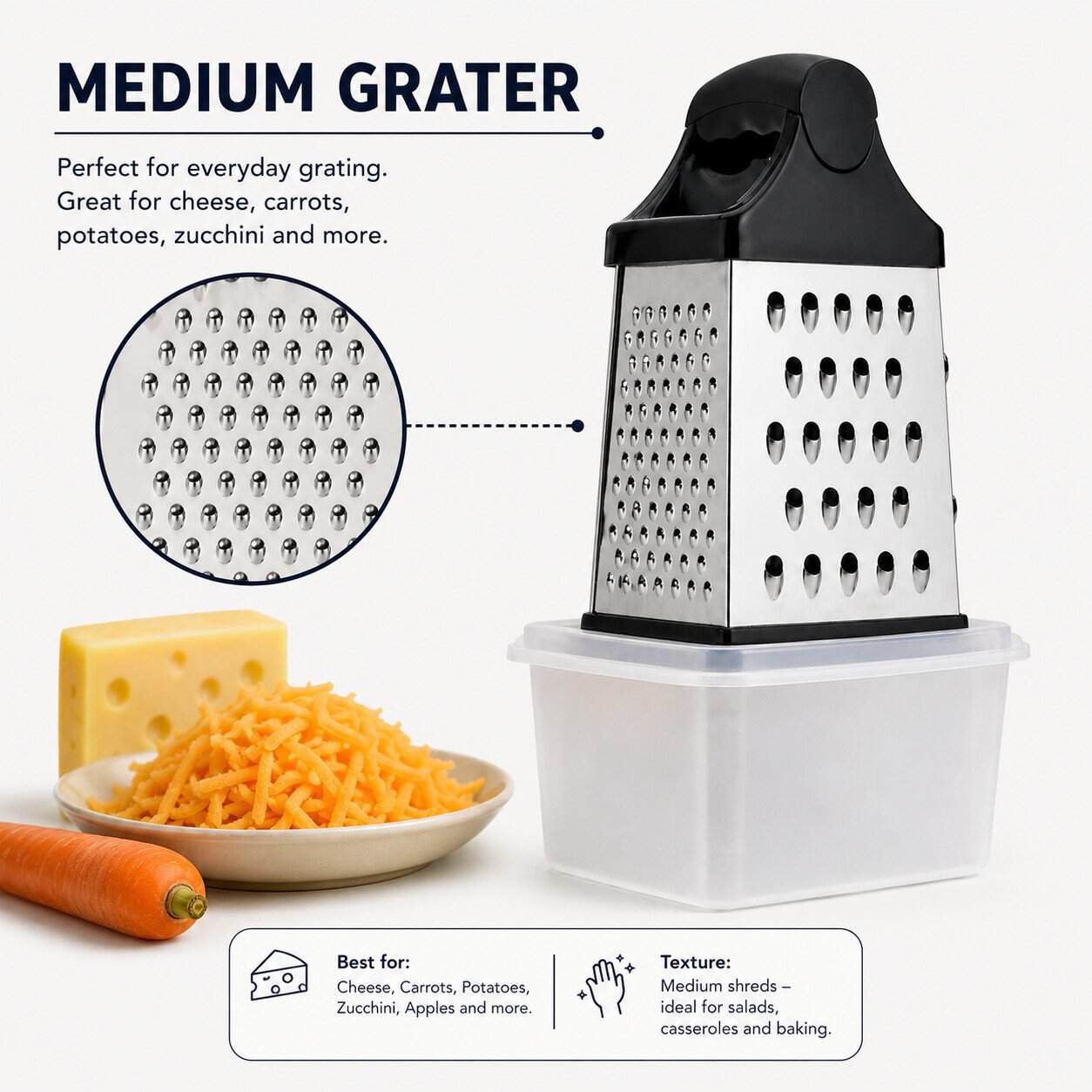
- Medium blade: carrot, courgette and cucumber. Good for coleslaw, salads and adding vegetables to sauces.
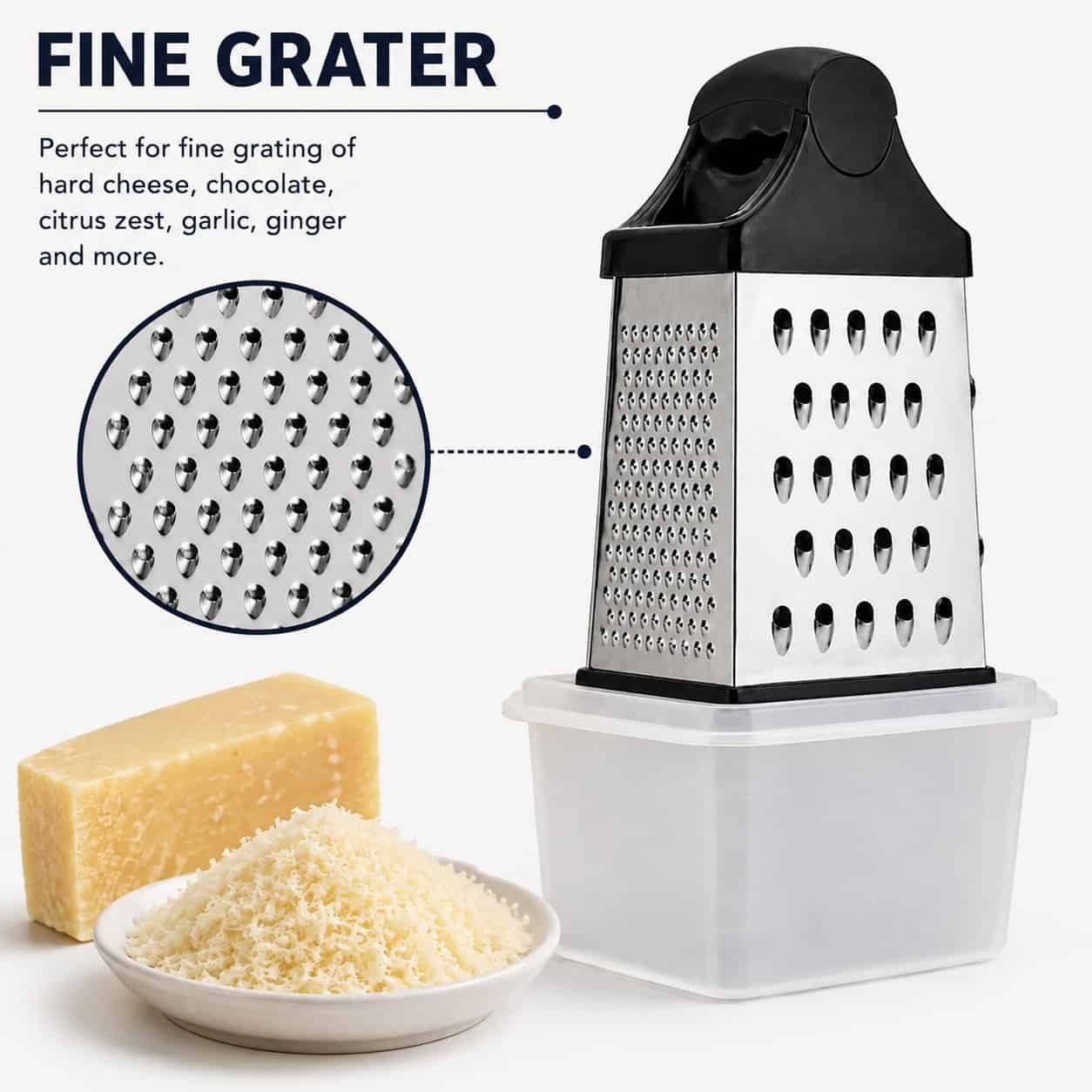
- Fine blade: parmesan and hard cheeses. Light, fluffy cheese that spreads evenly over pasta and risotto, and a little goes a long way.
- Micro blade: lemon zest, ginger, garlic and nutmeg. A very fine finish that releases the most flavour. Zest only the coloured part of the lemon, not the bitter white pith.
Grating tips that make a real difference
- Chill soft cheese first. Put mozzarella or soft cheddar in the freezer for 15 minutes and it grates cleanly instead of clumping.
- Grate parmesan at room temperature for the lightest, fluffiest result.
- Squeeze grated courgette or potato in a clean tea towel before cooking, so fritters and hash browns turn crisp instead of soggy.
- Grate ginger from frozen. Keep peeled ginger in the freezer and grate it straight onto the micro blade.
- Grate straight into the container when you need a measured amount for a recipe.
For more on avoiding the usual problems, read our guide to common grating mistakes.
How to clean a cheese grater
Clean it straight after use, before cheese dries on the blades. Our 6-in-1 grater is dishwasher safe, so you can simply put it in the dishwasher. If you wash it by hand, brush along the blades (not across them) with a washing-up brush, never with your fingers or a sponge, which the blades will shred. Let it dry fully before putting it away.
See the grater in action
Quick guide: what to grate on which side
| Food | Best blade |
|---|---|
| Cheddar, mozzarella | Coarse |
| Potato for hash browns | Coarse |
| Carrot, courgette, cucumber | Medium |
| Parmesan, pecorino | Fine |
| Lemon and lime zest | Micro |
| Ginger, garlic, nutmeg | Micro |
Now you know how to use a cheese grater for every job in the kitchen. If you want one tool with all four blades, a container and a non-slip base, take a look at the DTDF 6-in-1 Cheese Grater, or read more about how a multipurpose grater speeds up kitchen prep. It’s also available on Amazon UK if you prefer to order there.
🧀 10% off the DTDF 6-in-1 Cheese Grater
Use code DTDF10 at checkout on our shop. Shop only, ends 5 December 2026.